
 RFID Asset Management Kit
 IP67-protected Integrated RFID Reader Writer RFly-I165 for Supply Chain
 Long-range Distance UHF RFID Reader RFly-I195 for Inventory Management
 Small UHF RFID Tag Reader RFly-I300 for Cars
 Two-channel Compact Fixed RFID Reader RFly-F210 for Warehousing
 Four Channels Fixed UHF RFID Reader RFly-R6 for Supply Chain
 8-channel UHF RFID Tag Reader RFLY-MR8 for File Cabinet Identification-1
 USB Compact Desktop RFID Scanner GRU-D100 for Card Management
 Bluetooth Portable RFID Reader and Writer GRU-HBT100 for Inventory Management
 Industrial Grade Handheld UHF RFID Reader GRU-HC520 Suitable for Logistics
 Rotary HF RFID Tag Reader GRH-I40 Suitable for Assembly Lines
 Industrial-grade High-frequency Integrated Reader GRH-I65 Suitable for Asset Tracking
 With ESD Protection HF RFID Reader GRH-I68 Suitable for Progress Tracking
 Proximity HF RFID Reader GRH-M30 Suitable for Manufacturing Workshops
 High Frequency Medium Distance Reader GRH-I90 Suitable for Logistics Production Line
 UHF RFID Portals and Tunnel Machine RFly-AM3000 for Access Control
 Narrow RFID Portals Series TD-P20040-SS for Single Tag Entry and Exit Identification Scenario
 RFID Transmission Line Simple Identification Tunnel Machine (TD-T3050)
 Vision and RFID Tunnel Machine TD-T7692-RV for Logistics Sorting
 RFID Transmission Line Identification Tunnel Machine TD-T10090
 RFID Mobile Inventory Tunnel Machine TD-T65150 for Conveyor Belts
 RFID Tags for Container Turnover Management
 RFID Tags for Equipment O&M Management
 RFID Tags for Manufacturing Management
 RFID Tags for Tool Management
 High-Performance Far-Field Antennas for Broad Coverage.
 Multi-Purpose Antennas: Flexibility for Diverse Applications
 Near-Field Antennas for Short-Distance Tag Detection.
 Portals & Tunnel Antennas for Integrated RFID Series
 Slimline PCB Antennas for Warehousing and Logistics
 Miniaturized and Thin Antennas can Provide Good Performance in a Smaller Size.
 GPS Tracker for Vehicles, Car, Kids, Assets.
 CO2 Sensors Detect CO2 Gas through Alarms, Suitable for Offices, Planting Tents.
 Door Sensor, Detect Open and Closed Doors or Windows, Sends Alerts, Triggers Siren.
 Wireless Level Sensor Equipped with a 5-Meter Detection Line, Suitable for Water Tanks
 Real Time Monitoring of Air Quality Using PM2.5/PM10 Sensors.
 Smoke Sensor, Fire Alarm Smoke Detector with Test Button and Low Battery Reminder.
 Soil Stress Sensor,Bridge and Tunnel Monitors.
 Vibration Sensor Monitors Equipment, Like Conveyors and Motors, for Operational Status.
 E -Paper Display
 Smart Water Sensor Alarms, 1.2 M Detection Line.
 CO Sensor for Basements Home Office House Bedroom Living Room Car, Light Plug and Play.
 Temperature and Humidity Sensor
 Multi-sensor GD-ME
 Temperature Sensors Monitor the Surface Temperature of Various Heating Equipment.-1
 Signal Enhancement Terminal, Long Range Coverage.
 Multi-Protocol Communication Gateway, App Remote Control.
 Edge Vision Gateway can Access Various Mainstream Cameras, Suitable for Office, Factory.
 GBS-3550 Outdoor Sensor Gateway,LoRa, 2/3/4G Communication.
 Smart WiFi Gateway, Realize Remote Control.
 Ultra-Low-Power Solar-Powered Intelligent Gateway (Outdoor)
 A Kits for Equipment Condition Detection
 A Kits for Office Computer Room Environment Monitoring
 A Kits for Reservoir Environmental Monitoring
 A Kits for Storage Space Environment Monitoring
 A Kits for Stress Detection of Underground Tunnel
 A Kits for Urban Environment Monitoring
 Intelligent IoT Monitoring Platform
 Global 3PL Streamlines High-End Fashion Inventory with MingQ RFID Tunnel Solution
 Leading E‑Commerce Platform Accelerates Flash-Sale Fulfillment and Boosts Warehouse Productivity with MingQ RFID Sorting Wall Solution
 Global Automaker Elevates Component Kitting Accuracy with MingQ RFID Shelf‑Level Management Solution
 Asia’s Largest Logistics Provider Enhances Warehouse Intelligence with RFID Pallet & Container Management Solution
 RFID Application in Platform Vehicle Management
 RFID Application in Logistics Sorting
 RFID Application in Supply Chain Management
 RFID Application for Workshop/Warehouse Tracking
 TP‑Link Enhances Warehouse Inbound/Outbound Efficiency with MingQ RFID Dock‑Door Solution
 RFID technology empowers port containers: a new direction for future logistics
 RFID technology in forklift tracking and container bag identification
 Real-Time Data, Secure Transportation: The Future Trends of Cold Chain Logistics
 RFID Tool Management
 RFID Application in Battery Factory Production
 RFID Application in Production Line Rubber Box Management
 RFID Application in Mold Management on Production Lines
 RFID Application in Fiber Optic Cable Manufacturing
 Smart Manufacturing
 The medical industry uses RFID technology to make drug tracking more accurate
 RFID technology helps beverage production and build an efficient supply chain
 RFID technology helps car seat production lines: intelligent management improves efficiency and quality
 RFID technology in the production of electronic appliances monitoring and tracing application
 Use RFID technology to improve appliance management efficiency and security
 RFID technology helps precise installation of headrests


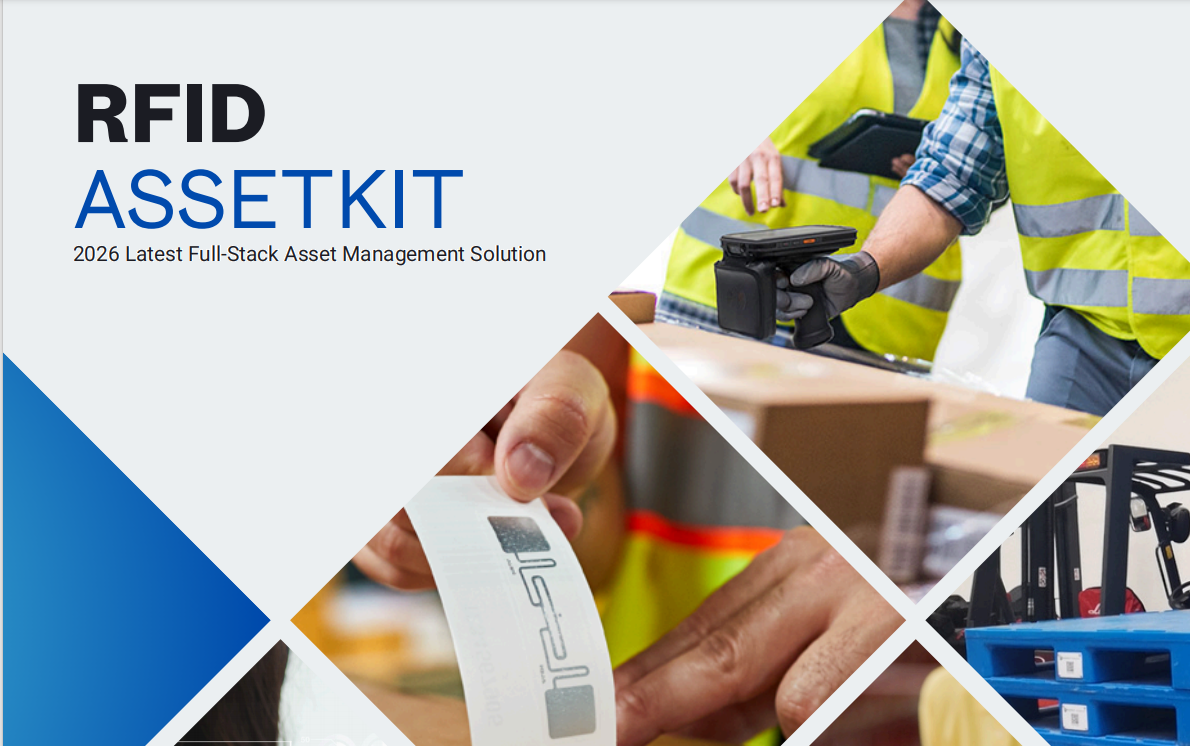
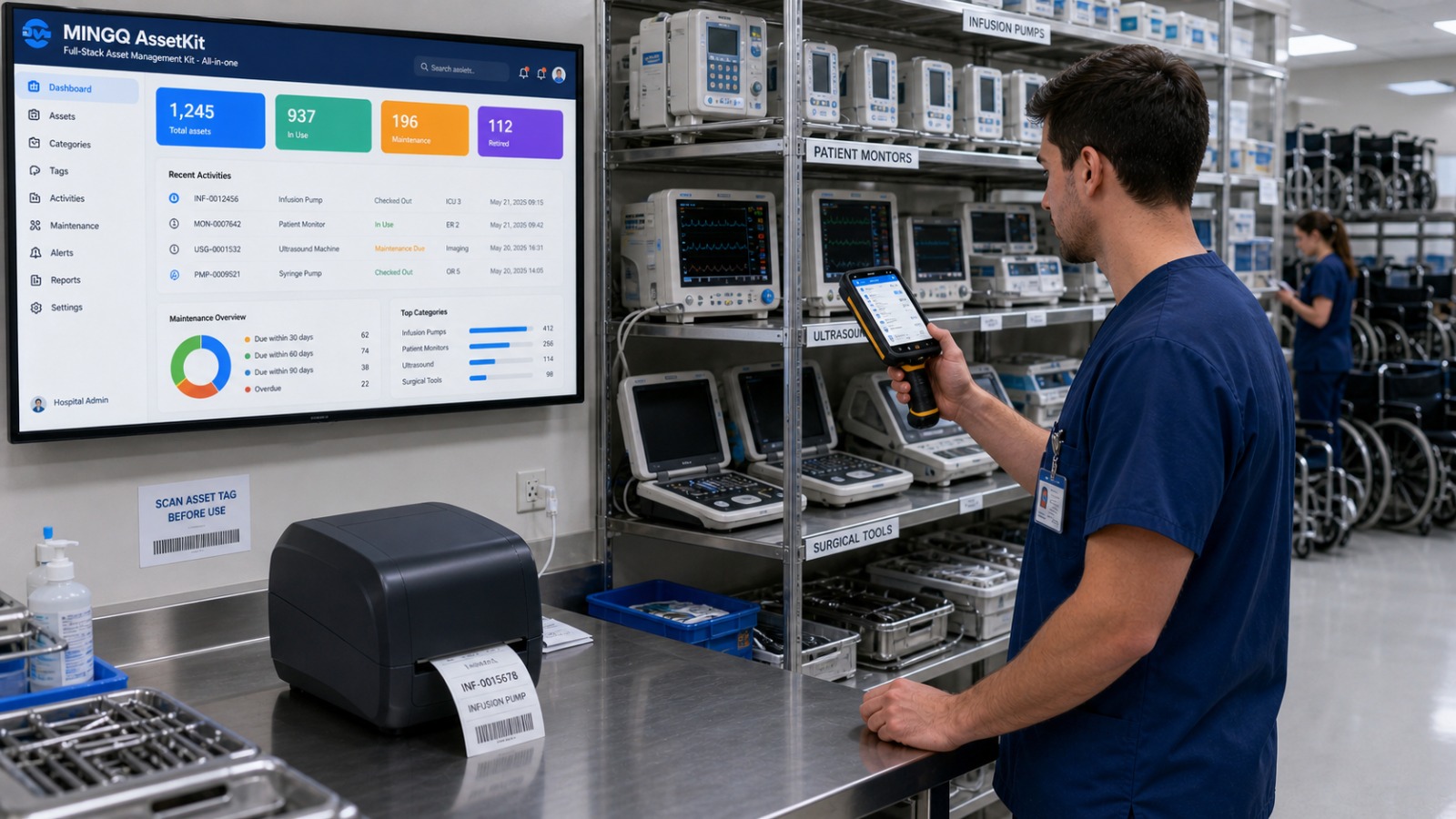


RFID Asset Management System: Making Every Asset Visible, Traceable, and Easier to Manage
Common problems include unclear asset location, delayed status updates, missing records, repeated purchases, low utilization, manual inventory errors, and unclear responsibility when assets are borrowed, transferred, repaired, or disposed of.
An RFID asset management system helps solve these problems by giving each asset a unique digital identity and connecting physical assets with software management workflows.
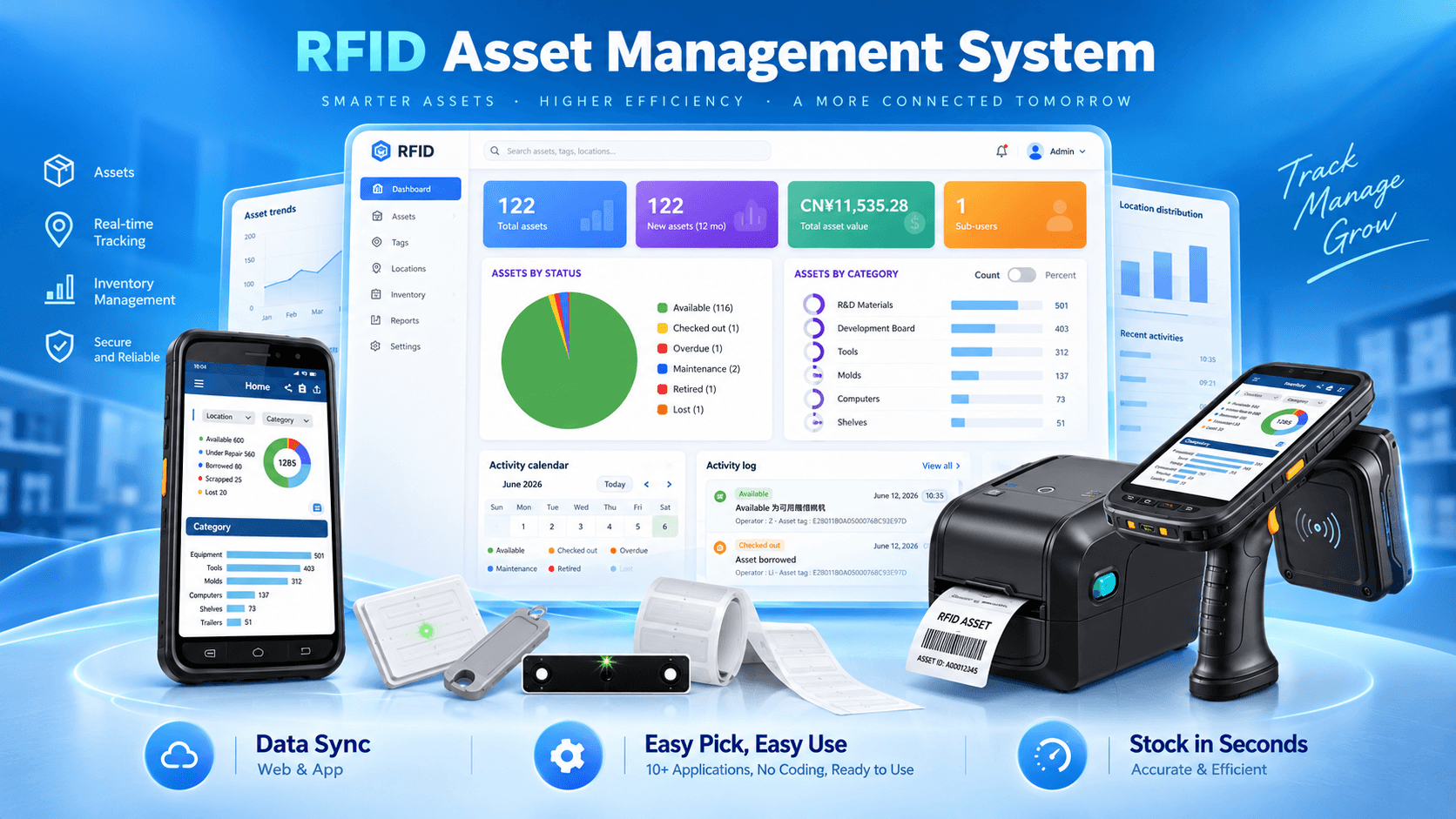
What Is an RFID Asset Management System?
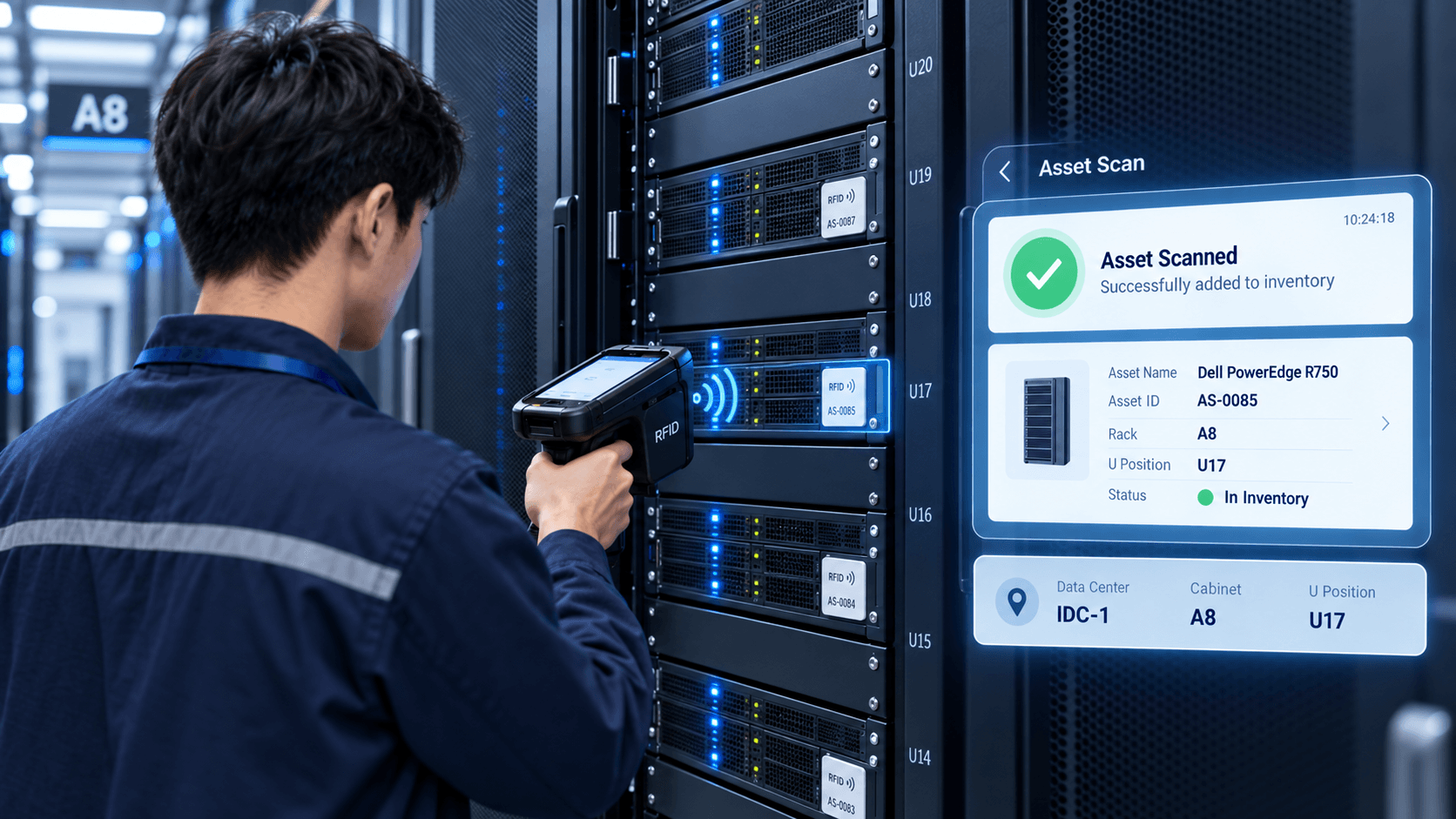
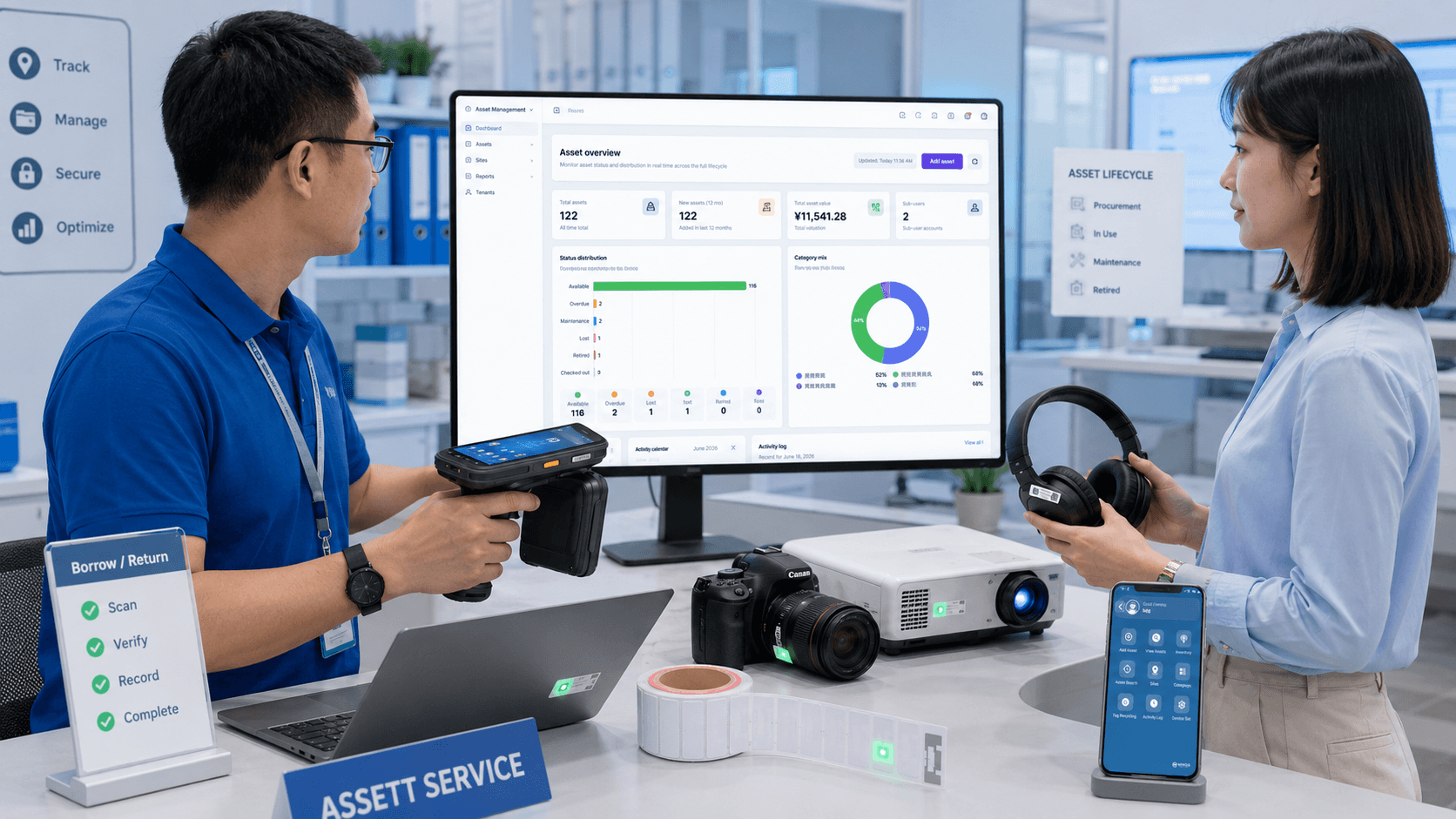
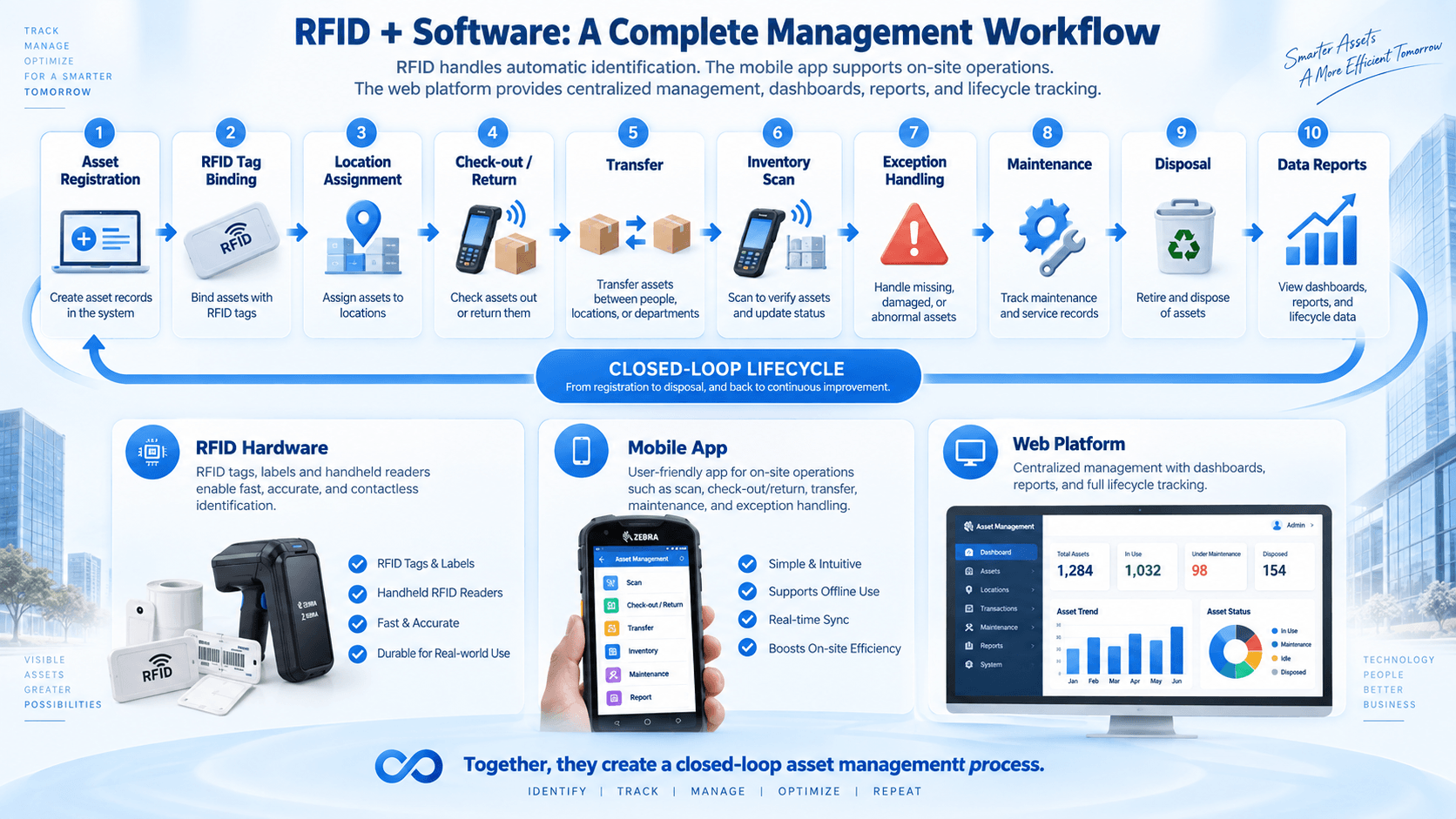
An RFID asset management system uses RFID Tags, RFID handheld terminals, mobile applications, and a web-based management platform to identify, track, and manage assets throughout their full lifecycle.
Why RFID Is Useful for Asset Management
Traditional barcode management requires line-of-sight scanning. Staff must find the label, aim at it, and scan assets one by one. This can be time-consuming when there are many assets or when assets are placed in storage rooms, racks, cabinets, warehouses, or busy working areas.
Main Functions of an RFID Asset Management System
1. Asset Registration
The system allows staff to create asset records and enter basic information such as asset name, code, category, brand, model, serial number, department, location, purchase date, value, and status.
Once registered, each physical asset has a corresponding digital file in the system.
2. RFID Tag Binding
After registration, an RFID tag is attached to the asset and bound to the asset record. From that point on, the RFID tag becomes the unique identity of the asset.
When the tag is read by an Rfid Device, the system can automatically recognize the asset and display its information.
3. Check-out and Return
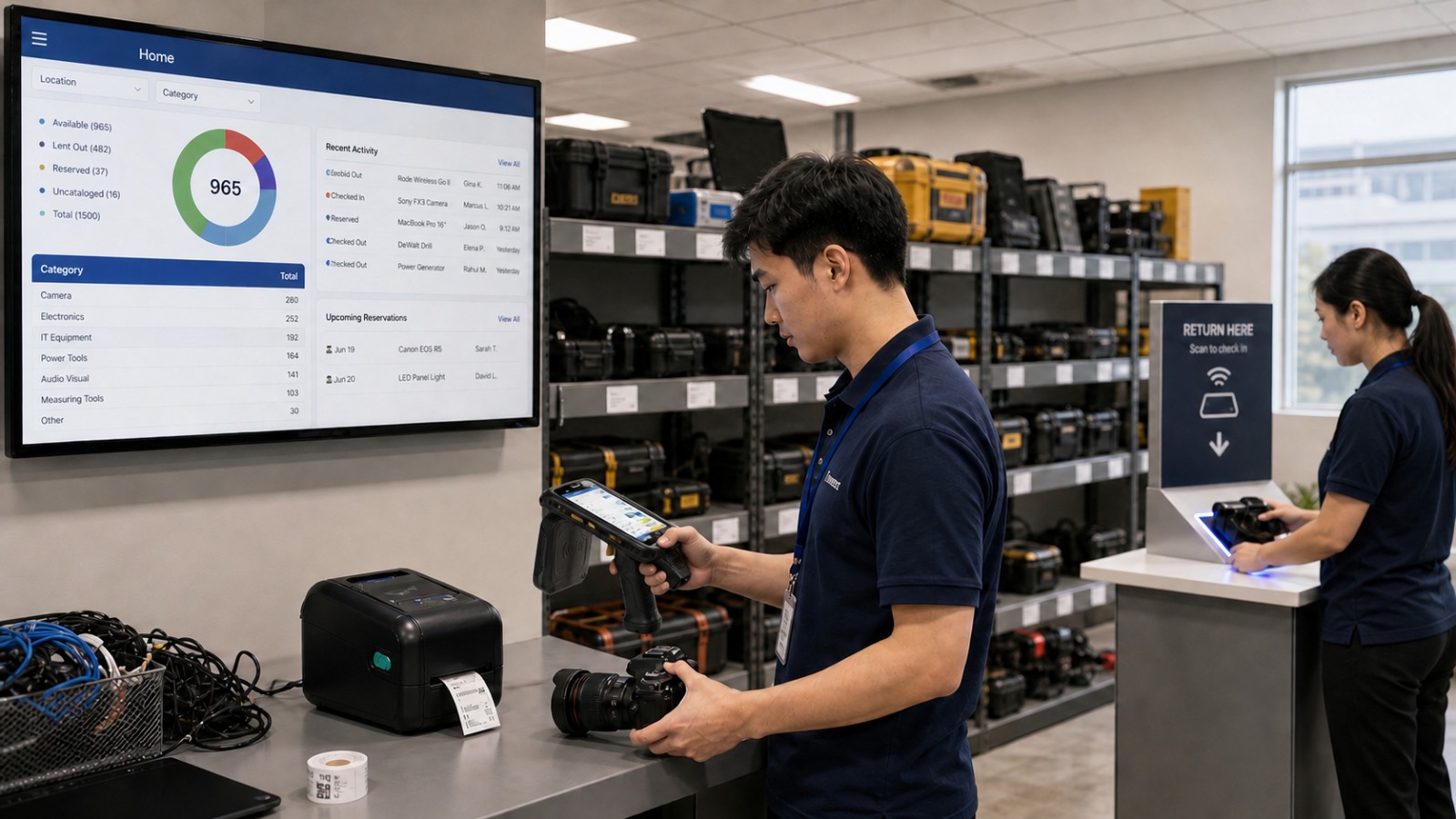
For shared assets, such as laptops, tools, medical equipment, handheld devices, or office equipment, the system can record check-out and return operations.
Managers can clearly know who is using the asset, when it was borrowed, when it should be returned, and whether it is overdue.
4. Asset Transfer
Assets often move between departments, rooms, warehouses, branches, or project sites. The RFID asset management system can record each transfer, including the original location, new location, operator, time, and reason.
This helps avoid unclear responsibility and keeps asset records consistent with the actual situation.
5. RFID Inventory
Inventory is one of the most important functions of RFID asset management.
Staff can use an RFID handheld terminal to scan assets in an office, warehouse, hospital ward, data center, storage room, or production area. The system automatically compares scanned assets with system records and generates inventory results.
Typical inventory results include:
Scanned assets: assets found on-site and consistent with the system
Unscanned assets: assets recorded in the system but not found on-site
Unknown assets: assets scanned on-site but not registered in the system
Abnormal assets: assets found in the wrong location or with inconsistent status
This makes inventory faster, more accurate, and easier to repeat regularly.
6. Asset Search
When an asset cannot be found, staff can use the RFID handheld terminal to search for it. The system can help locate the asset by reading the RFID signal, reducing the time spent searching manually.
This is useful for tools, IT devices, medical equipment, reusable containers, and other movable assets.
7. Maintenance Management
For assets that require regular maintenance, inspection, or calibration, the system can record maintenance schedules, service history, repair results, and responsible personnel.
When an asset is due for maintenance, the system can remind staff to take action.
8. Disposal and Lifecycle Management
An RFID asset management system can manage the complete lifecycle of an asset, from purchase and registration to use, transfer, maintenance, inventory, and final disposal.
Each operation is recorded, making the asset history clear and traceable.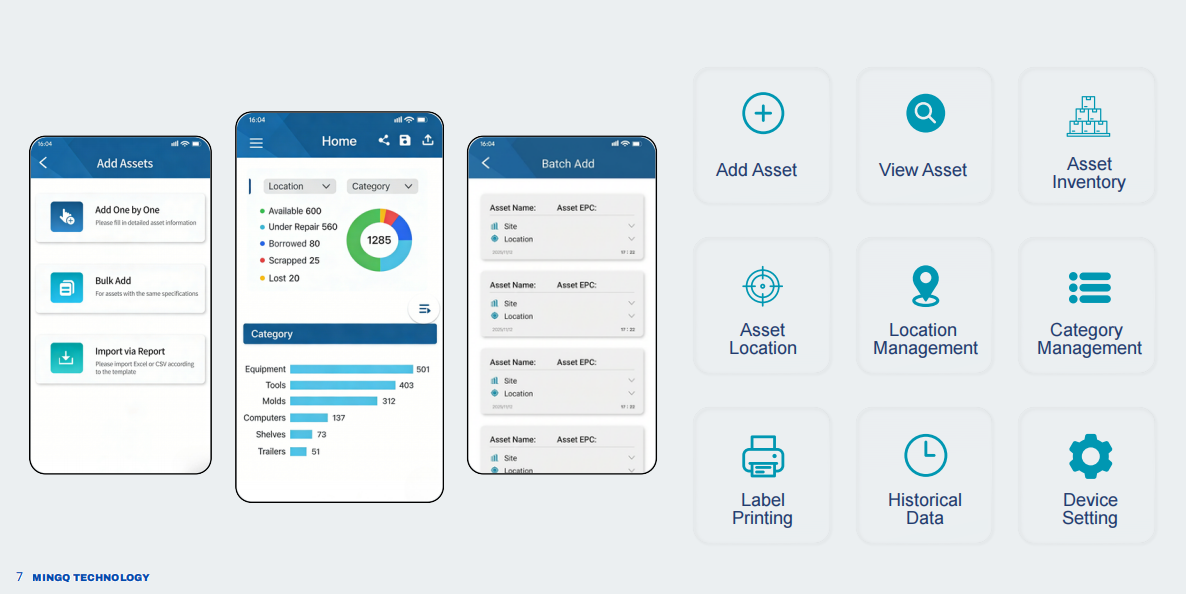
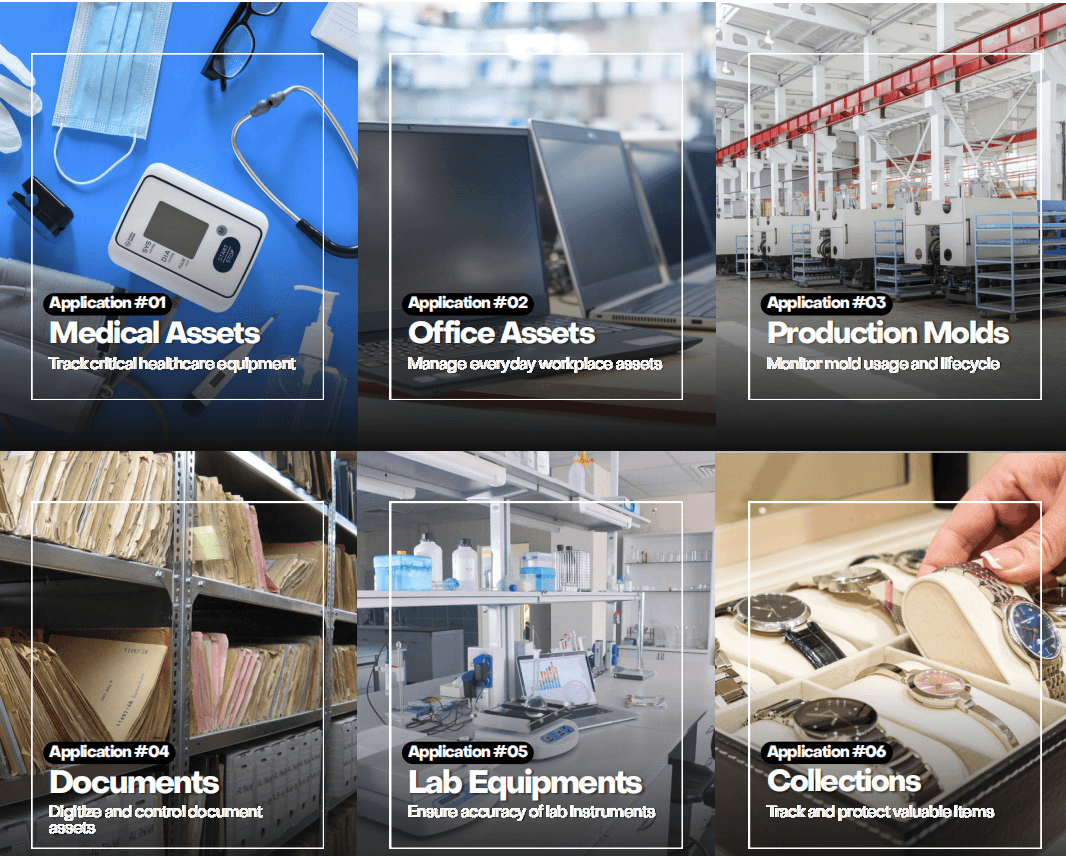
Typical Application Scenarios
RFID asset management can be used in many industries and environments, including:
Benefits / Outcomes
An RFID asset management system can help organizations achieve:
- Faster asset inventory through RFID batch scanning
- Real-time visibility of asset location, user, department, and status
- Clear lifecycle records from registration to disposal
- Reduced asset loss and duplicate purchasing
- Improved accuracy compared with Excel or manual records
- Clearer responsibility for check-out, return, transfer, and maintenance
- Better asset utilization across departments and locations
- More efficient management through mobile app and web platform
The value of RFID asset management does not come only from RFID tags. It comes from the connection between RFID hardware and software workflows.
Conclusion
RFID asset management is not simply replacing barcodes with RFID tags. It is a digital way to connect assets, people, locations, status, and operation records.
By using RFID tags, handheld terminals, mobile apps, and a web-based platform, organizations can make asset management faster, more accurate, and more transparent.
For companies managing large numbers of movable, valuable, or frequently used assets, an RFID asset management system helps ensure that every asset has an identity, every movement is recorded, every inventory result is clear, and every asset can be traced throughout its lifecycle.
RFID asset management makes every asset visible, traceable, and easier to manage.