In today’s super-fast business world, keeping track of inventory effectively is more important than ever. Companies like Smart Inventory Solutions are always looking for new tech to improve how they manage things. One of the cool innovations they’re exploring is UHF RFID Tags. These little tags hold a ton of useful data that can totally change the way businesses monitor and control their stock.
With UHF RFID tags, you can see what's in stock in real-time. They can scan multiple items all at once, which makes doing inventory so much quicker. Just imagine popping a shelf in front of a scanner and having the whole thing checked out in seconds—that’s pretty awesome, right? Of course, setting up this tech isn’t always a walk in the park. Some companies face hiccups when it comes to getting everything integrated smoothly into their existing systems. It’s really important to take these challenges seriously and plan carefully.
Plus, the accuracy of these RFID tags? It depends a lot on where and how you put them. If they’re placed incorrectly, you might end up with inaccurate inventory counts. And don’t forget, training staff properly is a must—nobody wants a bunch of confused employees messing up the system. While the benefits are definitely worth considering, every company has its own unique situation. Rushing into UHF RFID without thinking it through could lead to more headaches than it’s worth. So, it’s all about weighing the pros and cons and making sure it fits your needs.
UHF RFID technology is transforming inventory management across various industries. UHF stands for Ultra High Frequency, which operates between 300 MHz and 3 GHz. This range enables longer read distances and faster data transmission rates. According to recent industry reports, businesses using UHF RFID can achieve inventory accuracy levels exceeding 99%. This accuracy drastically reduces losses and improves supply chain efficiency.
Implementing UHF RFID involves a few key steps. The most crucial is the selection of appropriate tags. Few options exist, such as passive or active tags. Passive tags are cost-effective and ideal for most inventory applications. However, they have limited range. Active tags offer longer read distances but increase costs significantly. Understanding your inventory needs will guide your choice.
**Tips:**
- Test different tags in your environment.
- Monitor their performance over time.
Moreover, integrating UHF RFID technology into existing systems can be challenging. Data synchronization between software and hardware must be seamless. A small error can lead to significant discrepancies. Regular audits are essential to identify mistakes and correct them early. Investing in training for staff is also vital; incomplete understanding can lead to mishandling of the system.
**Tips:**
- Provide ongoing training sessions.
- Encourage feedback from users.
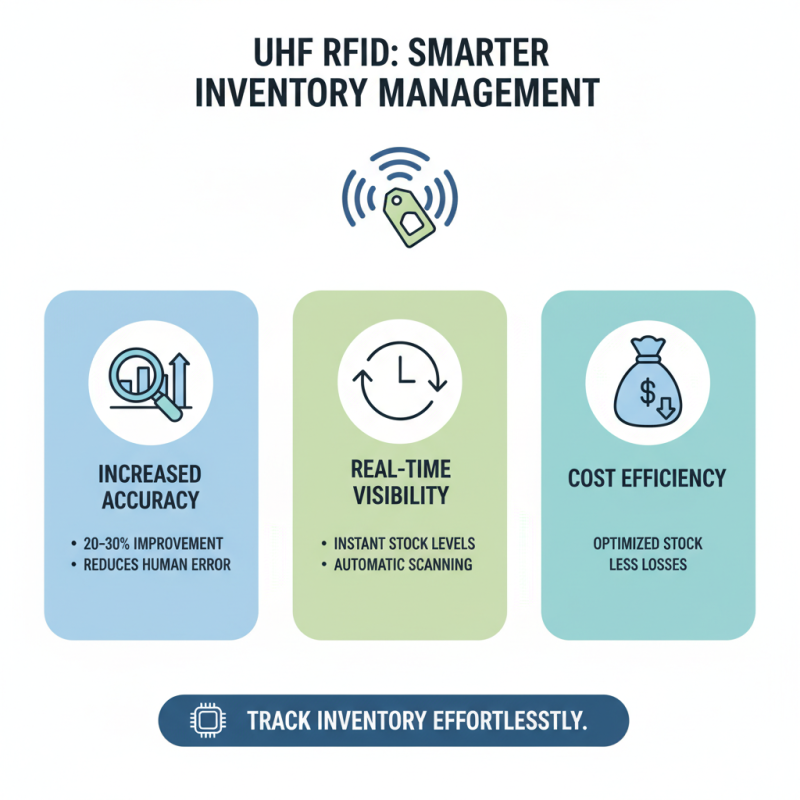
Effective inventory management is crucial for businesses aiming to reduce costs and enhance efficiency. UHF RFID tags offer numerous benefits in this arena. According to a recent industry report, companies using UHF RFID experience a 20-30% improvement in inventory accuracy. This technology allows automatic scanning of items, which reduces human error. It also provides real-time visibility into stock levels. With UHF RFID, businesses can track their inventory effortlessly.
Implementing UHF RFID tags streamlines processes. This technology allows for quicker stocktaking. Employees can scan several items in seconds. A study revealed that UHF RFID can reduce inventory processing time by up to 50%. This speed can lead to improved customer satisfaction due to better stock availability. The initial investment in UHF RFID technology often pays off through long-term savings.
Tips: Choose high-quality tags for better read rates. Regularly update the RFID system to maintain accuracy. Train staff on proper use to maximize benefits. Even with efficient systems, it’s essential to assess your processes continuously. Mistakes can still happen, so monitor for discrepancies often. Keeping an eye on the system allows for timely adjustments.
Implementing UHF RFID tags in your inventory system can streamline tracking and management. Start by assessing your current system. Identify areas of inefficiency. This helps you understand what improvements are needed. Choose the right UHF RFID tags based on the items you’re tracking. Consider the environment, like shelves or warehouses.
Next, set up the necessary hardware. You’ll need RFID readers and antennas. Place them strategically for optimal coverage. Training staff to use this new system is crucial. They must understand how to scan items properly. Start with a small batch of inventory to test the system. Monitor results closely.
As you implement UHF RFID tags, you may face challenges. Tags can sometimes fail to scan. This may occur in areas with metal or interference. Regular maintenance is essential. Evaluate your setup periodically. Are the tags performing well? Adjust your strategy as needed to resolve any issues. Effective inventory management is an ongoing process.
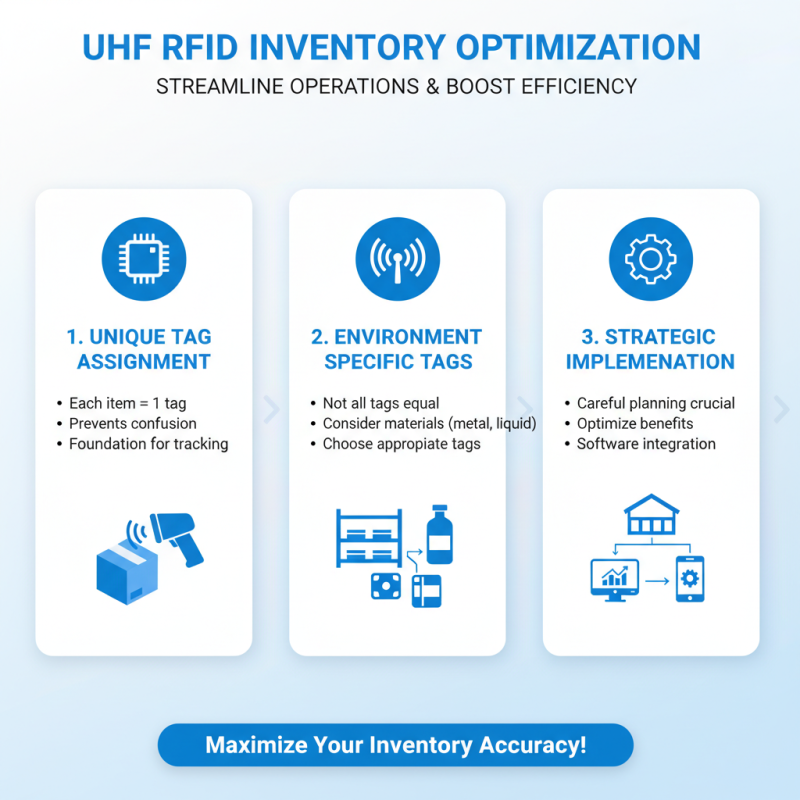
Tagging inventory items with UHF RFID can streamline operations. However, it requires careful planning to maximize benefits. Start by assigning a unique UHF RFID tag to each item. This can prevent confusion. Keep in mind that not all tags are created equal. Some may not work well in specific environments. Choose tags that suit the conditions of your inventory storage facility.
When placing tags, consistency is key. Attach them to a specific location on the item. This helps in scanning and tracking. Inconsistent tagging might lead to errors in inventory counts. Your team should follow a standardized tagging process. Training employees on the proper way to tag items is essential. They should understand how to handle the tags correctly.
Tips: Regularly test your RFID system to catch any inconsistencies early. Monitor your inventory periodically. This practice can help maintain accuracy. Additionally, consider the layout of your storage area. A cluttered space can interfere with signal strength. Keep it organized for better scanning results. Remember, small adjustments can lead to big improvements in efficiency.
Integrating UHF RFID with inventory management software can enhance accuracy and efficiency. RFID tags help track items in real-time. By embedding UHF RFID technology, businesses can streamline their inventory process. This reduces human error and speeds up stocktaking.
When choosing an RFID software, consider compatibility with your existing system. Ensure it can handle multiple data formats easily. This will save time. Also, evaluate how the software analyzes data. The right analytics tools can provide valuable insights into inventory trends.
Tips: Regularly update your inventory records to maintain accuracy. Ensure that your RFID reader is positioned correctly for optimal scanning. Train your team properly on using the technology.
Remember, integrating new technology can have challenges. Some systems may require adjustments or refinement. Monitor your processes closely to identify any issues. Flexibility and adaptability in your approach are essential for success.
This chart illustrates the effectiveness of UHF RFID tags in inventory management over a period of six months. The data reflects the number of items scanned per week, showcasing the efficiency gained through UHF RFID integration.
Troubleshooting common issues with UHF RFID tags can save time and enhance efficiency in inventory management. One frequent problem is tag read failure. This can happen due to distance or orientation. If tags are too far from the reader or not aligned correctly, they may not be detected. Adjusting the position of tags or readers often resolves this.
Another issue is interference from metals or liquids. These materials can block signals. To overcome this, use specialized tags designed to work in challenging environments. Experimenting with different tag placements may also help improve read rates. Sometimes, it might be beneficial to review the environment and make adjustments.
Additionally, consider firmware updates for the readers. Outdated software can cause compatibility issues. Keeping all devices updated can alleviate many reading errors. While troubleshooting can take time, it's essential to reflect on the setup. Each issue can highlight areas for improvement and lead to smoother operations in the long run.
| Issue | Description | Possible Causes | Solutions |
|---|---|---|---|
| Read Failure | RFID reader fails to read tags | Interference, distance, or tag damage | Check tag placement, reduce interference, replace damaged tags |
| Inaccurate Reads | Mistaken readings of inventory | Multiple tags in read range or poor orientation | Adjust read range, improve tag orientation |
| Tag Collision | Multiple tags interfere during read | Too many tags in one area | Use anti-collision protocols, space tags better |
| Bad Signal | Poor communication between tag and reader | Obstructions or distance | Minimize obstructions, adjust reader sensitivity |
| Data Sync Issues | Inventory data not updating correctly | Software bugs or network failures | Check software updates, verify network connections |
Future trends in UHF RFID technology are set to revolutionize inventory management. As businesses seek efficiency, UHF RFID tags provide real-time tracking of assets. This technology allows for automatic data capture, reducing human error. Companies are moving towards integrating AI with RFID systems. This combination will enhance data analysis and forecasting capabilities.
Moreover, the transition to cloud-based RFID platforms is picking up pace. With cloud technology, businesses can access inventory data from anywhere. This flexibility is vital in today's fast-paced environment. However, integration challengesremain. Companies must ensure seamless connectivity between existing systems and new Rfid Solutions.
Another evolving trend is the focus on sustainability. More industries are exploring eco-friendly RFID tags made from recyclable materials. These innovations may come at a higher cost, but they align with environmental goals. However, not all businesses may be ready for this change. The hesitation could stem from financial constraints or lack of awareness. Thus, the future of UHF RFID in inventory management will require careful consideration and adaptation.
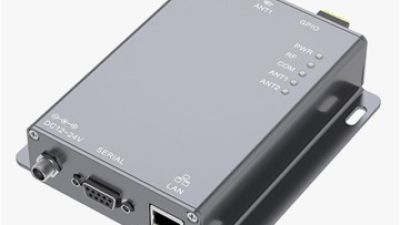
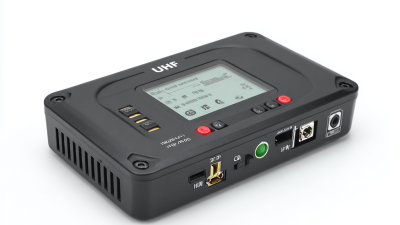
The efficient management of warehousing operations is crucial in today's fast-paced logistics environment. With the advancement in technology, the integration of compact RFID solutions is becoming increasingly popular in streamlining inventory tracking and enhancing overall operational efficiency. One such innovation is a two-channel UHF RFID reader designed to optimize your warehousing processes. Its compact size allows for easy installation in various spaces, making it an ideal choice for businesses looking to maximize their resources without compromising on functionality.
What sets this RFID reader apart is not just its high performance but also the extensive customization options available. Companies can benefit from tailored solutions that meet their specific operational requirements. This includes the ability to modify communication protocols, add unique functionalities, or even incorporate personalized branding. Such flexibility ensures that businesses can adapt the technology to fit seamlessly within their existing systems, thereby enhancing their overall productivity and efficiency. By harnessing this RFID solution, warehousing operations can achieve greater accuracy and speed in inventory management, ultimately driving better results in supply chain performance.
: The service aims to provide reliable information and support. It helps users make informed decisions.
Anyone seeking information can benefit. This includes individuals, businesses, and organizations.
While we aim for accuracy, we cannot guarantee it. Users should verify important details.
The content is updated regularly, but it may not cover every change immediately. Timeliness matters.
Yes, you can share it. However, ensure that the context remains clear and accurate.
Report any errors you discover. We appreciate your input to improve future content.
Yes, understanding context is crucial. Some topics may not be fully covered or may evolve.
Feedback is welcome and valuable. It helps shape the service and improve user experience.
No, this service does not provide professional legal or medical advice. Seek professionals for those needs.
Feel free to reach out. We encourage questions and want to assist further.
UHF RFID tags are revolutionizing inventory management by providing real-time tracking and enhanced accuracy in item handling. Understanding the fundamentals of UHF RFID technology is crucial for businesses looking to optimize their inventory systems. The benefits of implementing these tags include improved inventory control, reduced labor costs, and minimized human errors.
To successfully integrate UHF RFID tags into an inventory management system, businesses should follow a structured implementation process, adopt best practices for tagging, and ensure compatibility with existing inventory management software. Additionally, being aware of common troubleshooting issues can streamline operations. As technology advances, the future of UHF RFID in inventory management promises even greater efficiency and innovation, making it a vital component for businesses aiming for success in a competitive market.