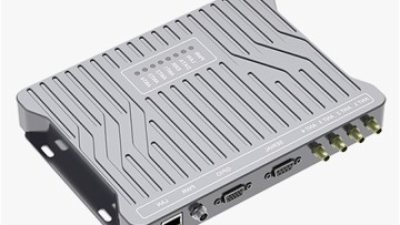
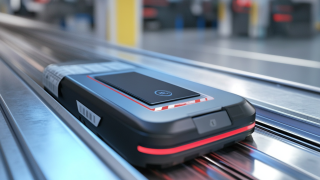
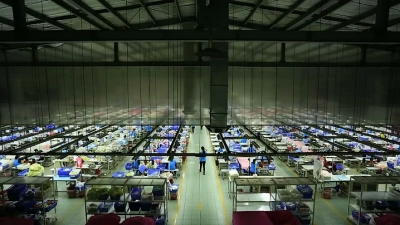
In today’s world, where getting things done quickly and accurately is more important than ever, using Rfid Scanner technologyfor inventory management is really changing the game. These scanners let businesses keep track of their stock in real-time, which means fewer mistakes and lower operational costs—something everyone loves.MingQ Technology Limited is right there in the thick of it, leading the charge with their smart IoT solutions and hardware. They’ve got serious expertise in areas like communication tech, AI, and industrial IoT, and they’re all about helping companies harness the power of RFID tech.
When businesses mix innovative IoT tools with top-notch RFID scanners, they can run more smoothly, see what’s happening at a glance, and make smarter decisions based on real data. It’s clear that RFID isn’t just a fancy gadget—it’s becoming an essential part of how companies are rethinking and improving their inventory strategies in this fast-paced, tech-driven market.
The Evolution of RFID Technology in Inventory Management
You know, the way RFID tech has evolved in inventory management really changed the game for how businesses keep track of their stock. It all started back in the 20th century, and since then, RFID—short for Radio Frequency Identification—has gone from pretty basic uses to these super smart systems that can gather data in real time and give detailed insights. This leap forward has helped companies get way more accurate with their counts and do things faster, cutting down on the time and effort needed for manual stock checks.
Nowadays, RFID scanners are pretty much a game-changer for traditional inventory processes. Because they can send data wirelessly, businesses are now able to keep an eye on stock levels, see their products more clearly, and make their supply chains much smoother. Using RFID not only reduces chances of human error, but it also lets companies respond faster when inventory levels change. And as this tech keeps improving, it’s set to totally shake up inventory management—making operations more efficient, flexible, and ready to handle whatever comes next for businesses big or small.
Impact of RFID Scanning on Inventory Accuracy and Efficiency
You know, integrating RFID scanning tech into inventory management systems is really shaking things up—making everything way more accurate and efficient in supply chains. Instead of manually counting and entering data, businesses can now automate the entire tracking process. 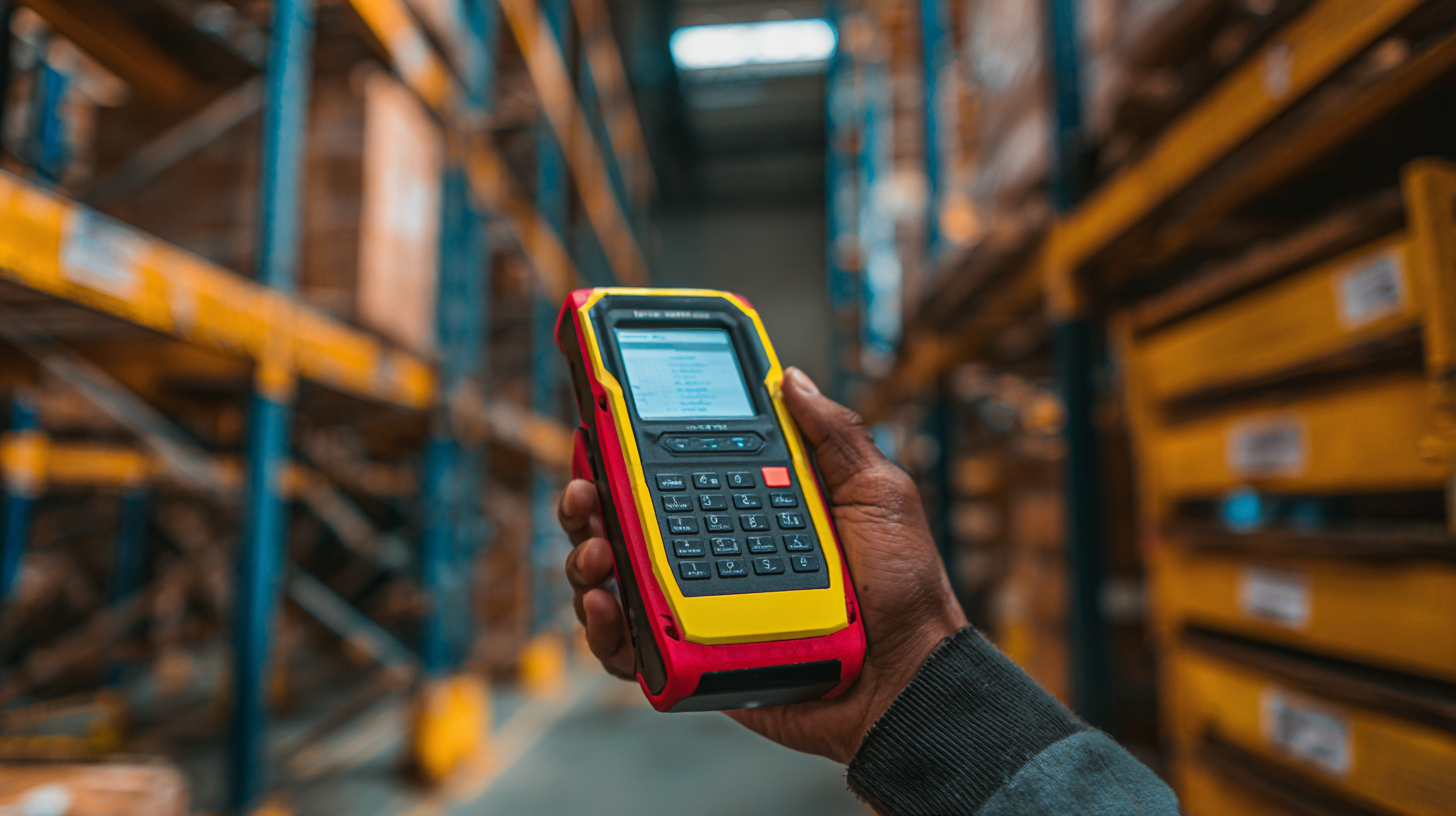 RFID Tags let them gatherreal-time info, so stock levels are always up-to-date and truly reflect what's actually on hand. This kind of instant visibility not only speeds things up but also helps companies make smarter decisions—responding quickly when demand shifts.
And honestly, more and more industries—like retail and manufacturing—are jumping on this bandwagon. The improvements in how they operate are pretty remarkable. Some logistics teams are even using RFID to tighten up their inventory accuracy, which means they’re managing stock better and saving money in the process. As more industries realize just how much RFID can transform supply chain management, I bet we’ll see this technology become even more common. It’s all about staying competitive and streamlining those inventory strategies, after all.
Cost Savings: How RFID Technology Reduces Operational Expenses
RFID tech is really shaking up how we do inventory management these days, mainly because it can save businesses a ton of money. By automating how data gets captured, companies can cut down on the costs that come with manual stock counting. A report from IDTechEx says that RFID systems can boost inventory accuracy up to 99%, which means fewer errors, less stock loss, and reduced discrepancies. With these systems in place, organizations don't have to spend as much on labor for stocktaking, plus they get better stock availability and avoid overstocking issues.
At MingQ Technology Limited, we focus on providing IoT solutions that leverage the latest RFID tech for smarter inventory management. By combining our expertise in AI and industrial IoT, we help businesses streamline their supply chains. A study from the Aberdeen Group found that companies using RFID can save around 12% on inventory management costs—pretty significant, right? It’s a strong case for switching to RFID if you’re looking to boost efficiency and keep costs in check when it comes to managing your inventory.

Case Studies: Successful RFID Implementations in Various Industries
You know, the way RFID technology has been making waves in different industries really shows how powerful and game-changing it can be for managing inventories. I mean, if you look at some case studies from the hospitality world, you'll see how RFID scanners actually make hotel operations way smoother. Take this well-known hotel in Hangzhou— they've teamed up with a tech company to develop a fancy management system that incorporates RFID. This setup helps them keep better track of assets, cut down on losses, and boost the overall guest experience by making sure their inventory levels are always on point with what’s needed.
On the retail front, things are also shifting fast. Recently, a local retail group held an event that focused on how stores are using RFID to become more efficient and get their inventory just right. With these RFID scanners, stores can access real-time data, which is a total lifesaver when it comes to adapting quickly to changing market trends. All in all, these examples really show how flexible RFID technology is—it's become a key player in modernizing inventory management across all sorts of industries.
Unlocking the Future of Inventory Management with Rfid Scanner Technology
| Industry | RFID Implementation Type | Benefits Achieved | Challenges Faced | Year of Implementation |
| Retail | Inventory Tracking | Reduced stock loss by 30% | Initial setup costs | 2021 |
| Manufacturing | Work-in-Progress Tracking | Improved production efficiency by 20% | Integration with existing systems | 2020 |
| Healthcare | Patient and Asset Tracking | Enhanced patient safety and asset utilization | User training | 2019 |
| Logistics | Shipping and Receiving | Reduced shipping errors by 40% | Scalability concerns | 2022 |
| Food & Beverage | Supply Chain Tracking | Increased inventory accuracy to 98% | Compliance with safety regulations | 2018 |
Future Trends: Integrating IoT with RFID for Smart Inventory Solutions
You know, the way the Internet of Things (IoT) is now blending with RFID tech is really changing the game for inventory management across all sorts of industries. Basically, by putting RFID tags on products, companies can see what's in stock in real-time, which makes tracking and managing everything way easier. The data from these RFID scanners can be smoothly sent over to IoT platforms—so businesses get smarter insights and run more smoothly. It’s a pretty neat combo: it not only makes inventory processes more streamlined but also cuts down on mistakes by humans and speeds up those tedious inventory checks.
Looking ahead, it’s pretty exciting to think about how the combo of IoT and RFID will open up new doors for smarter inventory solutions. For example, with cloud-based IoT systems running predictive analytics, companies can actually forecast their inventory needs based on how people are using products—so stocking becomes way more efficient. Plus, machine learning algorithms can sift through tons of RFID data, helping businesses adapt quickly to market changes. Bottom line: this integration makes the whole supply chain more flexible and responsive, so businesses can handle demand swings better and make the most of their resources.
Challenges and Solutions in Adopting RFID Technology for Businesses
Switching over to RFID technology for managing inventory can be a bit of a rollercoaster for businesses. Sure, the potential benefits are pretty impressive, but there are definitely some hurdles along the way. I read a study in the International Journal of Production Economics showing that companies that jumped into RFID saw their inventory mistakes drop by more than 30%! That’s a big deal — it really boosts efficiency. That said, the upfront costs can be quite hefty — sometimes between $100,000 and $1 million depending on the size of the business, which can be a real sticking point. So, it's all about weighing those initial expenses against the long-term perks, like better stock tracking and lower labor costs.
Then there’s the whole matter of making RFID fit seamlessly with the systems companies already have — which can get pretty tricky. Gartner reports that around 70% of organizations hit some snags when trying to integrate new tech like this, and honestly, that tends to scare off some businesses from even trying. But with the right tech partners, things can go a lot smoother. Plus, training staff properly and helping them get comfortable with the new system is crucial — nobody wants a bunch of confused employees! In the end, tackling these challenges head-on is the best way to unlock RFID’s true potential, helping companies run a tighter, more efficient inventory system without the headache.
Optimizing Supply Chain Efficiency with the Four Channels Fixed UHF RFID Reader RFly-R6
Optimizing supply chain efficiency is a critical objective for businesses across various sectors, and the introduction of advanced technologies is revolutionizing how this efficiency is achieved. The RFly-R6, a high-performance fixed UHF RFID reader, exemplifies this advancement with its exceptional capabilities across four channels. The ability to read multiple RFID tags simultaneously enhances inventory accuracy and significantly reduces the time spent on stock management. According to a recent report by Grand View Research, the global RFID market is projected to reach $40.4 billion by 2025, underscoring the growing reliance on RFID technology in supply chain operations.
The RFly-R6 stands out not only for its speed but also for its robust design, which supports the integration of various IoT devices within a supply chain system. By collaborating closely with partners from the initial conceptualization to the manufacturing stages, we ensure that the RFly-R6 meets specific operational needs. Research from Zebra Technologies indicates that 70% of enterprises that have adopted RFID solutions report improved visibility across their supply chains. This demonstrates that investing in advanced RFID readers like the RFly-R6 can lead to significant improvements in tracking assets and streamlining logistics processes.
Moreover, the RFly-R6's bespoke product development approach aligns seamlessly with the evolving demands of the IoT landscape. As industries seek customized solutions tailored to their unique challenges, the RFly-R6 represents a strategic investment for companies looking to enhance their operational efficiency. A McKinsey report highlights that companies embracing IoT and RFID technologies can achieve up to a 30% reduction in operational costs, making a compelling case for the integration of such innovative tools in supply chain management.
FAQS
: RFID (Radio Frequency Identification) technology is a system that allows for real-time data collection and analytics for tracking and managing inventory. It enables businesses to monitor stock levels, improve product visibility, and streamline supply chain operations through the wireless transmission of data.
RFID technology reduces operational expenses by automating data capture, enhancing inventory accuracy, minimizing labor costs, and improving stock availability. Studies indicate that companies can save an average of 12% on their inventory management costs after implementing RFID systems.
Businesses encounter several challenges, including high initial implementation costs (ranging from $100,000 to $1 million), complexities in integrating RFID with existing systems, and employee resistance to change.
Implementing RFID technology has been shown to reduce inventory inaccuracies by more than 30%, which leads to improved operational efficiency and fewer discrepancies in stock management.
Collaborating with experienced technology partners can facilitate smoother transitions when adopting RFID technology, helping businesses overcome integration difficulties and better implement the new systems.
Comprehensive training programs are essential for equipping staff with the skills needed to leverage RFID technology effectively, helping to overcome resistance and ensuring a successful adoption of the system.
Yes, RFID technology is scalable, making it suitable for businesses of all sizes. Its ability to enhance accuracy and efficiency can significantly benefit large-scale inventory management operations.
RFID technology enables real-time data collection and analytics, allowing businesses to make informed decisions about their inventory levels, optimize supply chain operations, and react quickly to inventory fluctuations.
RFID technology has evolved from rudimentary applications in the 20th century to sophisticated systems capable of real-time data transmission and analytics, significantly enhancing inventory management processes.
By automating data capture and reducing the need for manual inventory checks, RFID technology can significantly lower labor costs associated with inventory management, allowing employees to focus on higher-value tasks.
Conclusion
Hey, have you checked out the article titled "Unlocking the Future of Inventory Management with RFID Scanner Technology"? It dives into how RFID (Radio Frequency Identification) scanners are really transforming the way businesses handle their inventories. The piece walks through the evolution of RFID tech and shows how using it can seriously boost both accuracy and efficiency in day-to-day operations. Plus, it highlights some pretty impressive cost savings, sharing real-life success stories from different industries that prove RFID really works. One cool point they make is about integrating IoT with RFID — which is supposed to be the next big thing for smarter inventory solutions. That said, the article doesn’t sugarcoat things; it points out the hurdles companies might face when trying to adopt this tech and offers practical tips to get past those challenges.

 Rotary HF RFID Tag Reader GRH-I40 Suitable for Assembly Lines
 Industrial-grade High-frequency Integrated Reader GRH-I65 Suitable for Asset Tracking
 With ESD Protection HF RFID Reader GRH-I68 Suitable for Progress Tracking
 Proximity HF RFID Reader GRH-M30 Suitable for Manufacturing Workshops
 Desktop HF RFID Scanner GRH-D80-HID Suitable for Card-issuing Applications
 High Frequency Medium Distance Reader GRH-I90 Suitable for Logistics Production Line
 UHF RFID Portals and Tunnel Machine RFly-AM3000 for Access Control
 Narrow RFID Portals Series TD-P20040-SS for Single Tag Entry and Exit Identification Scenario
 RFID Transmission Line Simple Identification Tunnel Machine (TD-T3050)
 Vision and RFID Tunnel Machine TD-T7692-RV for Logistics Sorting
 RFID Transmission Line Identification Tunnel Machine TD-T10090
 RFID Mobile Inventory Tunnel Machine TD-T65150 for Conveyor Belts
 High-Performance Far-Field Antennas for Broad Coverage.
 Multi-Purpose Antennas: Flexibility for Diverse Applications
 Near-Field Antennas for Short-Distance Tag Detection.
 Portals & Tunnel Antennas for Integrated RFID Series
 Slimline PCB Antennas for Warehousing and Logistics
 Miniaturized and Thin Antennas can Provide Good Performance in a Smaller Size.
 GPS Tracker for Vehicles, Car, Kids, Assets.
 CO2 Sensors Detect CO2 Gas through Alarms, Suitable for Offices, Planting Tents.
 Door Sensor, Detect Open and Closed Doors or Windows, Sends Alerts, Triggers Siren.
 Wireless Level Sensor Equipped with a 5-Meter Detection Line, Suitable for Water Tanks
 Real Time Monitoring of Air Quality Using PM2.5/PM10 Sensors.
 Smoke Sensor, Fire Alarm Smoke Detector with Test Button and Low Battery Reminder.
 Soil Stress Sensor,Bridge and Tunnel Monitors.
 Vibration Sensor Monitors Equipment, Like Conveyors and Motors, for Operational Status.
 E -Paper Display
 Smart Water Sensor Alarms, 1.2 M Detection Line.
 CO Sensor for Basements Home Office House Bedroom Living Room Car, Light Plug and Play.
 Temperature and Humidity Sensor
 Multi-sensor GD-ME
 Temperature Sensors Monitor the Surface Temperature of Various Heating Equipment.-1
 Signal Enhancement Terminal, Long Range Coverage.
 Multi-Protocol Communication Gateway, App Remote Control.
 Edge Vision Gateway can Access Various Mainstream Cameras, Suitable for Office, Factory.
 GBS-3550 Outdoor Sensor Gateway,LoRa, 2/3/4G Communication.
 Smart WiFi Gateway, Realize Remote Control.
 Ultra-Low-Power Solar-Powered Intelligent Gateway (Outdoor)
 IP67-protected Integrated RFID Reader Writer RFly-I165 for Supply Chain
 Long-range Distance UHF RFID Reader RFly-I195 for Inventory Management
 Small UHF RFID Tag Reader RFly-I300 for Cars
 Two-channel Compact Fixed RFID Reader RFly-F210 for Warehousing
 Four Channels Fixed UHF RFID Reader RFly-R6 for Supply Chain
 8-channel UHF RFID Tag Reader RFly-R8 for File Cabinet Identification
 Bluetooth Portable RFID Reader and Writer GRU-HBT100 for Inventory Management
 Industrial Grade Handheld UHF RFID Reader GRU-HC520 Suitable for Logistics
 RFID Gateway Networking System
 RFID Passive Temperature Measurement System
 RFID Tags for Container Turnover Management
 RFID Tags for Equipment O&M Management
 RFID Tags for Manufacturing Management
 RFID Tags for Tool Management
 A Kits for Equipment Condition Detection
 A Kits for Office Computer Room Environment Monitoring
 A Kits for Reservoir Environmental Monitoring
 A Kits for Storage Space Environment Monitoring
 A Kits for Stress Detection of Underground Tunnel
 A Kits for Urban Environment Monitoring
 Intelligent IoT Monitoring Platform
 Integrating Multiple Functional OTG Demo Software
 HF Demo Software
 UHF Demo Software