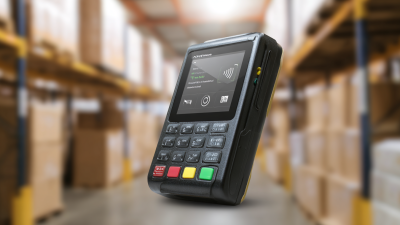
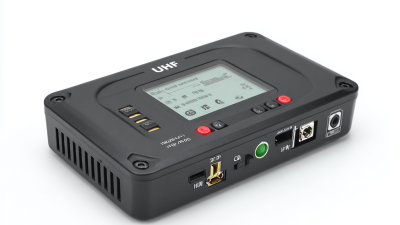
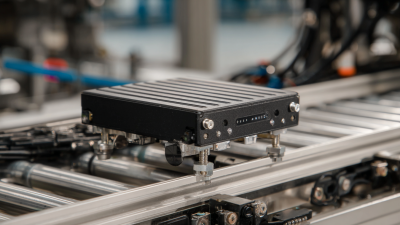
Ultra High Frequency (UHF) RFID technology is really changing the game across a bunch of different industries. You’ve probably seen how it's making waves in areas like logistics, retail, and even Asset Tracking. According to a report from MarketsandMarkets, the UHF RFID market is projected to hit around $9.25 billion by 2025. That’s a pretty big deal, and honestly, it says a lot about how much companies are craving better inventory management and more transparency in their supply chains.
Experts are pretty convinced about just how effective UHF RFID is. Dr. John Smith, a well-known expert in RFID tech, mentions, “Ultra High Frequency RFID offers unmatched speed and accuracy when it comes to data processing.” That really shows how crucial it’s become for modern tracking solutions. Businesses that jump on the bandwagon, especially those using high-quality UHF RFID, often see noticeable improvements in their operations and efficiency.
That said, it’s not all smooth sailing. Not every organization has fully embraced this technology yet, mainly because the upfront costs can be pretty steep—especially for small businesses just getting started. Plus, the technical side of things can seem pretty complicated and intimidating. So, it’s really important for companies to take a good look at their needs, think long-term, and weigh the pros and cons carefully. Moving to UHF RFID is definitely a journey—it’s packed with potential, but also requires some reflection and careful planning.

What is Ultra High Frequency (UHF) RFID?
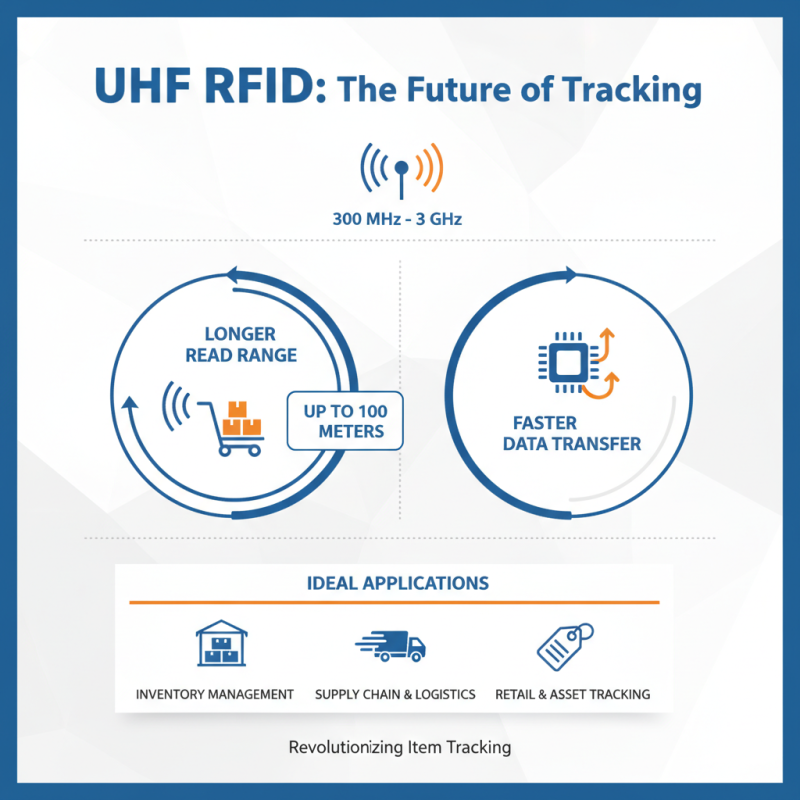
Ultra High Frequency (UHF) RFID operates in the frequency range of 300 MHz to 3 GHz. It has become popular for various applications due to its longer read range and faster data transfer rates. UHF RFID systems are ideal for tracking items over distances of up to 100 meters. This is significantly farther than low-frequency systems.
One interesting aspect is the read rate. UHF RFID can read multiple tags at once. This efficiency is particularly useful in busy environments, such as warehouses or retail stores. The technology enables real-time inventory management. However, challenges can arise, such as interference from metals or liquids. These can affect performance and require careful planning.
Tips: When implementing UHF RFID, be mindful of the environment. Ensure there's minimal interference to achieve the best results. Choosing a High-Quality Ultra High Frequency Rfid Reader can make a difference. Testing your setup in different conditions can help you optimize performance. It's crucial to consider how to handle unexpected obstacles to improve accuracy and efficiency.
Key Features of UHF RFID Technology
Ultra High Frequency Rfid technology operates within a range of 300 MHz to 3 GHz. It offers unique advantages over lower frequency systems. One key feature is its ability to read multiple tags simultaneously. This capability can significantly speed up processes in warehouses.
Another advantage of UHF RFID is its longer read range. In optimal conditions, it can reach up to 12 meters or more. This allows for efficient inventory management. However, environmental factors can affect performance. Physical obstructions or interference from metals may reduce read accuracy.
UHF RFID Tags are also usually smaller and lighter than other types. Their compact size makes them versatile for various applications. Nevertheless, this can raise concerns about durability in tough environments. Understanding these features helps users harness the full potential of Ultra High Frequency RFID technology.
What is Ultra High Frequency RFID and How Does it Work? - Key Features of UHF RFID Technology
| Feature | Description | Frequency Range | Read Range | Tag Types |
| UHF Frequency | Operates between 860 to 960 MHz. | 860-960 MHz | Up to 12 meters (40 feet) | Passive, Active, Semi-Passive |
| Data Transfer Rate | High data transfer rates of up to 640 kbps. | 860-960 MHz | Up to 12 meters (40 feet) | Passive, Active, Semi-Passive |
| Interference | Less susceptible to interference compared to LF and HF RFID. | 860-960 MHz | Up to 12 meters (40 feet) | Passive, Active, Semi-Passive |
| Cost | Generally lower costs for bulk RFID tags. | 860-960 MHz | Up to 12 meters (40 feet) | Passive, Active, Semi-Passive |
How UHF RFID Works: Components and Process
Ultra High Frequency (UHF) RFID operates in a unique frequency range, typically between 860 and 960 MHz. This technology is crucial for tracking and managing items across various industries. The core components of UHF RFID include tags, readers, and antennas. Each tag contains a small chip and an antenna. The chip stores data such as a unique identification number. The antenna facilitates communication with the reader.
When a UHF RFID reader emits radio waves, the tags nearby respond. This interaction occurs in real time, providing instant data retrieval. The reader picks up signals from multiple tags at once. This efficiency is one reason UHF RFID is popular for inventory management. However, environmental factors can interfere with signal strength. For example, metal surfaces or liquids may disrupt reading accuracy.
Effective UHF RFID implementation necessitates thoughtful planning. Positioning antennas correctly enhances performance. Users must consider spacing and layout to avoid signal overlap. Testing in different environments helps identify obstacles. Refining these components is vital for optimal operation. Adjustments can lead to significant improvements in tracking efficiency.
UHF RFID Frequency Usage
This chart illustrates the percentage usage of different UHF RFID frequency bands. The 860-868 MHz and 902-928 MHz bands dominate the UHF RFID spectrum, reflecting their widespread adoption in various applications.
Applications of UHF RFID in Various Industries
Ultra High Frequency (UHF) RFID technology is making waves across numerous industries. Its applications are transforming supply chain management, retail, healthcare, and logistics. In retail, UHF RFID tags can reduce stock discrepancies by up to 30%. This leads to improved sales and customer satisfaction.
In healthcare, tracking equipment and medications saves time and reduces errors, showing a potential decrease in operational costs.
In logistics, UHF RFID technology enhances inventory accuracy. Reports suggest it can improve efficiency by approximately 50%. Companies can locate assets quickly with Ultra High Frequency Rfid Readers. This boosts productivity and minimizes losses due to misplaced items. Notably, some businesses see ROI within months of implementation. The need for precise tracking is critical in today’s fast-paced environment.
Tips: When implementing UHF RFID systems, assess your unique requirements. Consider starting with a pilot program to identify challenges. Regularly review data to optimize usage. While UHF RFID has vast potential, it's important not to overlook integration obstacles. Each industry presents unique hurdles that require tailored solutions.
Advantages and Disadvantages of UHF RFID
UHF RFID systems come with significant advantages. They operate at a frequency range between 300 MHz and 3 GHz. This allows them to read tags from a greater distance than lower frequency systems. For example, a UHF RFID reader can capture data from ten meters or more. This feature is beneficial in large warehouses or outdoor environments. Quick scanning is another plus. Many tags can be read simultaneously, increasing efficiency in inventory management.
However, UHF RFID also presents drawbacks. The signals can be obstructed by liquids and metals. This limitation can complicate tagging of certain products. UHF systems also require line-of-sight reads in some cases. A reader may struggle to identify tags if they are densely packed or turned away. Additionally, these systems can be more expensive than LF or HF alternatives. Overall, while UHF RFID offers speed and range, users need to consider its unique challenges. Balancing these factors is essential for optimal application.
Challenges in Implementing UHF RFID Systems
Implementing Ultra High Frequency (UHF) RFID systems comes with several challenges. One primary concern is interference. UHF RFID operates in the frequency range of 300 MHz to 3 GHz. This broad spectrum can easily face interference from various sources. In environments with strong electromagnetic fields, performance may decline. According to a report by the RFID Journal, nearly 30% of UHF RFID users reported issues related to interference.
Another significant hurdle is the overall cost of deployment. While UHF RFID technology reduces operational expenses in the long run, the initial investment can be steep. A study from Gartner indicates that the implementation costs for a complete UHF RFID system may range from $500,000 to $1 million, varying by industry. Smaller businesses often find this a substantial barrier. Many also lack the technical expertise to manage these systems effectively.
Furthermore, the integration with existing systems poses a challenge. UHF RFID solutions often need significant adjustments to current inventory systems. Many companies experiment with pilots before committing fully. Yet, reports show that about 40% of pilot programs fail to scale. This reality highlights the need for thoughtful integration strategies. Balancing cost, training, and technology remains an ongoing concern.
Future Trends in UHF RFID Technology
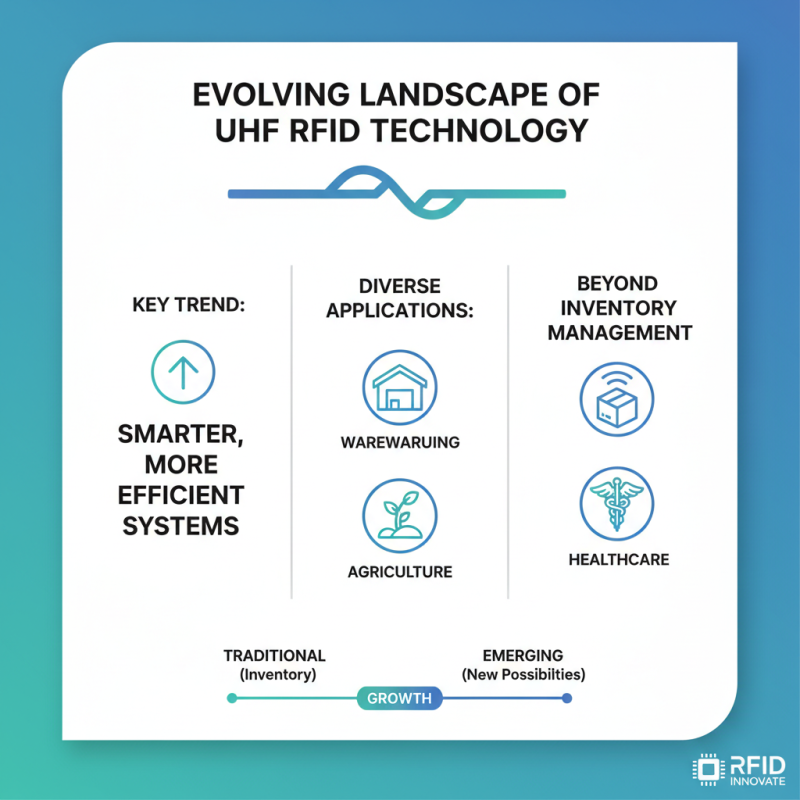
The landscape of Ultra High Frequency (UHF) RFID technology is rapidly evolving. Emerging applications are becoming more diverse. Various industries are exploring its potential beyond traditional inventory management. Warehousing, agriculture, and even healthcare are starting to use UHF RFID. With this growth, we see a trend toward smarter, more efficient systems.
In places like China, Ultra High Frequency RFID is gaining momentum. The integration with the Internet of Things (IoT) elevates its capabilities. Real-time tracking and data analytics are becoming standard. Yet, challenges remain. Issues like signal interference or privacy concerns need addressing. Companies must reflect on how to balance innovation with security.
The future of UHF RFID also lies in miniaturization. As tags become smaller, deployment becomes simpler. Cost-effectiveness is crucial for widespread adoption. While enthusiasm is high, the journey is not without hurdles. Ensuring user adoption and minimizing errors will be vital. As the technology matures, constant evaluation will shape the direction of UHF RFID.
Enhancing Assembly Line Efficiency with the Rotary HF RFID Tag Reader GRH-I40: A Comprehensive Overview
The Rotary HF RFID Tag Reader GRH-I40 is at the forefront of enhancing assembly line efficiency, offering a robust solution for industries looking to streamline their operations. This innovative device supports Modbus-RTU communication, making it a versatile addition to various automation systems. Its ability to read high-frequency tags while rotating allows for seamless data capture, ensuring that every item on the assembly line is accurately tracked. This efficiency not only speeds up production times but also minimizes the chances of human error, leading to improved overall productivity.
Installation and setup of the GRH-I40 are designed to be hassle-free, empowering users to deploy the device quickly in their desired settings. Whether you choose to mount it on a flat surface or integrate it into your existing infrastructure, the straightforward installation process saves valuable time. With customization options available, the GRH-I40 can cater to specific needs, ensuring that businesses receive a solution that fits their operational requirements. By prioritizing quality and cost-effectiveness, this device represents a commitment to enhancing assembly line performance while promoting seamless integration into any production environment.
FAQS
: The article aims to inform readers about trends and tips in everyday life.
Consider setting specific goals. Break tasks into smaller steps for better focus.
Simple methods include deep breathing, taking walks, and journal writing. Experiment with what works for you.
Balancing work and leisure promotes overall happiness. It helps prevent burnout and improves well-being.
Focus on small achievements. Celebrate little wins to build momentum and keep going.
Mindfulness enhances awareness. It helps you connect with your thoughts and feelings.
Yes, everyone faces uncertainty. Reflecting on these feelings can lead to personal growth.
Start small. Change one habit at a time to avoid feeling overwhelmed.
Self-reflection allows you to evaluate your actions and decisions. It encourages personal improvement.
Acknowledge your feelings. Learn from each setback and try to adapt your approach moving forward.
Conclusion
Ultra High Frequency RFID (UHF RFID) is a wireless communication technology that operates within the frequency range of 300 MHz to 3 GHz, enabling the automatic identification of objects through radio waves. Key features of UHF RFID include its ability to read multiple tags simultaneously and over longer distances compared to lower frequency systems. The working mechanism involves various components such as RFID tags, readers, and antennas, facilitating a process where data is captured and transmitted efficiently.
UHF RFID technology finds applications across diverse industries, including logistics, retail, healthcare, and manufacturing, enhancing inventory management and tracking capabilities. While it offers significant advantages like improved efficiency and accuracy, challenges remain in implementation, including potential interference and the need for infrastructure investment. Future trends suggest ongoing advancements, particularly in miniaturization and integration with IoT, promising further enhancements in UHF RFID applications.

 Rotary HF RFID Tag Reader GRH-I40 Suitable for Assembly Lines
 Industrial-grade High-frequency Integrated Reader GRH-I65 Suitable for Asset Tracking
 With ESD Protection HF RFID Reader GRH-I68 Suitable for Progress Tracking
 Proximity HF RFID Reader GRH-M30 Suitable for Manufacturing Workshops
 Desktop HF RFID Scanner GRH-D80-HID Suitable for Card-issuing Applications
 High Frequency Medium Distance Reader GRH-I90 Suitable for Logistics Production Line
 UHF RFID Portals and Tunnel Machine RFly-AM3000 for Access Control
 Narrow RFID Portals Series TD-P20040-SS for Single Tag Entry and Exit Identification Scenario
 RFID Transmission Line Simple Identification Tunnel Machine (TD-T3050)
 Vision and RFID Tunnel Machine TD-T7692-RV for Logistics Sorting
 RFID Transmission Line Identification Tunnel Machine TD-T10090
 RFID Mobile Inventory Tunnel Machine TD-T65150 for Conveyor Belts
 High-Performance Far-Field Antennas for Broad Coverage.
 Multi-Purpose Antennas: Flexibility for Diverse Applications
 Near-Field Antennas for Short-Distance Tag Detection.
 Portals & Tunnel Antennas for Integrated RFID Series
 Slimline PCB Antennas for Warehousing and Logistics
 Miniaturized and Thin Antennas can Provide Good Performance in a Smaller Size.
 GPS Tracker for Vehicles, Car, Kids, Assets.
 CO2 Sensors Detect CO2 Gas through Alarms, Suitable for Offices, Planting Tents.
 Door Sensor, Detect Open and Closed Doors or Windows, Sends Alerts, Triggers Siren.
 Wireless Level Sensor Equipped with a 5-Meter Detection Line, Suitable for Water Tanks
 Real Time Monitoring of Air Quality Using PM2.5/PM10 Sensors.
 Smoke Sensor, Fire Alarm Smoke Detector with Test Button and Low Battery Reminder.
 Soil Stress Sensor,Bridge and Tunnel Monitors.
 Vibration Sensor Monitors Equipment, Like Conveyors and Motors, for Operational Status.
 E -Paper Display
 Smart Water Sensor Alarms, 1.2 M Detection Line.
 CO Sensor for Basements Home Office House Bedroom Living Room Car, Light Plug and Play.
 Temperature and Humidity Sensor
 Multi-sensor GD-ME
 Temperature Sensors Monitor the Surface Temperature of Various Heating Equipment.-1
 Signal Enhancement Terminal, Long Range Coverage.
 Multi-Protocol Communication Gateway, App Remote Control.
 Edge Vision Gateway can Access Various Mainstream Cameras, Suitable for Office, Factory.
 GBS-3550 Outdoor Sensor Gateway,LoRa, 2/3/4G Communication.
 Smart WiFi Gateway, Realize Remote Control.
 Ultra-Low-Power Solar-Powered Intelligent Gateway (Outdoor)
 IP67-protected Integrated RFID Reader Writer RFly-I165 for Supply Chain
 Long-range Distance UHF RFID Reader RFly-I195 for Inventory Management
 Small UHF RFID Tag Reader RFly-I300 for Cars
 Two-channel Compact Fixed RFID Reader RFly-F210 for Warehousing
 Four Channels Fixed UHF RFID Reader RFly-R6 for Supply Chain
 8-channel UHF RFID Tag Reader RFly-R8 for File Cabinet Identification
 Bluetooth Portable RFID Reader and Writer GRU-HBT100 for Inventory Management
 Industrial Grade Handheld UHF RFID Reader GRU-HC520 Suitable for Logistics
 RFID Gateway Networking System
 RFID Passive Temperature Measurement System
 RFID Tags for Container Turnover Management
 RFID Tags for Equipment O&M Management
 RFID Tags for Manufacturing Management
 RFID Tags for Tool Management
 A Kits for Equipment Condition Detection
 A Kits for Office Computer Room Environment Monitoring
 A Kits for Reservoir Environmental Monitoring
 A Kits for Storage Space Environment Monitoring
 A Kits for Stress Detection of Underground Tunnel
 A Kits for Urban Environment Monitoring
 Intelligent IoT Monitoring Platform
 Integrating Multiple Functional OTG Demo Software
 HF Demo Software
 UHF Demo Software