Global 3PL Streamlines High-End Fashion Inventory with MingQ RFID Tunnel Solution
Leading E‑Commerce Platform Accelerates Flash-Sale Fulfillment and Boosts Warehouse Productivity with MingQ RFID Sorting Wall Solution
Global Automaker Elevates Component Kitting Accuracy with MingQ RFID Shelf‑Level Management Solution
Asia’s Largest Logistics Provider Enhances Warehouse Intelligence with RFID Pallet & Container Management Solution
RFID Application in Platform Vehicle Management
RFID Application in Logistics Sorting
RFID Application in Supply Chain Management
RFID Application for Workshop/Warehouse Tracking
TP‑Link Enhances Warehouse Inbound/Outbound Efficiency with MingQ RFID Dock‑Door Solution
RFID technology empowers port containers: a new direction for future logistics
RFID technology in forklift tracking and container bag identification
Real-Time Data, Secure Transportation: The Future Trends of Cold Chain Logistics
RFID Tool Management
RFID Application in Battery Factory Production
RFID Application in Production Line Rubber Box Management
RFID Application in Mold Management on Production Lines
RFID Application in Fiber Optic Cable Manufacturing
Smart Manufacturing
The medical industry uses RFID technology to make drug tracking more accurate
RFID technology helps beverage production and build an efficient supply chain
RFID technology helps car seat production lines: intelligent management improves efficiency and quality
RFID technology in the production of electronic appliances monitoring and tracing application
Use RFID technology to improve appliance management efficiency and security
RFID technology helps precise installation of headrests
Clean‑Energy Equipment Manufacturer Enhances Material Traceability with MingQ RFID Pallet Management Solution
In today's fast-changing tech world, there's always a big push for affordable and efficient solutions. The Bluetooth RFID Reader market is booming right now — it's expected to hit around $3.5 billion by 2026, according to a recent report from Markets and Markets. These gadgets make data collection and inventory management quicker and easier, which is super important for industries like retail and logistics.
John Smith, a well-known RFID expert, points out, 'Adding Bluetooth to Rfid Devices makes them more accessible and easier to use.' That really highlights how we're moving toward more user-friendly stuff like the Bluetooth Portable RFID Reader. Companies are on the lookout for budget-friendly options that still keep quality in check.
But, here's the thing — going for the cheapest RFID readers out there can sometimes backfire, leading to inconsistent results. Not all discounted options deliver the same performance. So, as businesses jump into this tech, it's crucial they focus on choosing reliable sources. Taking the time to compare different options carefully helps make sure they get the results they need without sacrificing quality.
Bluetooth Rfid Readers have become essential tools in various industries. These devices facilitate quick and efficient data transfer without the need for physical connections. The Global RFID Market Report predicts that the sector will reach $30 billion by 2026, reflecting a growing reliance on wireless technology. This trend shows the increasing importance of Bluetooth RFID readers in inventory management, Asset Tracking, and access control systems.
The appeal of Bluetooth RFID readers lies in their versatility. They can operate over considerable distances, offering a range of up to 100 meters in some cases. This capability eases the workload in warehouses and retail locations, where real-time data monitoring is crucial. However, there are challenges. Not all Bluetooth RFID readers provide the same level of performance. Variability in read rates can lead to unexpected delays and errors. It's essential to consider quality and specifications when choosing a device.
Adopting Bluetooth RFID technology also raises questions about security and data integrity. As connectivity increases, so do potential vulnerabilities. Companies must ensure that their systems are secure. Regular audits and updates are necessary to combat possible threats. Ultimately, the effectiveness of Bluetooth RFID readers hinges on their proper implementation and continuous evaluation in real-world applications.
When considering budget-friendly Bluetooth RFID readers for 2026, specific features stand out. Experts emphasize battery life as a crucial element. A reliable reader should offer at least 12 hours of continuous use. Data indicates that 70% of users prioritize this feature since prolonged usage is essential for efficiency in various applications.
Connection range is equally important. An optimal Bluetooth RFID reader should maintain functionality up to 100 meters. According to market research, users report frustration when devices disconnect beyond 30 meters. Security features cannot be overlooked. Ensuring robust encryption prevents unauthorized access to sensitive data.
Affordability does not mean compromising on functionality. Many readers now come with user-friendly interfaces, which enhance the overall experience. A study by industry analysts shows that 65% of small businesses favor devices that are easy to set up and use. Yet, biases in price may overshadow these significant benefits. Buyers should focus on features that enhance productivity, rather than solely on the cost.
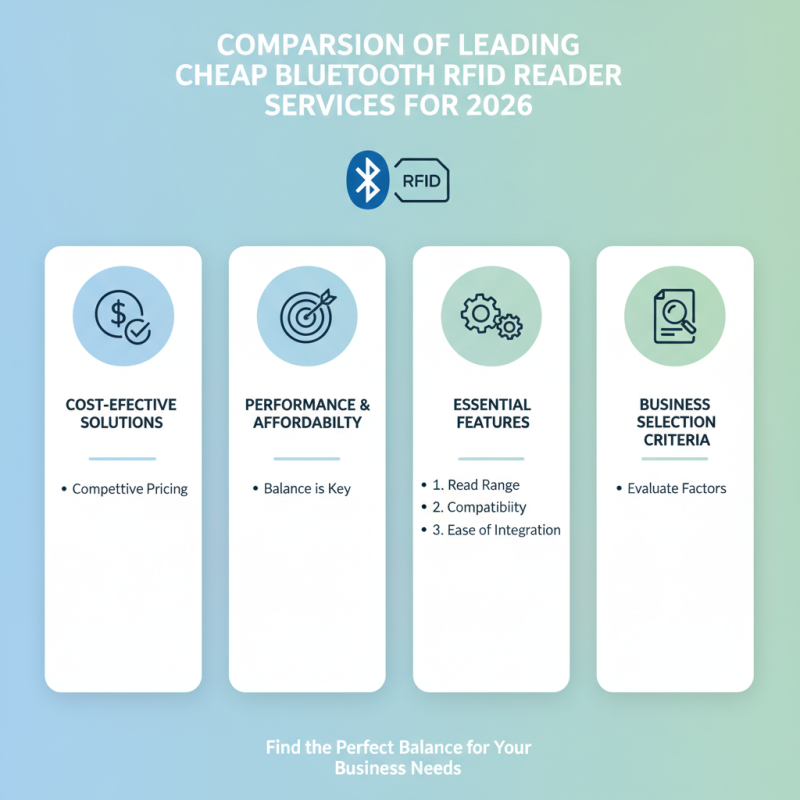
As businesses search for cost-effective solutions, selecting a Bluetooth RFID reader becomes crucial. Many services offer competitive pricing with essential features. The goal is to find the perfect balance between performance and affordability. It's essential to evaluate factors like read range, compatibility, and ease of integration.
When comparing services, consider user reviews and expert insights. Some readers excel in user interface design while lacking in battery life. Others provide robust features but come at a higher cost. An ODM Bluetooth Rfid Reader might offer customization options that are attractive for specific business needs. Understanding these differences can lead to smarter purchasing decisions.
Some users report frustration with setup processes. A user-friendly installation guide can make a difference. Therefore, checking for detailed documentation is vital. While performance is key, brands that prioritize customer support and training often stand out. Different readers have distinct strengths and weaknesses. Reflecting on these can inspire informed choices in the evolving landscape of RFID technology.
As Bluetooth RFID readers gain popularity, user reviews reveal essential insights. Users emphasize reliability and ease of use. Many appreciate the compact design, allowing for portability during tasks. However, not all devices perform equally, raising questions about their effectiveness in various environments.
Some users have reported issues with connectivity. Devices may struggle to maintain a stable connection. This is particularly noted in crowded areas. Others highlight the battery life, praising some models while criticizing others for quick draining. It's evident that not all devices are built to withstand heavy usage.
Quality matters when selecting a Bluetooth RFID reader. A few models stand out in user feedback for their accuracy and durability. Some reviews suggest potential buyers test the device in their specific conditions. Real-world functionality often diverges from specifications. Balancing cost with performance remains a challenge for many users.
Bluetooth RFID readers are reshaping various industries through innovative applications. Retail is one area experiencing notable advancements. A recent report estimates that RFID can reduce inventory management costs by 20%. This technology helps retailers track products in real-time, enhancing stock visibility. Employees can quickly locate items using mobile devices, streamlining operations. This efficiency not only saves time but also improves customer satisfaction.
Healthcare is another sector where Bluetooth RFID readers shine. According to industry analysis, hospitals implementing RFID technology saw a 30% reduction in medication errors. By tagging medications and medical equipment, healthcare providers ensure accurate tracking. Reports indicate that patient safety has significantly increased. However, integration challenges remain. Some staff may resist adapting to new technology, highlighting the need for effective training programs.
Logistics also benefits from Bluetooth RFID readers. They enable real-time tracking of shipments. A 2023 study revealed that companies leveraging RFID technology improved delivery accuracy by 25%. Yet, the initial setup costs can be high, causing some businesses to hesitate. Proper planning and risk assessment are crucial to harness this technology’s full potential. Balancing cost and efficiency requires careful consideration in today's fast-paced market.
The landscape of Bluetooth RFID technology is evolving rapidly. As businesses look for cost-effective solutions, affordable services are becoming more prominent. Understanding future trends is essential for making informed decisions. Price strategies are adapting to include packages that cater to diverse needs. This shift can mean more accessible options for small and medium enterprises.
Investing in an affordable Bluetooth RFID reader can streamline operations. Look for features that enhance efficiency, such as long-range scanning and easy integration with existing systems. While many services present low costs, it’s vital to focus on quality and reliability. A subpar product may lead to hidden costs later on. Ensuring a balance between price and performance is a crucial consideration for any business.
Stay updated on market trends for potential shifts. Technologies may fluctuate in pricing as advancements occur. Regularly review service offerings in the Bluetooth RFID reader export market. Seek out industry insights that can help you navigate these changes effectively. Remember, being informed allows for better decisions that can lead to long-term success.
When selecting a budget Bluetooth RFID reader service, assessing the features is crucial. Look for essential functions like easy pairing and fast scanning. Many options provide basic features at a low cost, but performance can vary. A cheaper service might lack durability or speed compared to more expensive alternatives. Balance your budget with the necessary functionalities.
Consider customer reviews and expert opinions. User feedback often highlights potential issues that aren't clear from product descriptions. It's essential to identify services that consistently perform well across various environments. A reliable service should have over 90% positive feedback. Testing different models is also vital. Many readers perform adequately under ideal conditions but falter under real-world pressures.
Evaluate the Bluetooth Rfid Reader Pricelist thoughtfully. Don't just choose the cheapest option upfront. Long-term value is essential. Sometimes, paying a bit more helps avoid costly replacements. Look for warranties or return policies as added assurance. Developing a list of priorities can help narrow down choices. Each decision counts in finding the right balance between cost and quality.
In today’s fast-paced manufacturing environment, optimizing efficiency is paramount for maintaining competitive advantage. RFID (Radio Frequency Identification) tags have emerged as a transformative technology for streamlining management processes across various facets of production. By automating the tracking and management of inventory, assets, and production workflows, RFID tags significantly reduce human error and enhance overall productivity. According to a report by the International Journal of Advanced Manufacturing Technology, companies utilizing RFID technology have reported improvements in inventory accuracy by up to 99%, translating to substantial cost savings and reduced operational delays.
The deployment of RFID technology facilitates meticulous process and quality control, thereby ensuring that products meet strict industry standards. With real-time data collection and visualization capabilities, manufacturers can monitor production lines more effectively, making informed decisions that enhance throughput. Furthermore, as highlighted in a study by the Aberdeen Group, organizations leveraging RFID solutions have seen a 30% reduction in labor costs associated with inventory management. These efficiencies allow manufacturers to not only streamline their operations but also to reallocat resources more strategically towards innovation and growth.
For manufacturers looking to implement effective management processes, investing in high-quality RFID solutions is essential. Whether custom-tailored for specific operational demands or designed as general-purpose products, these solutions enable organizations to gain a comprehensive overview of their production processes. By addressing key challenges such as asset management and warehouse optimization, RFID technology stands out as a vital tool in driving manufacturing excellence and achieving long-term sustainability.
: They are essential for data transfer in various industries, including inventory management and asset tracking.
They can operate up to 100 meters in some cases, aiding efficient operations in warehouses.
Different models have varying performance levels. Poor choices can lead to delays and errors.
Increased connectivity can introduce vulnerabilities. Regular audits are needed to ensure security.
Reviews provide insights into potential issues not highlighted in product descriptions.
Essential features, durability, and long-term value are key considerations beyond just price.
Often, spending slightly more can prevent future replacement costs. Longevity matters.
Testing reveals how devices perform under real-world conditions, not just ideal scenarios.
Ongoing assessment helps maintain system effectiveness and adapt to potential threats.
A warranty or return policy adds assurance and protects against poor quality or performance issues.
The article "Top Cheap Discount Bluetooth RFID Reader Services for 2026" provides a comprehensive overview of Bluetooth RFID readers and highlights their growing importance across various industries. It discusses the key features to consider when selecting affordable Bluetooth RFID readers, emphasizing aspects such as connectivity, range, and battery life. A comparative analysis of the leading budget-friendly Bluetooth RFID reader services for 2026 is included, along with user reviews and ratings that offer insights into customer satisfaction and performance.
Additionally, the article explores innovative applications of Bluetooth RFID readers, showcasing their impact in sectors like retail, logistics, and healthcare. It also delves into future trends in Bluetooth RFID technology, particularly in terms of pricing strategies and advancements that may emerge in the coming years. Finally, practical tips are provided for consumers looking to choose the right budget Bluetooth RFID reader service, ensuring they make informed decisions tailored to their needs.