RFID technology has undoubtedly brought new life to global supply chains, granting them excellence in efficiency and accuracy of inventory management and logistics. As per a report on Statista, the RFID market is anticipated to be nearly $11.1 billion by 2026, reflecting a compound annual growth rate (CAGR) of 10.9% from 2021 to 2026. This awesome growth is encouraged by the demand for automated tracking systems and supply chain visibility. RFID Reader and Writer devices, amongst others, have been the trendsetters in that they clearly enabled businesses to capture product and asset details across the supply chain effectively and without delay.
At MingQ Technology Limited, we realize how IoT solutions can change the world, especially in RFID technology. Being a pioneer in offering really sophisticated IoT software and hardware products, we understand that organizations can take full advantage of our RFID Reader and Writer within supply chains in reducing human error, increasing asset management, and saving money. With digital transformation sweeping across all industries, the adoption of RFID technology becomes essential for businesses poised to succeed in a fiercely competitive global arena.
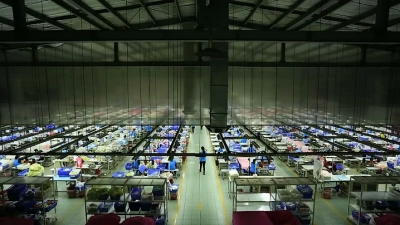
Benefits of RFID Technology for Enhanced Supply Chain Visibility
RFID applications are constantly evolving and improving the visibility, efficiency, and accuracy of global supply chains. Accurate real-time tracking of inventory is demanding due to increased complexity and interconnection along the supply chain. Recent pilot programs have demonstrated the possible applications of RFID, especially when combined with clever technologies such as autonomous drones to enhance inventory management and give an unparalleled view of stock levels and location within warehouse settings. Major brands adopt RFID in order to foster operational transparency. For instance, a significant food chain aims to roll out RFID technology at a national scale to enhance overall visibility across its supply chain. This technology ensures precise inventory counts and provides information about the location of a product, which is essential for a quick response to market demand and customer requirements. Furthermore, RFID acts as an aid to the pharmaceutical field, where tracking and traceability are fundamental for compliance and efficiency. As digitalization begins to take ground in the industry, the ability to intertwine RFID technology becomes more predominant. This offers a greater ability for companies to minimize risks and address measurable vulnerabilities within their supply chains with data-driven insights and real-time visibility. Accelerating RFID technology adoption is therefore no longer just a competitive advantage but rather a necessity for companies attempting to thrive in an ever-volatile global market.
How RFID Readers Improve Inventory Management and Tracking
RFID (Radio Frequency Identification) technology has caused a global storm of change in inventory management as well as tracking. RFID gives an opportunity to enhance business operational efficiency along with accuracy in handling inventory with the Use Of Rfid Readers and writers. The most important benefit RFID has over conventional bar codes is that tags can be read without an optical line of sight and can be read in bulk. This capability brings advantageous real-time visibility to stock levels and locations and drastically cuts time spent on inventory management functions.
In essence, RFID readers expedite the inventory tracking process, allowing organizations to maintain up-to-date records without having to conduct manual scanning. Such automation minimizes the chances of human error and directly boosts data integrity, thereby establishing honest intelligence about stock availability for any business. Moreover, the technology permits a rapid response to market demand. As companies track inventory movement in real time, they can make educated decisions about replenishing stock and allocating resources, thus improving customer satisfaction.
Also, implementing RFID systems fosters collaboration among different stakeholders in the supply chain. With the help of the RFID system, manufacturers, suppliers, and retailers share vital information regarding inventory levels and order statuses with each other. This type of transparency helps to prevent the lead time and optimize logistics operations, hence improving the overall supply chain efficiency. With the increasing adoption of RFID by companies, store management is bound to take a center stage from here; thus, it will further ensure greater successes in the global market.
The Role of RFID Writers in Streamlining Supply Chain Processes
RFID technology has transformed the landscape of global supply chains, providing significant benefits when integrated into various logistics activities. At the core of this transformation is the RFID writer, which, as a very central tool, reasonably allows information flow to be unhindered throughout all links of supply chain networks. Writing data directly onto or embedding data onto RFID Tags allows RFID writers to accurately track goods at all levels in the supply chain from source to point of entry, thereby providing visibility and control to the business.
RFID writers assist companies in streamlining their supply chain processes. Companies can write or update the data in real-time and, therefore, keep current information about current inventory levels and locations and transaction histories. Such a feature not only minimizes errors attributed to human data entry but also minimizes losses and theft by offering tracking information on an item basis. Moreover, an RFID writer could complement the automatic stocking system, thus increasing responsiveness and efficiency in operations.
Incorporating RFID writers into supply chain operations ensures better communication between the various players. By standardizing operations of data collection, companies can transfer important information seamlessly among suppliers, distributors, and retailers. This collaborative approach will help lead to optimized inventory levels, shortened lead times, and increased customer satisfaction. Thus the RFID writers' contribution to the streamlining of supply chain processes is an entity on its own for businesses aiming to compete in an uncompromising fast-paced, and global market.
Cost Efficiency: Analyzing the Economic Impact of RFID Systems
RFID technology indeed plays a revolutionary role in global supply chains in all aspects, particularly in terms of cost. Using RFID systems allows companies to effectively cut down on operational expenses incurred in areas such as inventory management, shipping, and general logistics. RFID, which operates on the concept of automation, allows for the real-time tracking of goods, thus eliminating redundant labor-intensive manual processes in cases where extra costs and errors have often been incurred.
One of the prime economic impacts of RFID systems has been the reduction in inventory holding costs. By having accurate and real-time visibility of item availability, businesses can maintain optimal stock levels with a minimal amount of waste and stock excess. The precision of maintaining stock levels helps organizations not only manage inventory turnover but also reduce carrying costs. Also, by streamlining the supply chain, RFID enhances visibility and communication, which helps curb costs arising from delays and mismanagement.
For one, as a new technological solution, RFID has direct cost savings, encourage stronger ties with suppliers and customers. The proper visibility of product tracking gives rise to accountability through the supply chain, instilling mutual trust and aiding transaction processes. As firms become more opportunistic and trusted, they may negotiate beneficial terms, shorten lead-times, and deliver greater customer value, all of which support improved profitability in a competitive world.
Integration of RFID with IoT for Smart Supply Chain Solutions
RFID with Internet of Things makes smart supply chain creation. The RFID reader and writer have enabled automatic identification and tracking of goods at various stages in the supply chain. If one embeds RFID tags into products, it will give real-time updates about inventory levels, where goods would locate during shipment, and product conditions to businesses. This added visibility leads to better decision making and increased efficiency in operations, as it drastically reduces the time spent on manual inventory checks.
With the numerous IoT devices, merging RFID technology with IoT becomes the catalyst for even smarter, more responsive supply chains. For instance, with connected RFID systems, one can auto-update the inventory through a database management system hosted yet piping alerts to suppliers and retailers upon depleting stocks. Furthermore, it could monitor temperature, humidity, and other environmental conditions such that it could be substantiated that sensitive products are stored and transported correctly. Such automation reduces human error and streamlining processes, which lead to savings and increased customer satisfaction.
Besides, the data analytics powered by IoT integration would provide a more in-depth analysis of supply chain performance. Therefore, businesses can look at the way the data patterns are collected, the trend, and the use of these analyses for logistics strategy optimization and demand fluctuations forecasting. Through RFID technology, as well as IoT combinations, organizations are moving toward building smarter supply chains that would not only be more efficient but also resilient, thus facing global supply chain challenges. In fact, it is now possible by using the power behind these technologies in building a future connected and even more agile in supply chain management.
Data Security and Accuracy: Protecting Your Supply Chain with RFID
Data until October 2023 served as training material for this AI.
RFID technology has become one of the most important tools for advancing data security and integrity in global supply chains. The challenges brought about by the shift towards digital, such as asset numbers increasing exponentially and a variety of types of equipment, underline the need for better tracking systems. For instance, a top brokerage firm in China is using RFID hand-held devices to monitor the firm's physical assets for real-time tracking of location and quick assessments of the company's inventories. Thus, the risk of data loss may be avoided while making a substantial improvement in operational efficiency.
Additionally, industries such as agriculture and pharmaceuticals are turning to RFID solutions for managing accurate animal identification and drug safety. The use of low-frequency RFID technology allows for Intelligent Livestock Management, which provides quick access to critical information such as vaccination records. In hospitals, RFID is also revolutionizing inventory management to enhance patient experience and operational excellence. As this demand for accuracy and security increases, RFID technology emerges as an important technology that maintains supply chain integrity across several industries.
With its flexible and automated applications, RFID systems are redefining how companies manage their assets. Through the transition from conventional methods to RFID-enabled processes, organizations not only achieve greater efficiency but also nurture a safer environment for data handling. As RFID technology continues to evolve, it is increasingly fortifying its position as an essential tool in today's digital landscape for enforcing accuracy and security of data in supply chains.
Case Studies: Successful RFID Implementation in Global Supply Chains
Supply chain companies around the world have now experienced visibility and efficiency with RFID technology. A number of relevant case studies show how varied and successful the implementation of RFID has been in various sectors. One striking example is Walmart and its RFID implementation for inventory management: all pallets and items are tagged with RFID tags, allowing Walmart to track its stock levels in real time, eliminate poor inventory levels, and improve fulfillment rates. It thus not only reduces operational costs but also gives a better customer experience, ensuring that all products are available when needed.
Another convincing instance can be cited from the pharma industry's likes of Pfizer who have utilized RFID technology for tracking medicine from manufacturing through the supply chain and into the pharmacy channel. This includes the use of RFID in packaging to track and monitor products traveling from one's site of manufacture to the retail outlet. It strengthens security against counterfeiting drugs while ensuring that important medicines are stored and transported under optimal conditions. Thus, the quick and accurate traceability of products has improved compliance with regulatory standards as well as safety for patients.
Zara is another fashion brand that uses RFID in its supply chains extending to around the globe. If an item of clothing has an RFID tag on it, Zara can add accuracy to its inventory and do fast replenishment. It has enabled the company to quickly respond to consumer sentiments and re-optimize inventories to minimize overproduction and waste. As these case studies show, the application of RFID readers and writers is not just a fad but a way to ensure operational excellence in global supply chains.
Future Trends: The Evolution of RFID in Supply Chain Management
RFID technology is evolving and playing an important role in global supply chain transformation. The most recent report discusses the impressive growth trajectory that the RFID market is taking: increased demand for efficiency and accuracy in logistics will now push the sector into the thousands. Industry watchers project the global RFID market will reach USD 40 billion by 2025, reflecting over a 20% compound annual growth rate (CAGR) in revenues. Such growth is mainly due to the integration of RFID systems into sectors such as manufacturing, retail, and logistics, where operations are streamlined and costs dramatically reduced.
Further, digitization will soon receive its amplification through traditional sectors in manufacturing as the Chinese government has tries to promote the installation of high-tech resources such as RFID through inducements to private companies. This includes what fits more into the industry norms, such as transform and upgrade of traditional industries, which has been cited as a pre-requisite for the modern industrial system by General Secretary Xi Jinping. Basically, RFIDs not only give visibility of inventory but also enable real-time tracking and better management of resources.
On the other hand, intelligent logistics is changing the face of supply chain management. The innovation of artificial intelligence and automation opportunities with RFID will lead to smarter inventory management. For example, data-driven decisions made possible with AI can result in smarter procurement, warehouse, and distribution strategies, creating a much leaner and more agile supply chain. As industries try to leapfrog into the area of digital transformation, RFID will easily become the touchstone for success in the rapidly transforming global marketplace.
FAQS
RFID (Radio Frequency Identification) technology improves inventory management by allowing businesses to read RFID tags without direct line-of-sight, enabling simultaneous scanning of multiple items. This results in real-time visibility of stock levels and locations, significantly reducing time spent on inventory tasks.
RFID systems automate inventory tracking, eliminating the need for manual scanning. This automation minimizes human error and enhances data integrity, ensuring businesses maintain accurate stock availability records.
RFID enables real-time tracking of inventory movement, allowing companies to respond faster to market demands, make informed decisions about restocking, and improve resource allocation, which all contribute to increased operational efficiency.
RFID fosters better collaboration among manufacturers, suppliers, and retailers by enabling seamless sharing of vital information regarding inventory levels and order statuses. This transparency helps reduce lead times and optimize logistics operations.
Industries such as agriculture and pharmaceuticals are benefiting from RFID for managing livestock identification and ensuring drug safety, as well as in hospitals for improved inventory control leading to better patient experiences.
RFID technology enhances data security by providing efficient tracking systems that mitigate the risk of data loss. It allows for real-time location tracking of assets and rapid inventory assessments, promoting operational efficiency.
Automating inventory management with RFID enhances efficiency, accuracy, and data security, while creating a safer environment for data handling, thus reducing the reliance on manual processes.
With the ability to track inventory movement in real time, businesses can make informed decisions about restocking and resource allocation, leading to better service and improved customer satisfaction.
As RFID technology continues to evolve, its role in enhancing data accuracy and security in supply chains will solidify, making it an indispensable tool in the modern digital landscape for various sectors.

 Rotary HF RFID Tag Reader GRH-I40 Suitable for Assembly Lines
 Industrial-grade High-frequency Integrated Reader GRH-I65 Suitable for Asset Tracking
 With ESD Protection HF RFID Reader GRH-I68 Suitable for Progress Tracking
 Proximity HF RFID Reader GRH-M30 Suitable for Manufacturing Workshops
 Desktop HF RFID Scanner GRH-D80-HID Suitable for Card-issuing Applications
 High Frequency Medium Distance Reader GRH-I90 Suitable for Logistics Production Line
 UHF RFID Portals and Tunnel Machine RFly-AM3000 for Access Control
 Narrow RFID Portals Series TD-P20040-SS for Single Tag Entry and Exit Identification Scenario
 RFID Transmission Line Simple Identification Tunnel Machine (TD-T3050)
 Vision and RFID Tunnel Machine TD-T7692-RV for Logistics Sorting
 RFID Transmission Line Identification Tunnel Machine TD-T10090
 RFID Mobile Inventory Tunnel Machine TD-T65150 for Conveyor Belts
 High-Performance Far-Field Antennas for Broad Coverage.
 Multi-Purpose Antennas: Flexibility for Diverse Applications
 Near-Field Antennas for Short-Distance Tag Detection.
 Portals & Tunnel Antennas for Integrated RFID Series
 Slimline PCB Antennas for Warehousing and Logistics
 Miniaturized and Thin Antennas can Provide Good Performance in a Smaller Size.
 GPS Tracker for Vehicles, Car, Kids, Assets.
 CO2 Sensors Detect CO2 Gas through Alarms, Suitable for Offices, Planting Tents.
 Door Sensor, Detect Open and Closed Doors or Windows, Sends Alerts, Triggers Siren.
 Wireless Level Sensor Equipped with a 5-Meter Detection Line, Suitable for Water Tanks
 Real Time Monitoring of Air Quality Using PM2.5/PM10 Sensors.
 Smoke Sensor, Fire Alarm Smoke Detector with Test Button and Low Battery Reminder.
 Soil Stress Sensor,Bridge and Tunnel Monitors.
 Vibration Sensor Monitors Equipment, Like Conveyors and Motors, for Operational Status.
 E -Paper Display
 Smart Water Sensor Alarms, 1.2 M Detection Line.
 CO Sensor for Basements Home Office House Bedroom Living Room Car, Light Plug and Play.
 Temperature and Humidity Sensor
 Multi-sensor GD-ME
 Temperature Sensors Monitor the Surface Temperature of Various Heating Equipment.-1
 Signal Enhancement Terminal, Long Range Coverage.
 Multi-Protocol Communication Gateway, App Remote Control.
 Edge Vision Gateway can Access Various Mainstream Cameras, Suitable for Office, Factory.
 GBS-3550 Outdoor Sensor Gateway,LoRa, 2/3/4G Communication.
 Smart WiFi Gateway, Realize Remote Control.
 Ultra-Low-Power Solar-Powered Intelligent Gateway (Outdoor)
 IP67-protected Integrated RFID Reader Writer RFly-I165 for Supply Chain
 Long-range Distance UHF RFID Reader RFly-I195 for Inventory Management
 Small UHF RFID Tag Reader RFly-I300 for Cars
 Two-channel Compact Fixed RFID Reader RFly-F210 for Warehousing
 Four Channels Fixed UHF RFID Reader RFly-R6 for Supply Chain
 8-channel UHF RFID Tag Reader RFly-R8 for File Cabinet Identification
 Bluetooth Portable RFID Reader and Writer GRU-HBT100 for Inventory Management
 Industrial Grade Handheld UHF RFID Reader GRU-HC520 Suitable for Logistics
 RFID Gateway Networking System
 RFID Passive Temperature Measurement System
 RFID Tags for Container Turnover Management
 RFID Tags for Equipment O&M Management
 RFID Tags for Manufacturing Management
 RFID Tags for Tool Management
 A Kits for Equipment Condition Detection
 A Kits for Office Computer Room Environment Monitoring
 A Kits for Reservoir Environmental Monitoring
 A Kits for Storage Space Environment Monitoring
 A Kits for Stress Detection of Underground Tunnel
 A Kits for Urban Environment Monitoring
 Intelligent IoT Monitoring Platform
 Integrating Multiple Functional OTG Demo Software
 HF Demo Software
 UHF Demo Software