In today’s fast-moving business world, staying on top of your inventory game is more important than ever if you wanna stay competitive and run things smoothly. That’s where RFID tech comes in — it’s really changing the game. With RFID, companies can make their inventory processes way more streamlined, cut down on costs, and even get more accurate data. I recently came across a report by Grand View Research, and it’s pretty mind-blowing — they’re saying the global RFID market could hit around $40.9 billion by 2026, growing at about 14.5% annually. Firms like MingQ Technology Limited are leading the charge, focusing on IoT solutions that blend RFID hardware and software to make logistics a whole lot smarter. By tapping into RFID tech, businesses can get a real-time peek at their inventory, which means better decision-making and smarter use of resources. As industries continue to evolve, jumping on the RFID bandwagon isn’t just a good idea—it’s kinda essential if you wanna keep up and stay ahead in this competitive landscape.

Understanding RFID Technology and Its Components
You know, RFID—Radio Frequency Identification—has really become a game-changer in how we manage inventory these days. At its core, it’s made up of three main parts: the reader, the tags, and the antenna. Those RFID Tags? They’ve got a tiny chip and an antenna, and they store all the info about whatever product they’re attached to. When they come close enough to an RFID reader, the reader sends out a radio signal that kicks things off—activating the tags so they can send back their info. It’s pretty cool because it takes a lot of the hassle out of tracking stuff, making inventory management way more efficient than before.
If you’re thinking about using RFID in your business, here’s a tip: make sure your tags and readers are properly aligned. And keep in mind the environment where you’re implementing this tech—things like metal surfaces or liquids can mess with the signals, so you’ll want to plan accordingly. Also, investing in good RFID software is a smart move; it can really help you manage data smoothly, do quick updates, and generate reports without breaking a sweat.
But RFID isn’t just about tracking. Its components can actually automate parts of your inventory routine, which means fewer errors and less manual work. Plus, with real-time info on stock levels, you’re able to react faster to any changes—ultimately helping you optimize your supply chain and keep things running smoothly.
The Role of RFID in Streamlining Inventory Processes
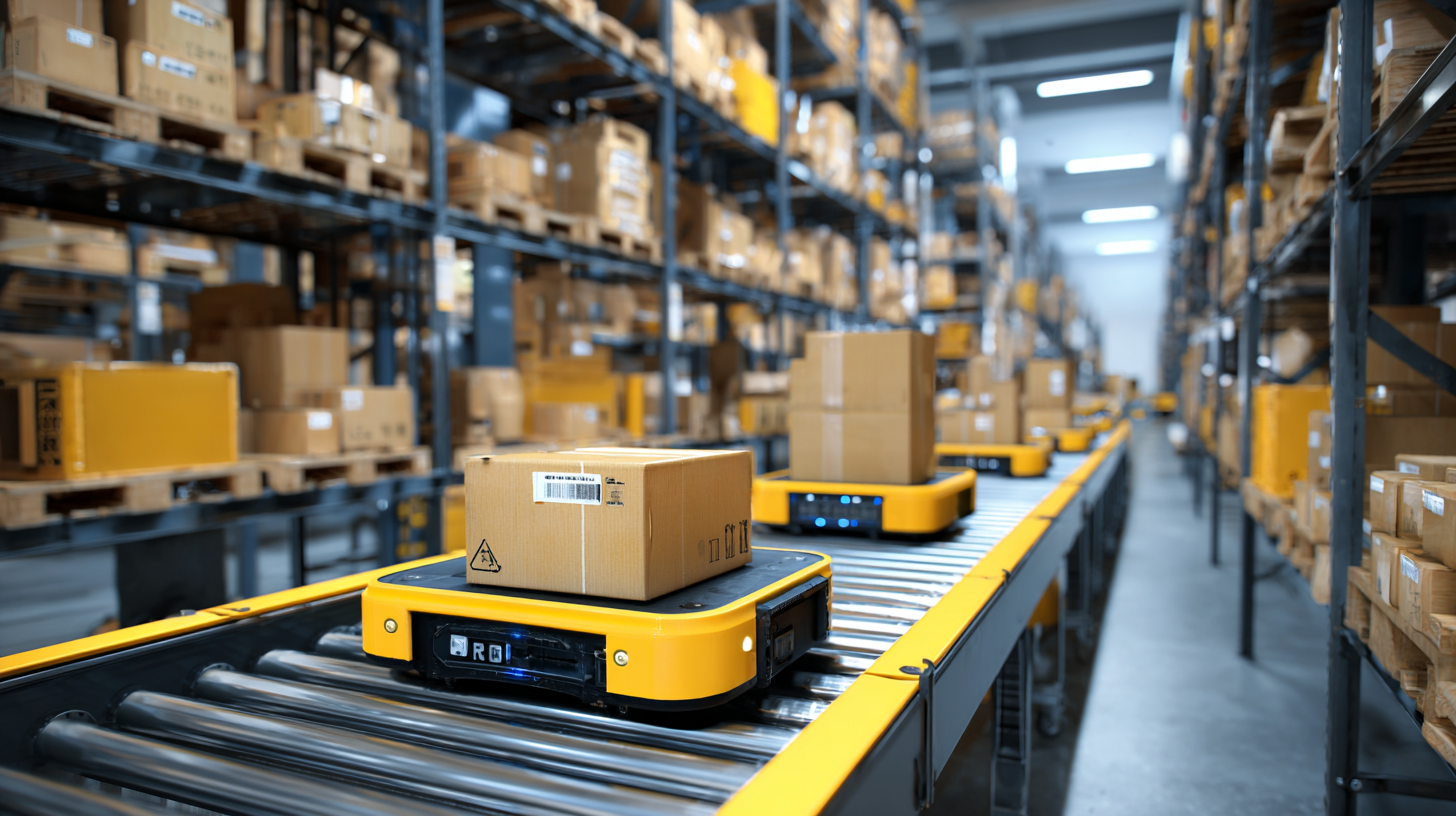
You know, RFID technology is really changing the game when it comes to managing inventory. It makes things so much smoother and more accurate across a bunch of different industries. Funny thing is, I recently read about a big children’s hospital that started using RFID to keep track of their high-value meds, and wow — they actually saved a ton of time and money! Not only does this make managing their drug inventory way more efficient, but it also cuts down on those annoying errors, which means safer treatment for the kids. Industry experts say the global market for RFID printers is expected to jump from around USD 1.85 billion in 2024 all the way up to USD 3.36 billion by 2034 — shows a real demand for smarter inventory solutions, right?

If you're thinking about jumping into RFID for your own system, a good place to start is by taking a close look at your current processes. Figure out where things could be better before diving in. For example, it’s often smart to begin with tracking your most valuable items — you’ll see some quick wins that way. Oh, and don’t forget: make sure your team gets proper training on the new tech. That really helps get everything running smoothly.
Plus, RFID is booming in supply chain and logistics too. Using RFID for tracking within the supply chain can totally automate a lot of those tricky steps, making everything run more seamlessly and giving you clear visibility of your inventory from start to finish. This kind of automation is becoming pretty much essential in today’s fast-moving markets — it lets businesses react quickly to changes, whether it’s stock running low or spikes in demand. Bottom line? Investing in RFID tech is a pretty smart move for companies looking to boost efficiency and cut costs in the long run.
Benefits of RFID for Real-Time Inventory Tracking
You know, when it comes to changing the game in inventory management, RFID tech really stands out—especially for keeping real-time tabs on stock. More and more companies are craving better visibility and transparency in their supply chains, and RFID is becoming an essential part of that. By 2024, the market for Rfid Solutions is expected to hit over$16.8 billion, and it's projected to grow at a pretty steady clip—about 12.7% annually through 2034. That’s mainly because industries are starting to see just how much easier it is to track inventory efficiently.
Having RFID-powered real-time tracking means businesses can get instant updates on what’s in stock, where it’s located, and how much is available. This kind of info helps prevent those frustrating stockouts or overstocking nightmares. Plus, it makes operations smoother and keeps customers happier because they can count on products being there when they need them.
Companies like MingQ Technology Limited are really leading the charge, offering all-in-one IoT solutions that use RFID to make inventory management way more effective. As more businesses jump on board with these new tech improvements, we’re going to see a serious boost in efficiency and overall performance—especially in areas like healthcare and retail, where getting things right quickly and accurately is a total must.
Challenges and Solutions in Implementing RFID Systems
Trying to roll out RFID systems for inventory management isn’t exactly a walk in the park; there are quite a few hurdles that need some thoughtful handling. For starters, the biggest wiggle room tends to be the cost—buying all those tags, readers, and the software—and honestly, a lot of businesses get cautious here. They don’t want to go all-in without being pretty sure it’s worth it. A good way to handle this? Maybe run some small pilot projects first. That way, you can actually see if RFID makes a difference, helping you figure out if it’s saving time and money before committing to something bigger.
Then, there’s the tricky part of fitting RFID tech into the systems you already have. Many companies are still running on older software that doesn’t play nice with RFID. That can cause all kinds of data issues and chaos. To avoid that, it’s smart to look for scalable, cloud-based solutions—they tend to integrate a lot more smoothly and give you real-time updates, making the switch feel less like a headache. And let’s not forget about training your team! Making sure everyone knows how to use the new tech properly can really speed up the whole process and make sure everyone’s on the same page.
All in all, while it’s not a simple upgrade, with some strategic planning and a bit of patience, RFID can really transform inventory management for the better.
Impact of RFID Implementation on Inventory Management
This chart illustrates the percentage improvement in various aspects of inventory management after implementing RFID systems. The data highlights the key benefits experienced by companies utilizing RFID technology.
Future Trends in RFID Development and Inventory Management
The RFID industry is really on the rise right now. It’s expected that the ultra-high frequency RFID market will hit around $762 million by 2024, and then shoot up to about $1.43 billion by 2032. That’s an average annual growth rate of roughly 8.3%, which is pretty awesome. This rapid growth shows just how much potential RFID technology has, especially when it comes to managing inventories. It’s a game-changer for making things more efficient and accurate. Even though it’s still not widely used in some key areas, there’s a lot of room for innovation and growth—so the future looks pretty exciting.
As the market for inventory tagging gear gets bigger — climbing from $3.5 billion in 2024 to an estimated $6.8 billion by 2033 — companies really need to start leveraging these new tech advancements if they want to stay ahead. Firms like MingQ Technology Limited are leading the way, offering some of the latest IoT hardware and software solutions that help organizations implement RFID stuff more smoothly. They’re also focusing on how AI and IoT can work together, which could totally change how inventory management works—making it more responsive and efficient in our fast-changing world. All in all, the future of RFID and inventory management is looking bright, full of potential to bring about some serious industry-wide improvements.
Comparing RFID with Traditional Inventory Management Methods
When it comes to managing inventory these days, switching from old-school methods to RFID tech really feels like a game-changer. You know, the kind of stuff where you’d have folks manually counting items or scanning barcodes one by one—sounds familiar, right? That process can get pretty slow and sometimes, let’s be honest, totally error-filled. According to a report by the Aberdeen Group, companies that jump on the RFID bandwagon see about a 25% cut in the labor costs for managing inventory. That’s pretty impressive, and it’s mainly because RFID systems can scan multiple tags all at once and give you real-time updates — way faster and more precise.
Adopting RFID also means you get a much clearer picture of your stock levels, which is super important for keeping your supply chain smooth sailing. A study from GS1 US points out that businesses using RFID often hit inventory accuracy rates of over 99%. Meanwhile, traditional methods often struggle to even reach 90%. That gap can lead to running out of stock or overstocking, both of which hurt your profits.
Here’s a little tip: To get the most out of RFID, take a good look at your current inventory process first. Spot where mistakes often happen and focus on those areas for the RFID setup. Plus, don’t forget—training your staff regularly is key. The better they understand the system, the more you’ll really unlock its full potential and make your inventory management way more efficient.
Optimizing Manufacturing Efficiency with Proximity HF RFID Reader GRH-M30: A Comprehensive Guide
In the evolving landscape of industrial automation, the GRH-M30 proximity HF RFID reader emerges as a powerful tool for optimizing manufacturing efficiency. This advanced reader features Modbus-RTU communication support, enabling seamless integration into existing systems. Its robust design and versatile communication interfaces make it an ideal choice for various applications, from data collection to secure access control in a manufacturing environment.
Manufacturers seeking to enhance their operational processes will find the GRH-M30 an invaluable asset. Its combination of cutting-edge technology and cost-effective solutions allows businesses to tailor implementations to their specific needs. The reader’s reliable performance ensures that data is captured accurately and efficiently, thereby facilitating improved workflow and productivity on the shop floor. With our commitment to high-quality products and responsive customer service, we invite inquiries for customized solutions that can further elevate your automation strategy.
FAQS
: The primary challenges include the initial costs of acquiring RFID tags, readers, and software, and the integration of RFID systems with existing inventory management software.
Companies can conduct pilot programs to demonstrate the effectiveness of RFID technology, allowing them to quantify potential savings and efficiency improvements before committing to a full-scale rollout.
Integrating RFID systems with legacy software can lead to data inconsistencies and mismanagement due to compatibility issues.
Investing in scalable solutions and leveraging cloud-based systems can help achieve seamless integration and provide real-time data access.
RFID technology enhances speed and accuracy, allowing automatic reading of multiple tags simultaneously, leading to a reported 25% reduction in inventory management labor costs and accuracy rates over 99%.
Organizations need to train their staff to effectively use RFID technology and assess their current inventory processes to address specific challenges.
The ultra-high frequency RFID market is projected to reach a valuation of $762.26 million by 2024 and $1.43 billion by 2032.
The market for inventory tagging systems is expected to grow from $3.5 billion in 2024 to $6.8 billion by 2033.
MingQ Technology Limited offers cutting-edge IoT software and hardware solutions to help organizations effectively integrate RFID technology, aiming to revolutionize inventory management.
Businesses should identify areas where errors frequently occur in their inventory processes and provide ongoing training for staff to fully leverage RFID capabilities.
Conclusion
So, I came across this article called "Unlocking the Future: How RFID Products Revolutionize Inventory Management," and honestly, it was pretty eye-opening. It dives into how RFID tech is really changing the game when it comes to managing inventory. The article kicks off with a simple breakdown of what RFID is and what parts make it tick, making it easy to understand how it helps keep track of things in real-time and boosts accuracy. It’s pretty clear that RFID products can seriously help businesses run smoother, cut down costs, and be more efficient. Of course, it doesn’t shy away from the challenges too — like, implementing these systems isn’t always a walk in the park — but they also share some good solutions. Plus, they talk about what's coming next in RFID development and compare it to the old-school ways of managing inventory. With new tech like IoT and industrial applications on the rise, companies like MingQ Technology Limited seem ready to jump on this wave and come up with some pretty innovative inventory solutions.

 Rotary HF RFID Tag Reader GRH-I40 Suitable for Assembly Lines
 Industrial-grade High-frequency Integrated Reader GRH-I65 Suitable for Asset Tracking
 With ESD Protection HF RFID Reader GRH-I68 Suitable for Progress Tracking
 Proximity HF RFID Reader GRH-M30 Suitable for Manufacturing Workshops
 Desktop HF RFID Scanner GRH-D80-HID Suitable for Card-issuing Applications
 High Frequency Medium Distance Reader GRH-I90 Suitable for Logistics Production Line
 UHF RFID Portals and Tunnel Machine RFly-AM3000 for Access Control
 Narrow RFID Portals Series TD-P20040-SS for Single Tag Entry and Exit Identification Scenario
 RFID Transmission Line Simple Identification Tunnel Machine (TD-T3050)
 Vision and RFID Tunnel Machine TD-T7692-RV for Logistics Sorting
 RFID Transmission Line Identification Tunnel Machine TD-T10090
 RFID Mobile Inventory Tunnel Machine TD-T65150 for Conveyor Belts
 High-Performance Far-Field Antennas for Broad Coverage.
 Multi-Purpose Antennas: Flexibility for Diverse Applications
 Near-Field Antennas for Short-Distance Tag Detection.
 Portals & Tunnel Antennas for Integrated RFID Series
 Slimline PCB Antennas for Warehousing and Logistics
 Miniaturized and Thin Antennas can Provide Good Performance in a Smaller Size.
 GPS Tracker for Vehicles, Car, Kids, Assets.
 CO2 Sensors Detect CO2 Gas through Alarms, Suitable for Offices, Planting Tents.
 Door Sensor, Detect Open and Closed Doors or Windows, Sends Alerts, Triggers Siren.
 Wireless Level Sensor Equipped with a 5-Meter Detection Line, Suitable for Water Tanks
 Real Time Monitoring of Air Quality Using PM2.5/PM10 Sensors.
 Smoke Sensor, Fire Alarm Smoke Detector with Test Button and Low Battery Reminder.
 Soil Stress Sensor,Bridge and Tunnel Monitors.
 Vibration Sensor Monitors Equipment, Like Conveyors and Motors, for Operational Status.
 E -Paper Display
 Smart Water Sensor Alarms, 1.2 M Detection Line.
 CO Sensor for Basements Home Office House Bedroom Living Room Car, Light Plug and Play.
 Temperature and Humidity Sensor
 Multi-sensor GD-ME
 Temperature Sensors Monitor the Surface Temperature of Various Heating Equipment.-1
 Signal Enhancement Terminal, Long Range Coverage.
 Multi-Protocol Communication Gateway, App Remote Control.
 Edge Vision Gateway can Access Various Mainstream Cameras, Suitable for Office, Factory.
 GBS-3550 Outdoor Sensor Gateway,LoRa, 2/3/4G Communication.
 Smart WiFi Gateway, Realize Remote Control.
 Ultra-Low-Power Solar-Powered Intelligent Gateway (Outdoor)
 IP67-protected Integrated RFID Reader Writer RFly-I165 for Supply Chain
 Long-range Distance UHF RFID Reader RFly-I195 for Inventory Management
 Small UHF RFID Tag Reader RFly-I300 for Cars
 Two-channel Compact Fixed RFID Reader RFly-F210 for Warehousing
 Four Channels Fixed UHF RFID Reader RFly-R6 for Supply Chain
 8-channel UHF RFID Tag Reader RFly-R8 for File Cabinet Identification
 Bluetooth Portable RFID Reader and Writer GRU-HBT100 for Inventory Management
 Industrial Grade Handheld UHF RFID Reader GRU-HC520 Suitable for Logistics
 RFID Gateway Networking System
 RFID Passive Temperature Measurement System
 RFID Tags for Container Turnover Management
 RFID Tags for Equipment O&M Management
 RFID Tags for Manufacturing Management
 RFID Tags for Tool Management
 A Kits for Equipment Condition Detection
 A Kits for Office Computer Room Environment Monitoring
 A Kits for Reservoir Environmental Monitoring
 A Kits for Storage Space Environment Monitoring
 A Kits for Stress Detection of Underground Tunnel
 A Kits for Urban Environment Monitoring
 Intelligent IoT Monitoring Platform
 Integrating Multiple Functional OTG Demo Software
 HF Demo Software
 UHF Demo Software