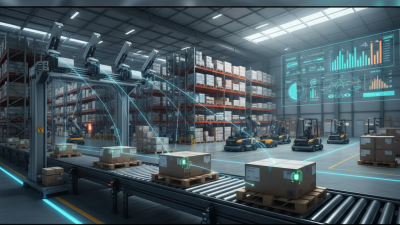
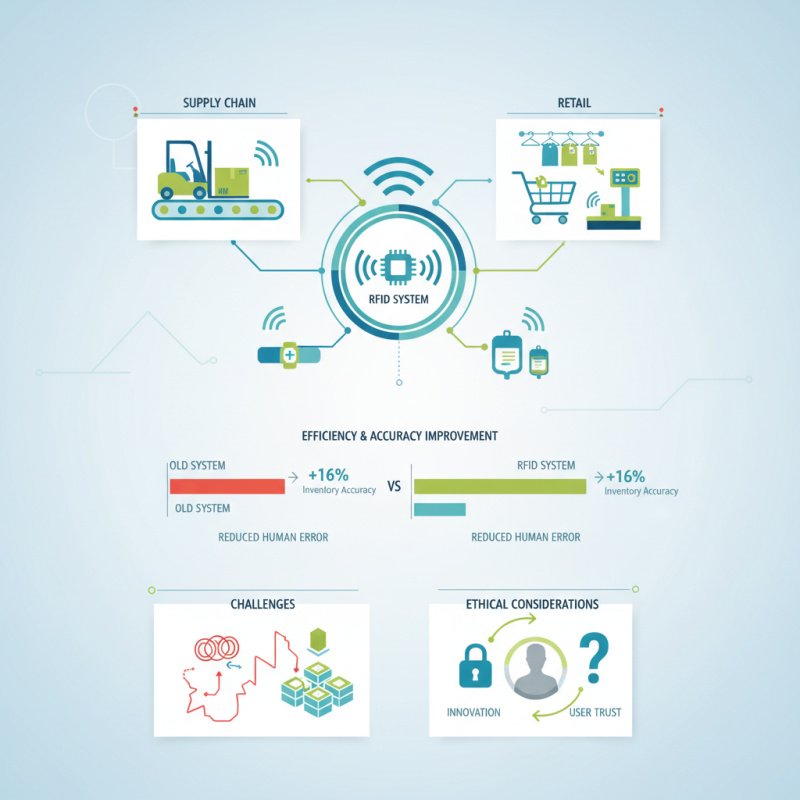
You know, Rfid Products are really shaking things up across different sectors—making things run smoother and more accurately. According to a report by IDTechEx, the RFID market is on track to hit around $26 billion by 2028. That’s pretty crazy growth, and it shows just how much companies in supply chains, retail, and healthcare are leaning on these tech solutions. As more businesses jump on board, RFID helps them streamline their operations and cut down on mistakes caused by humans.
A good example? Walmart’s been using RFID tech, and they’ve actually seen about a 16% drop in out-of-stock items. Pretty neat, right? But, of course, it’s not all smooth sailing. Sometimes, companies run into hurdles—like trying to fit RFID into their existing systems or dealing with massive amounts of data. These challenges remind us that while the tech has huge potential, it’s not perfect and still has some bumps to iron out.
And let’s not forget, there are some ethical questions hanging around RFID tech, especially when it comes to privacy and data security. Some folks out there are worried about being tracked without their consent, which is totally valid. So, finding that balance between pushing innovation forward and respecting user privacy is going to be super important. As industries keep exploring RFID’s possibilities, thinking carefully about these issues will definitely shape how this technology evolves in the future.
Definition and Overview of RFID Technology
Radio Frequency Identification (RFID) technology provides a powerful way to track and manage inventory. It uses electromagnetic fields to automatically identify and track tags attached to objects. Each tag carries unique data. This technology can work in various environments, from warehouses to retail.
RFID systems consist of three main components: tags, readers, and software. The tags can be passive, active, or semi-passive. Passive tags are powered by the reader's signal, while active tags have their own power source. Readers scan the tags using radio waves. Once captured, the data is processed by software, which displays the information.
Tip: When using RFID, consider your environment. Metal and liquids can interfere with signals. Test the setup to ensure reliable performance.
Implementation may present challenges. Misreadings can occur if tags overlap or if the reader is misaligned. Regular calibration and training for staff are essential to minimize errors.
Tip: Keep your RFID system updated. Regularly check for software updates and maintain hardware components to ensure efficiency.
Components of RFID Systems: Tags, Readers, and Antennas
The components of RFID systems include tags, readers, and antennas. Tags are small devices that store data. They can be passive or active. Passive tags draw power from the reader, while active tags use their own power source. Industry data shows that passive tags account for approximately 70% of the market in various applications.
Readers are essential for interpreting data from tags. They emit radio waves, which activate the tags. Once activated, tags send information back to the reader. Reports indicate that RFID readers can operate over distances of several meters. The effectiveness varies by environment and tag type.
Antennas serve as the communication link between tags and readers. Their design directly impacts the read range and performance of the RFID system. For instance, poor antenna design can lead to weak signal strength. The growth of China Rfid Products demonstrates innovation in this field. Research highlights that better antennas can improve efficiency and accuracy. However, challenges remain in optimizing all components for various industrial needs.
Types of RFID Tags: Active, Passive, and Semi-Passive
RFID technology utilizes three main types of tags: active, passive, and semi-passive. Active RFID Tags have their own power source. They can transmit signals over long distances. This makes them ideal for tracking larger assets. However, they are generally bulkier and more expensive. They might not be the best choice for all applications.
Passive RFID tags do not have a power supply. Instead, they rely on energy from the reader's signal. These tags are smaller and often cheaper than active ones. They are commonly used in retail for inventory tracking. Yet, their range is limited. Sometimes, they may struggle in environments with interference.
Semi-passive RFID tags fall between the two. They have a battery but only use it to power the chip when responding to a reader. This design improves the signal range without the bulk of active tags. Each type of RFID tag serves various purposes. OEM Rfid Products often incorporate these technologies creatively. Whether for inventory or asset management, each choice involves trade-offs. Understanding these options is crucial for effective deployment in any system.
How RFID Systems Communicate: Encoding and Decoding Data
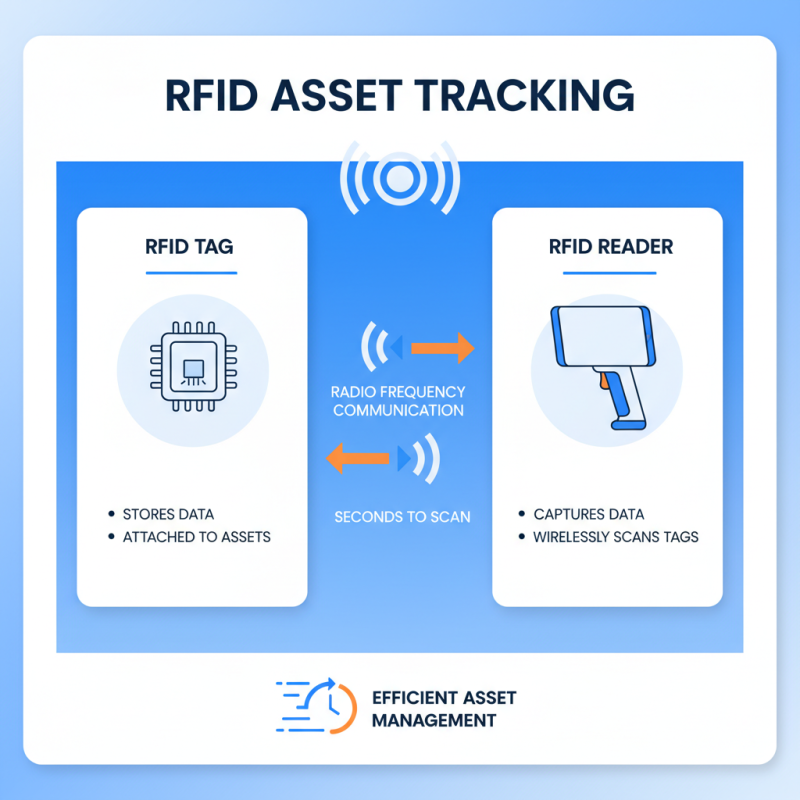
RFID systems are powerful tools for tracking and managing assets. They utilize radio frequency to transmit data wirelessly. The communication involves two main components: the RFID tag and the reader. Tags store information, while readers capture this data through antennas. This process is efficient, often completed in seconds.
Data encoding is critical for successful communication. RFID tags encode information using specific data formats. These formats define how readers interpret the signals. According to a report by Grand View Research, the RFID market is projected to reach $40 billion by 2026. This growth highlights its increasing importance across various industries.
Decoding, on the other hand, involves processing the received signals into usable information. This step can be complex and requires reliable software. Many systems still face challenges in accurately decoding signals under certain conditions. Poor performance can lead to misreadings or missed opportunities. Despite advancements, the need for improvement remains. The efficiency of RFID systems could greatly enhance operations if these decoding issues are effectively addressed.
Applications of RFID Technology in Various Industries
RFID technology is transforming various industries through its unique capabilities. In retail, RFID helps streamline inventory management. Businesses can scan shelves more efficiently. This technology reduces human error and saves time. Tags are placed on products, enabling real-time tracking. Some retailers still struggle with implementation costs, though. The benefits must outweigh these expenses for widespread adoption.
In healthcare, RFID tags track medical equipment and patient records. This enhances the efficiency of operations and improves patient safety. Hospitals can locate equipment quickly. But, not all staff members are trained in using this technology properly. Miscommunication can lead to delays. Industries are realizing the importance of proper training and integration.
Logistics and supply chain management also benefit significantly from RFID. Packages tagged with RFID can be tracked through various stages of shipping. This ensures better accuracy in deliveries. Yet, some companies face obstacles with compatibility of systems. Each solution needs thorough testing to avoid disruptions. In the world of Wholesale Rfid Products, finding the right fit is crucial for maximizing efficiency.
Benefits and Limitations of Using RFID Products
RFID products have become popular in various industries. They offer several benefits. One major advantage is efficiency. RFID tags enable automatic tracking of items within a supply chain. Information is updated in real-time, which minimizes human error. This technology can speed up inventory management significantly.
However, there are limitations to consider. The cost of implementing High-Quality Rfid Products can be substantial. Small businesses may struggle to integrate them effectively. Additionally, security can be a concern. Unauthorized scanning of RFID signals can lead to theft or data breaches. Users must be aware of these risks when adopting this technology.
In practical terms, RFID can enhance operations but may require a careful assessment. Companies must weigh the benefits against potential drawbacks. A balanced approach is essential, ensuring that the integration of RFID aligns with their specific needs and capacities.
Future Trends and Innovations in RFID Technology
RFID technology is evolving rapidly. Future trends indicate a shift towards more integrated systems. These systems will not only track products but also gather valuable data. Enhanced analytics will provide insights into customer behavior. This could change inventory management dramatically.
Tips: Consider how your business can leverage RFID for better decision-making. Evaluate your current processes and identify areas of improvement.
Innovations in RFID will likely involve smaller, more efficient tags. These tags can be embedded in a wider range of products. Think about clothing, food packaging, and even medical supplies. The ability to track these items in real-time will boost efficiency. However, challenges remain in data security and privacy.
Tips: Stay informed about legislative changes surrounding RFID. This can safeguard your business from potential legal issues. Also, consider public perception of RFID technology in your marketing strategies.
What is RFID Products and How Do They Work? - Future Trends and Innovations in RFID Technology
| Product Type | Frequency Range | Read Range | Typical Uses | Future Trends |
| Passive RFID Tags | Low Frequency (LF), High Frequency (HF), Ultra High Frequency (UHF) | 1 cm to 100 m | Inventory management, asset tracking | Integration with IoT, improved security |
| Active RFID Tags | UHF | Up to 300 m | Real-time tracking of vehicles, people | Battery improvements, miniaturization |
| RFID Readers | Usually UHF | Varies with tag type | Reading RFID tags for inventory control | Mobile reading devices, enhanced connectivity |
| RFID Antennas | Varies with system | Depends on tag and reader configuration | Used in various RFID systems | Directional and multi-directional designs |
| RFID Software | N/A | N/A | Data management, analytics | AI integration, cloud computing |
Revamping Inventory Management: The Impact of RFID Gateway Networking Systems on Efficiency and Accuracy
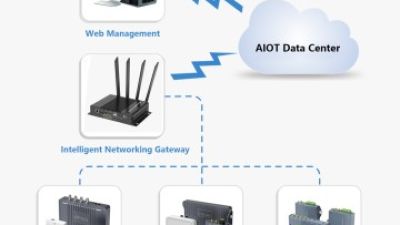
Revamping inventory management through advanced RFID gateway networking systems is proving to be a game-changer for businesses seeking greater efficiency and accuracy. Reports indicate that companies implementing RFID technology in their inventory processes can achieve up to a 30% reduction in inventory costs, primarily due to improved data accuracy and visibility. The intelligent gateway, designed for aggregating data from multiple RFID readers, stands at the forefront of this evolution. By leveraging customized pre-algorithms, these gateways enhance identification speed and significantly lessen the computational burden on backend systems. This results in more agile operations and quicker decision-making.
The integration of such intelligent gateways into existing inventory management frameworks fosters a robust infrastructure for asset tracking and inventory control. Research suggests that organizations utilizing RFID systems see a 95% accuracy rate in inventory counts as opposed to the traditional manual processes, which often suffer from errors. With real-time data aggregation, businesses can enjoy enhanced visibility over their assets, leading to timely restocking and reduction of excess inventory. As companies continue to seek scalable, reliable, and efficient solutions, the shift towards RFID technology is not merely beneficial; it is becoming essential in maintaining competitiveness in today's fast-paced digital marketplace.
FAQS
: Eat a balanced diet and exercise regularly. Drink plenty of water daily.
Try mindfulness or meditation. Take breaks and engage in hobbies you enjoy.
Fatigue, irritability, and decreased performance. Reflect on your workload and mental state.
Create a bedtime routine and limit screen time before bed. Keep your sleeping area dark and cool.
Break tasks into smaller steps. Prioritize what truly matters and ask for help if needed.
Start small and stay consistent. Track your progress and be patient with yourself.
Reflection helps identify patterns in behavior. It fosters personal growth and better decision-making.
Set milestones to celebrate progress. Find a support system that encourages you along the way.
It's okay to stumble. Analyze what went wrong and adjust your approach. Learn from the experience.
Minimize distractions in your environment. Take short breaks to recharge your concentration.
Conclusion
RFID products are innovative tools that utilize radio frequency identification technology to automate data collection and improve tracking processes across various industries. The system primarily consists of three components: tags, readers, and antennas. RFID tags can be categorized into active, passive, and semi-passive types, each with distinct functionalities. Communication between RFID systems involves encoding and decoding data, allowing for seamless information exchange.
The applications of RFID technology are vast, ranging from inventory management in retail to tracking assets in logistics and healthcare. While RFID products offer numerous benefits, such as enhanced efficiency and accuracy, they also present limitations, including cost and security concerns. As technology advances, future trends indicate continued innovation in RFID systems, providing even more capabilities and applications in the coming years.

 Rotary HF RFID Tag Reader GRH-I40 Suitable for Assembly Lines
 Industrial-grade High-frequency Integrated Reader GRH-I65 Suitable for Asset Tracking
 With ESD Protection HF RFID Reader GRH-I68 Suitable for Progress Tracking
 Proximity HF RFID Reader GRH-M30 Suitable for Manufacturing Workshops
 Desktop HF RFID Scanner GRH-D80-HID Suitable for Card-issuing Applications
 High Frequency Medium Distance Reader GRH-I90 Suitable for Logistics Production Line
 UHF RFID Portals and Tunnel Machine RFly-AM3000 for Access Control
 Narrow RFID Portals Series TD-P20040-SS for Single Tag Entry and Exit Identification Scenario
 RFID Transmission Line Simple Identification Tunnel Machine (TD-T3050)
 Vision and RFID Tunnel Machine TD-T7692-RV for Logistics Sorting
 RFID Transmission Line Identification Tunnel Machine TD-T10090
 RFID Mobile Inventory Tunnel Machine TD-T65150 for Conveyor Belts
 High-Performance Far-Field Antennas for Broad Coverage.
 Multi-Purpose Antennas: Flexibility for Diverse Applications
 Near-Field Antennas for Short-Distance Tag Detection.
 Portals & Tunnel Antennas for Integrated RFID Series
 Slimline PCB Antennas for Warehousing and Logistics
 Miniaturized and Thin Antennas can Provide Good Performance in a Smaller Size.
 GPS Tracker for Vehicles, Car, Kids, Assets.
 CO2 Sensors Detect CO2 Gas through Alarms, Suitable for Offices, Planting Tents.
 Door Sensor, Detect Open and Closed Doors or Windows, Sends Alerts, Triggers Siren.
 Wireless Level Sensor Equipped with a 5-Meter Detection Line, Suitable for Water Tanks
 Real Time Monitoring of Air Quality Using PM2.5/PM10 Sensors.
 Smoke Sensor, Fire Alarm Smoke Detector with Test Button and Low Battery Reminder.
 Soil Stress Sensor,Bridge and Tunnel Monitors.
 Vibration Sensor Monitors Equipment, Like Conveyors and Motors, for Operational Status.
 E -Paper Display
 Smart Water Sensor Alarms, 1.2 M Detection Line.
 CO Sensor for Basements Home Office House Bedroom Living Room Car, Light Plug and Play.
 Temperature and Humidity Sensor
 Multi-sensor GD-ME
 Temperature Sensors Monitor the Surface Temperature of Various Heating Equipment.-1
 Signal Enhancement Terminal, Long Range Coverage.
 Multi-Protocol Communication Gateway, App Remote Control.
 Edge Vision Gateway can Access Various Mainstream Cameras, Suitable for Office, Factory.
 GBS-3550 Outdoor Sensor Gateway,LoRa, 2/3/4G Communication.
 Smart WiFi Gateway, Realize Remote Control.
 Ultra-Low-Power Solar-Powered Intelligent Gateway (Outdoor)
 IP67-protected Integrated RFID Reader Writer RFly-I165 for Supply Chain
 Long-range Distance UHF RFID Reader RFly-I195 for Inventory Management
 Small UHF RFID Tag Reader RFly-I300 for Cars
 Two-channel Compact Fixed RFID Reader RFly-F210 for Warehousing
 Four Channels Fixed UHF RFID Reader RFly-R6 for Supply Chain
 8-channel UHF RFID Tag Reader RFly-R8 for File Cabinet Identification
 Bluetooth Portable RFID Reader and Writer GRU-HBT100 for Inventory Management
 Industrial Grade Handheld UHF RFID Reader GRU-HC520 Suitable for Logistics
 RFID Gateway Networking System
 RFID Passive Temperature Measurement System
 RFID Tags for Container Turnover Management
 RFID Tags for Equipment O&M Management
 RFID Tags for Manufacturing Management
 RFID Tags for Tool Management
 A Kits for Equipment Condition Detection
 A Kits for Office Computer Room Environment Monitoring
 A Kits for Reservoir Environmental Monitoring
 A Kits for Storage Space Environment Monitoring
 A Kits for Stress Detection of Underground Tunnel
 A Kits for Urban Environment Monitoring
 Intelligent IoT Monitoring Platform
 Integrating Multiple Functional OTG Demo Software
 HF Demo Software
 UHF Demo Software