You know, in the fast-changing world of logistics these days, using the latest tech has become pretty much essential to keep things running smoothly. If you look at recent data, the global Rfid Inventory system market is expected to hit around $9.7 billion by 2027, growing at about 14.1% annually since 2020. That really highlights just how important RFID is for managing supply chains. These systems don’t just make tracking inventory easier—they also cut down on mistakes and give businesses better visibility throughout the entire process. MingQ Technology Limited is definitely leading the charge in this tech revolution, offering innovative IoT hardware and software solutions that are built to meet the needs of modern logistics. With their expertise in AI and industrial IoT applications, they help companies adopt RFID tech that not only streamlines inventory management but also boosts overall growth and efficiency in logistics operations.

Understanding RFID Technology: A Game Changer for Inventory Management
You know, RFID technology is really shaking things up when it comes to managing inventory. It's honestly a game changer for businesses trying to get their operations more streamlined. I read in the 2022 RFID Industry Report that companies starting to use RFID are seeing their inventory accuracy shoot up to over 99%. That’s a huge leap! Not only does this help avoid those dreaded stockouts or whacks of overstock, but it also makes the whole supply chain run smoother—leading to some serious savings and happier customers.
And get this—the global RFID market is expected to almost double from about $10.2 billion in 2022 to around $20.7 billion by 2027. That just shows how more and more sectors—retail, manufacturing, logistics—are jumping on board with this tech. With RFID systems, businesses can track products in real-time across the entire supply chain. That means making smarter, data-backed decisions on the fly. As companies keep adopting these systems, they’re able to better manage resources, optimize workflows, and respond quickly to market changes—giving them a real edge in this competitive, ever-shifting landscape.

Key Innovations in RFID Systems Transforming Logistics Operations
The logistics world is really going through a major shift right now, thanks to the ongoing evolution of RFID technology. These new advances are bringing some pretty exciting changes that make everything run smoother and faster. For instance, the way companies manage their inventory is changing big time — now, they can track items in real-time and get much more accurate data, things that weren’t really possible before. By adopting these cutting-edge Rfid Solutions, logistics teams can cut down on manual mistakes and get a clearer picture of their stock across the entire supply chain. In the end, that means happier customers and a more efficient operation.
At MingQ Technology Limited, we’re all about helping businesses integrate these revolutionary RFID systems into what they already have. Our expertise in IoT hardware and software means we can tailor solutions that not only improve resource management but also use artificial intelligence to help predict inventory needs better. When you take advantage of our tech, you'll find that communication within your supply chain just becomes more seamless — making sure the right products are in the right place at the right time. It’s honestly a game-changer for logistics management, and we’re here to help make that happen.
Revolutionizing Logistics Efficiency with the Latest RFID Inventory System Innovations
| Innovation | Description | Impact on Logistics | Implementation Cost |
| Active RFID Tags | Battery-powered tags with enhanced range for real-time tracking. | Increased visibility of inventory, reduced loss. | $$$ |
| Cloud Computing Integration | Using cloud technology for data storage and access. | Improved data accessibility and synchronization across locations. | $$ |
| IoT Integration | Connecting RFID systems with IoT devices for smarter inventory management. | Automated alerts and analytics for inventory trends. | $$$ |
| Mobile RFID Scanners | Portable devices for on-the-go inventory checks. | Faster stock audits and accuracy improvements. | $ |
| AI-Powered Analytics | Utilizing AI for predictive analytics based on inventory data. | Better demand forecasting and inventory optimization. | $$$ |
Step-by-Step Implementation of RFID Inventory Solutions in Your Business
Getting started with RFID inventory solutions in your business really begins with taking a good, honest look at how you're currently managing your stock. It helps to pin down the specific issues you're facing—maybe stock counts aren’t always accurate, or locating items takes forever. Talking to folks across different departments is super useful too, since it gives you a better idea of what everyone's needs and expectations are. That way, you can make sure the RFID system you choose actually fits with how you run your operations. Once you've got a clear picture of what you need, set some straightforward goals for implementing the RFID system—that’s a really important step.
After that, spend some time choosing the right RFID tech. Think about things like which tags work best, whether your readers are compatible, and how it all fits with the systems you already have in place. A pilot test is also a smart move—trying out the system in a small, controlled setting helps you see how it really performs, catch any hiccups, and tweak things before rolling it out on a bigger scale. And don’t forget to train your team! Show them how to use the RFID tools properly so they can work more efficiently, and ensure the whole transition goes smoothly. In the end, all of this helps you get the most out of your investment and keeps everything running smoothly.
Enhancing Accuracy and Speed: Benefits of RFID in Supply Chain Efficiency
You know, technology's been moving at such a crazy pace lately, and it's really changing the game when it comes to logistics. Take RFID (Radio Frequency Identification), for example—it’s this pretty amazing tech that’s making supply chains much faster and more accurate. Before, errors or delays could really hurt a business financially, but with RFID, things are turning around. Actually, a report from Grand View Research predicts the global RFID market will hit around $40 billion by 2026—no joke! That just shows how important it’s becoming for managing inventory these days.
Now, for companies like MingQ Technology Limited, who specialize in IoT solutions, jumping into RFID tech is a total game-changer. They’re helping businesses keep track of their stock more accurately—like, nearly 99% accuracy, which is huge! That means fewer mistakes from manual counts and a much smoother operation overall. Plus, it allows companies to react quickly when the market shifts, cutting down on unnecessary delays in their supply chain.
If you’re thinking about giving RFID a shot, here are a few pointers:
- Take some time to really figure out what’s not working in your current inventory process. Pinpoint those pain points.
- Partner up with tech folks like MingQ who can customize the RFID system to fit your specific needs and help you get everything set up smoothly.
- And don’t forget, make sure your team gets proper training so they’re confident in using the new system and getting the most out of it.
Honestly, by embracing RFID, your business can seriously boost how you handle inventory, making your entire supply chain
more efficient and
responsive. Can’t tell you how much of a difference it can make!
Best Practices for Integrating RFID with Existing Logistics Processes
Adding RFID technology into your current logistics setup can really boost how you manage inventory and make things run smoother. But before diving in, it’s a good idea to take a step back and review your existing workflows. That way, you can spot the pain points RFID might help fix. Sometimes, sketching out all your logistics processes can highlight exactly where real-time tracking could make a difference.
Pro tip: Talk to folks across different departments early on—that way, you get their input, and everyone’s on the same page about what’s needed. Working closely with your IT and operations teams from the start will make the whole setup go more smoothly and help avoid surprises.
Also, don’t forget training! Your team should know not just how to use the RFID systems but also understand the real benefits—like better inventory accuracy and more efficient resource management. Providing ongoing support and learning resources will make it easier for everyone to get comfortable and actually use the new tech.
Another tip: Roll out the RFID system gradually, step by step. This gives your team a chance to get used to it, share feedback, and suggest tweaks along the way. Doing things this way can really cut down on resistance and make the whole transition way smoother in the long run.
Future Trends in RFID Technology and Their Impact on Inventory Systems
The global RFID market is really gearing up for some serious growth. Experts are saying it’s going to jump from around $17 billion in 2025 to nearly $38 billion by 2032 — that’s an annual growth rate of about 11.9%. A big reason behind this boom? The rising need for better supply chain visibility and transparency. You see, industries like healthcare and pharmaceuticals are turning to RFID tech more than ever to help streamline their operations and get a grip on inventory accuracy. Basically, they want real-time tracking of assets, and RFID is making that happen.
One company that's really making waves here is a major retail giant. They’ve been investing heavily in RFID solutions, basically reshaping their entire supply chain. Not only does this move make their operations more efficient, but it’s also pushing the whole retail sector to rethink how they handle inventory. It’s kind of a game-changer. Industry reports also show that the market for inventory labels alone is expected to grow from about $5.78 billion in 2024 to roughly $8.49 billion by 2032. That just goes to show how RFID is becoming a central part of inventory management. Plus, the ultra-high-frequency RFID segment, which is a bit more techy, is forecasted to go from around $762 million in 2024 to about $1.43 billion by 2032. All in all, it’s clear that cutting-edge tracking tech is taking over a lot of industries — and it’s only going to get bigger.”
Optimizing Assembly Line Efficiency with the Rotary HF RFID Tag Reader GRH-I40
The efficiency of assembly lines plays a crucial role in maximizing productivity and minimizing operational costs in manufacturing environments. A key innovation in this sphere is the adoption of HF RFID technology, particularly the GRH-I40 Rotary HF RFID Tag Reader. This device not only enhances inventory tracking and management but also integrates seamlessly into existing assembly line setups. According to industry reports, RFID technology can increase inventory accuracy rates to over 95%, significantly reducing the costs associated with stock discrepancies and lost items.
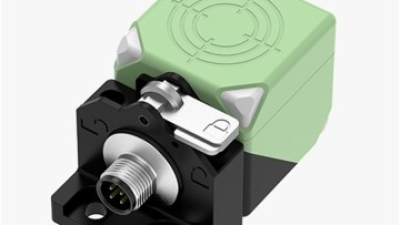
The GRH-I40 is designed for versatility and ease of use. Its rotatable nature allows it to be installed in various orientations, ensuring optimal reading angles regardless of assembly line configurations. With support for Modbus-RTU communication, the GRH-I40 is compatible with a variety of industrial systems, facilitating easy integration. The installation process is straightforward, promoting rapid deployment and minimizing downtime—crucial factors in maintaining assembly line momentum. This functionality is backed by a commitment to high-quality service, ensuring users can customize their RFID solutions to meet specific operational needs.
As manufacturers increasingly embrace automation and IoT technologies, the demand for robust RFID solutions is surging. A recent study forecasts that the global RFID market will reach approximately $40 billion by 2026, influenced by the enhanced efficiency RFID systems provide. The GRH-I40 not only aligns with these market trends but also exemplifies an intelligent investment in the continuous improvement of assembly line efficiency, thereby driving significant returns in productivity and cost savings.
FAQS
: The first step is to conduct a thorough assessment of your current inventory management processes to identify specific challenges, such as inaccuracies in stock levels or slow retrieval times.
Engaging stakeholders across departments helps gather insights into their needs and expectations, ensuring that the chosen RFID system aligns with the operational goals of the entire organization.
Factors to consider include the types of RFID tags, reader compatibility, and how well the technology integrates with existing software systems.
A pilot test evaluates the performance of the chosen system in a limited environment, allowing businesses to identify potential disruptions and make necessary adjustments before broader deployment.
Training is essential to ensure employees understand how to use the RFID tools effectively, which enhances logistics efficiency and ensures a smooth transition to the new system while maximizing return on investment.
A phased rollout of the RFID system is recommended, allowing teams to gradually acclimate to the technology and providing opportunities for feedback and adjustments to minimize resistance.
The increasing demand for enhanced supply chain visibility and transparency, especially in industries such as healthcare and pharmaceuticals, is driving significant growth in the RFID market.
Major retail companies are aggressively investing in RFID solutions to improve operational efficiency and set new standards, which is encouraging other businesses to explore similar technological advancements.
The inventory label market is expected to grow from $5.78 billion in 2024 to $8.49 billion by 2032, highlighting the expanding role of RFID in inventory systems.
The ultra-high-frequency RFID segment is projected to rise from $762.26 million in 2024 to $1.43 billion by 2032, reflecting the increasing reliance on advanced tracking technologies across various sectors.
Conclusion
So, I came across this article titled "Revolutionizing Logistics Efficiency with the Latest RFID Inventory System Innovations," and honestly, it’s pretty eye-opening. It talks about how RFID tech is really changing the game when it comes to managing inventories. Basically, RFID Inventory Systems are making logistics way smoother and more efficient, and the article highlights some of the coolest recent innovations that are helping businesses move faster and more accurately. It also walks you through how to actually get RFID up and running in your company—step by step—and points out all the benefits, like boosted precision and quicker processes, which directly boost the supply chain overall. Plus, they share some tips on how to smoothly fit RFID into what you're already doing, and poke a bit at what’s coming next in RFID tech that could shake things up even more.
On top of that, MingQ Technology Limited is doing some pretty awesome work here. They’re pushing the boundaries with their state-of-the-art IoT hardware and software solutions that work hand-in-hand with RFID systems. By focusing on cutting-edge info transfer and AI, MingQ helps businesses get the most out of these innovations—making their logistics operations not just better, but truly ahead of the curve.

 Rotary HF RFID Tag Reader GRH-I40 Suitable for Assembly Lines
 Industrial-grade High-frequency Integrated Reader GRH-I65 Suitable for Asset Tracking
 With ESD Protection HF RFID Reader GRH-I68 Suitable for Progress Tracking
 Proximity HF RFID Reader GRH-M30 Suitable for Manufacturing Workshops
 Desktop HF RFID Scanner GRH-D80-HID Suitable for Card-issuing Applications
 High Frequency Medium Distance Reader GRH-I90 Suitable for Logistics Production Line
 UHF RFID Portals and Tunnel Machine RFly-AM3000 for Access Control
 Narrow RFID Portals Series TD-P20040-SS for Single Tag Entry and Exit Identification Scenario
 RFID Transmission Line Simple Identification Tunnel Machine (TD-T3050)
 Vision and RFID Tunnel Machine TD-T7692-RV for Logistics Sorting
 RFID Transmission Line Identification Tunnel Machine TD-T10090
 RFID Mobile Inventory Tunnel Machine TD-T65150 for Conveyor Belts
 High-Performance Far-Field Antennas for Broad Coverage.
 Multi-Purpose Antennas: Flexibility for Diverse Applications
 Near-Field Antennas for Short-Distance Tag Detection.
 Portals & Tunnel Antennas for Integrated RFID Series
 Slimline PCB Antennas for Warehousing and Logistics
 Miniaturized and Thin Antennas can Provide Good Performance in a Smaller Size.
 GPS Tracker for Vehicles, Car, Kids, Assets.
 CO2 Sensors Detect CO2 Gas through Alarms, Suitable for Offices, Planting Tents.
 Door Sensor, Detect Open and Closed Doors or Windows, Sends Alerts, Triggers Siren.
 Wireless Level Sensor Equipped with a 5-Meter Detection Line, Suitable for Water Tanks
 Real Time Monitoring of Air Quality Using PM2.5/PM10 Sensors.
 Smoke Sensor, Fire Alarm Smoke Detector with Test Button and Low Battery Reminder.
 Soil Stress Sensor,Bridge and Tunnel Monitors.
 Vibration Sensor Monitors Equipment, Like Conveyors and Motors, for Operational Status.
 E -Paper Display
 Smart Water Sensor Alarms, 1.2 M Detection Line.
 CO Sensor for Basements Home Office House Bedroom Living Room Car, Light Plug and Play.
 Temperature and Humidity Sensor
 Multi-sensor GD-ME
 Temperature Sensors Monitor the Surface Temperature of Various Heating Equipment.-1
 Signal Enhancement Terminal, Long Range Coverage.
 Multi-Protocol Communication Gateway, App Remote Control.
 Edge Vision Gateway can Access Various Mainstream Cameras, Suitable for Office, Factory.
 GBS-3550 Outdoor Sensor Gateway,LoRa, 2/3/4G Communication.
 Smart WiFi Gateway, Realize Remote Control.
 Ultra-Low-Power Solar-Powered Intelligent Gateway (Outdoor)
 IP67-protected Integrated RFID Reader Writer RFly-I165 for Supply Chain
 Long-range Distance UHF RFID Reader RFly-I195 for Inventory Management
 Small UHF RFID Tag Reader RFly-I300 for Cars
 Two-channel Compact Fixed RFID Reader RFly-F210 for Warehousing
 Four Channels Fixed UHF RFID Reader RFly-R6 for Supply Chain
 8-channel UHF RFID Tag Reader RFly-R8 for File Cabinet Identification
 Bluetooth Portable RFID Reader and Writer GRU-HBT100 for Inventory Management
 Industrial Grade Handheld UHF RFID Reader GRU-HC520 Suitable for Logistics
 RFID Gateway Networking System
 RFID Passive Temperature Measurement System
 RFID Tags for Container Turnover Management
 RFID Tags for Equipment O&M Management
 RFID Tags for Manufacturing Management
 RFID Tags for Tool Management
 A Kits for Equipment Condition Detection
 A Kits for Office Computer Room Environment Monitoring
 A Kits for Reservoir Environmental Monitoring
 A Kits for Storage Space Environment Monitoring
 A Kits for Stress Detection of Underground Tunnel
 A Kits for Urban Environment Monitoring
 Intelligent IoT Monitoring Platform
 Integrating Multiple Functional OTG Demo Software
 HF Demo Software
 UHF Demo Software