The rapid advancement of technology has seen the importance of RFID (Radio Frequency Identification) technology rise, with RFID writers standing as vital tools for data encoding and data management. These sophisticated devices permit the seamless initiation of communication with RFID Tags for tracking inventories, supply chain management, and a whole lot of other things for efficient operations. As industries move toward automation and greater connectivity, it becomes increasingly important to understand the specifications and features of RFID writers to allow businesses to smoothen their processes.
At Shenzhen Jinruiming Technology Co., Ltd., we are the leading edge of this RFID revolution in the development of innovative and high-performance RFID writer solutions to meet a variety of market needs. Our ISO9001-certified, quality-driven company embraces innovation, which leads to state-of-the-art technology for better accuracy and speed in data handling. This blog will offer insights into the advanced specifications of RFID writer technology in relation to their functioning, performance metrics, and importance in today's applications so that businesses can make the full use of RFID systems.
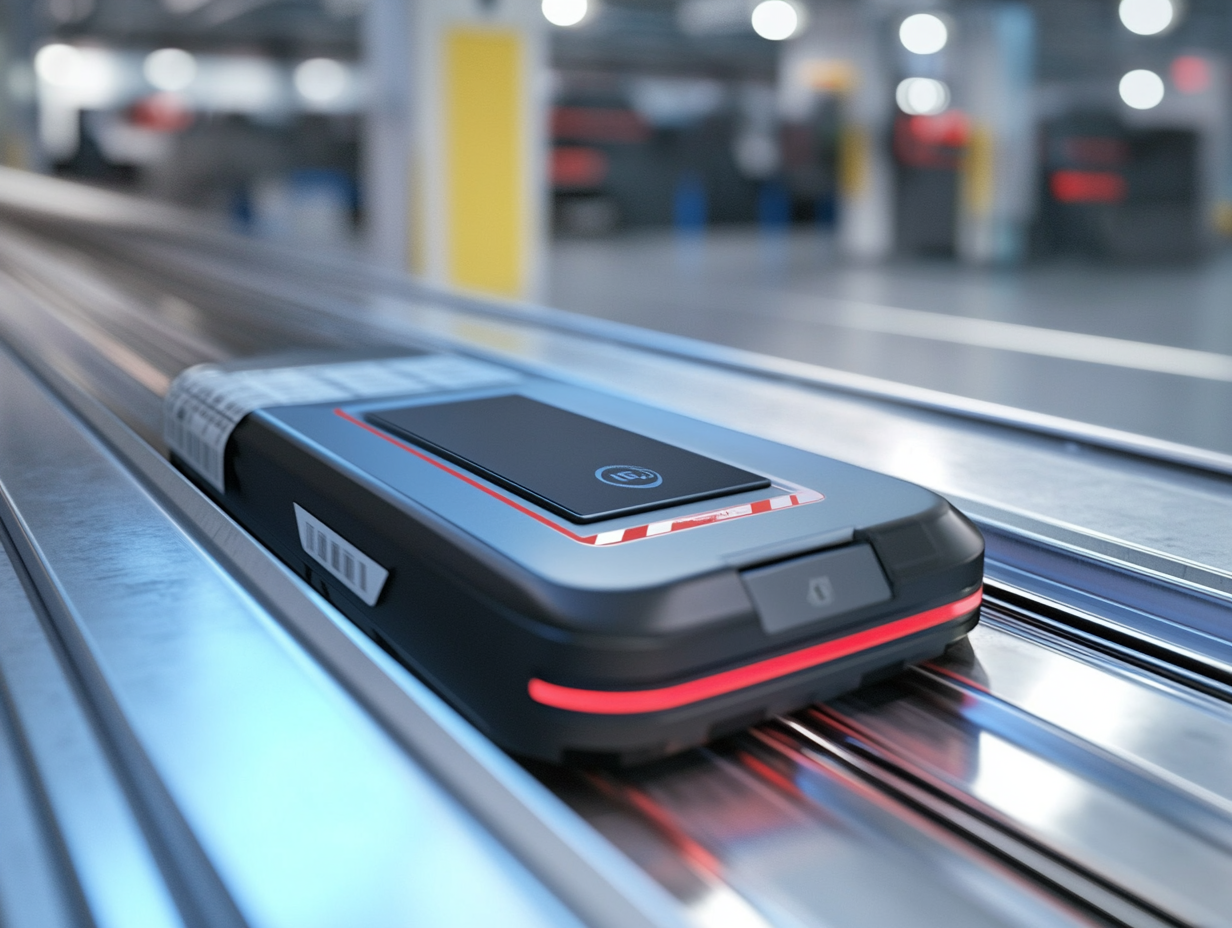
Understanding RFID Writer Technology
From the dispensing of information all the way mostly to user experience, RFID writer technology enables the full spectrum of their application. This technology permits the user to encode and personalize RFID tags seamlessly for different applications, management of events, security, and retail. By knowing the basics of RFID writers, businesses can use them to streamline their operations and engage with their clients better. The forthcoming Maha Kumbh Mela, 2025, is a stellar demonstration of how RFID technology can change the face of an entire event. With RFID wristbands, participants will enjoy a smooth experience, being able to practically use these wristbands for everything from efficient crowd management to personalized services. This application shows how RFID can connect the gap between tradition and modern technology, thus adding enormously to the pilgrim's' experience.
The Basics of RFID Technology
Advancements in RFID writer technology are particularly important and critical for contemporary applications like large events such as the Maha Kumbh Mela 2025. The RFID wristbands will enhance the pilgrim experience through a seamless and efficient solution for crowd flow management and safety. These wristbands will be tracked by mobile apps and AI cameras to form a complete system that connects the past with the present.
Advanced RFID writers are tailored to support a variety of RFID tags with data-writing and reading capabilities at high speed, and offer solid security features to protect sensitive information. Their compact design and user-friendly interface make them a necessary ally for event organizers and businesses involved in fast transactions and inventory management. With the evolution of technology, these features will continue to meet the demanding needs of spiritual and commercial environments.
Key Specifications of Advanced RFID Writers
Revolutionizing the Industry: RFID Writer Technology RFID writer technology is becoming a major player in the different industries, improving the facility with which things can work and reliability in data management. It has enabled real-time update data on RFID tags in such industries as logistics, healthcare, and manufacturing. This is used for conducting extremely precise tracking of inventories and assets by the organizations and streamlining operations while minimizing human errors that occur during manual data entry.
In retail, the use of RFID technology really changes the approach toward shopping. RFID writers are great tools that allow retailers to manage their level of stock with remarkable ease leading to fine-tuning of supply chain management and improved customer satisfaction. Further, it allows the integration of RFID-blocking features in such goods as wallets or cases, hence security in consumer products is becoming all the more important in its everyday life. Hence, with more and more industries adding to advanced RFID writer technology, the innovations can keep sprouting and bring further improvements and efficiencies.

Types of RFID Writers: An Overview
RFID Technology or Radio Frequency Identification has a glaring importance in lot of sectors, including the proper management in the case of big events like that of the Maha Kumbh Mela. The holy pilgrimage scheduled for the year 2025 at Prayagraj aims to embrace modernities in the hope of improving the experience for millions attending. The main goal of implementing RFID wristbands is to have a streamlined crowd management system and improve visitor flow.
Unlike its conventional approach, these RFID wristbands empower the real-time tracking and collection of data, granting smooth passage for pilgrims across vast venues. Integrated with AI camera mobility tracking, RFID presents a modern tech spiral intertwined into the sacred journey. Such integration captures a bigger picture trend that in 2024-swaying forward includes the growing acceptance of RFID and allied technologies by businesses, including retail, to spur their customer experience and operational efficiency.
Performance Metrics: Speed and Efficiency
RFID writer technology is at the cusp of an overhaul, ridden by the demand for efficient data management and tracking systems. The growing trend of automation and real-time data processing in organizations worldwide is drawing RFID writers along. New developments focus on integrating advanced security features like hybrid security schemes that combine data encryption with role-based access control (RBAC) for secure communication, which is of vital importance in applications requiring sensitive data collection.
Interoperability between RFID technology and Near Field Communication (NFC) is another area of innovation. As NFC continues to penetrate consumer electronics, the merger of these technologies will further improve user experience across multiple fields-from retail to logistics. Automated toll collect systems are just a few examples demonstrating how RFID could efficiently implement their operations while providing accurate real-time data, portraying further future impact in diverse industries.
Compatibility with Various RFID Tags
Highly advanced RFID writers are continuing to evolve, with strong emphasis being given to modern security considerations, which grew out of the electronic pickpocketing issue related to RFID skimming. These writers pack a whole arsenal of security systems, including advanced encryption and authentication protocols to ensure that the interface data on transmission is secure from any unauthorized access. With the use of gamma-stable RFID tags that still work under harsh conditions, manufacturers are proving that these devices can be relied upon not only for the normal applications but also where extreme caution is needed.
Furthermore, user input and smart card writing features greatly enhance the practical aspects of RFID readers and writers. It allows businesses to dynamically customize the information stored on RFID tags, thus improving security with operational flexibility. As RFID usage grows, security will remain to be a major concern, which these refinements help to address for sensitive data.
Security Features in Advanced RFID Writers
Types of RFID writers differ according to their specific applications and functionalities. The most significant classification of these tools is according to the frequency on which they operate: low-frequency (LF), high-frequency (HF), and ultra-high-frequency (UHF) writers. LF Writers are generally for access control and animal tracking. HF writers best suit smart cards and ticketing systems. In contrast, the UHF writers are long-range writers best suited for supply chain and inventory management.
RFID writers can also be categorized according to their interface and connectivity options. Standalone models prove operation on their own; while on the integrated systems, devices attached can work in streamlined operations. Today, there are portable RFID writers shaped for use in writing and reading tags in an open space, thus improving flexibility in various environments. The continuous evolution of RFID writer technology promises even more specialized types in the future, targeted to the varied growing audience demands.
Software Integration and User Interface
It is command advanced RFID technology through so many microns with the software and their user interfaces, mold the working getting today by almost all industries. The latest RFID writers are equipped with seamless software integration that allows quicker data processing and efficient workflows. Such adaptability not only guarantees better user experience but also addresses various challenges on efficiency that affect several industries, from healthcare to supply chain management.
Some of the developments that have recently come up include the introduction of highly sophisticated RFID readers, which already come with very powerful sensors and modules. There have been constructions in such ways that these devices are used as the device of scanning speed. The operational reliability of an industry can be increased through the enhancement of such equipment. Industries really rely on Rfid Solutions: from tracking product sales and managing their inventories. In that case, the application becomes very critical. The interface could be designed well enough for employees to have minimal faults with regard to usability, while scanning their items quickly and accurately.
Applications of RFID Writer Technology in Industries
The touch point between the advanced RFID writer technology and its compatibility with various RFID tags is one of the most significant considerations for application by businesses exploiting this high-tech solution. The increasing trend towards RFID in industries for the management of inventories and asset tracking to authenticate them calls for an adequate capability of an RFID writer to cooperate seamlessly with different tags. This mechanism is critical to harness investment values in RFID systems since companies will be able to make use of their existing infrastructure while adopting newer technologies.
Recent advancements in RFID writer technology aim to improve versatility. Now, RFID writers are capable of handling an even larger variety of tag types: passive, active, and semi-passive RFID tags. This feature allows organizations to select the most suitable tags for specific applications instead of being confined to a standard format. In such a fast-evolving scenario of RFID technology, the drive toward compatibility will maintain the door open for organizations to adapt and thrive in the possibly competitive marketplaces.
Future Trends in RFID Writer Development
Performance metrics for advanced RFID technology are fundamental in enhancing efficiency in various sectors-from crowd control for large events to retail streamlining. High data transfer rates are unarguably needed, especially in an event like the Maha Kumbh Mela 2025, where RFID wristbands help in the real-time tracking and crowd management of pilgrims through mobile apps, allowing for smooth moving and safety for millions of pilgrims.
RFID technology is indeed changing the way retailers do business. Through fast and efficient RFID continuing processes, retailers can enhance inventory accuracy and optimize supply chain processes. This improved equipment and technology will enhance a customer's experience and therefore improve operational efficiency as well. Speed and efficiency have become metrics of success in an ever-changing market.
FAQS
The key performance metrics include speed and efficiency, which are essential for applications like crowd management and retail operations.
RFID wristbands can be used for real-time tracking and crowd management, particularly in large events such as the Maha Kumbh Mela 2025, enhancing safety and movement for attendees.
RFID technology improves inventory accuracy and optimizes supply chain processes, enhancing customer experience and operational effectiveness.
Compatibility allows businesses to maximize their investments in RFID systems by utilizing existing infrastructure while integrating different types of RFID tags.
Recent advancements allow RFID writers to support passive, active, and semi-passive RFID tags, providing organizations with flexibility in their applications.
RFID writers enable real-time updates on RFID tags, improving the ability to track inventory and assets with high precision and reducing human errors.
By efficiently managing stock levels and improving supply chain management, RFID technology enhances the overall shopping experience, leading to greater customer satisfaction.
Yes, the ability to incorporate RFID-blocking features in products, such as wallets and cases, highlights the importance of security for consumers.
The use of RFID writers streamlines operations across various industries, minimizing errors and enhancing the overall efficiency of data management processes.
As more industries adopt this technology, innovative applications are likely to emerge, driving further advancements and efficiencies in how RFID is utilized.

 Rotary HF RFID Tag Reader GRH-I40 Suitable for Assembly Lines
 Industrial-grade High-frequency Integrated Reader GRH-I65 Suitable for Asset Tracking
 With ESD Protection HF RFID Reader GRH-I68 Suitable for Progress Tracking
 Proximity HF RFID Reader GRH-M30 Suitable for Manufacturing Workshops
 Desktop HF RFID Scanner GRH-D80-HID Suitable for Card-issuing Applications
 High Frequency Medium Distance Reader GRH-I90 Suitable for Logistics Production Line
 UHF RFID Portals and Tunnel Machine RFly-AM3000 for Access Control
 Narrow RFID Portals Series TD-P20040-SS for Single Tag Entry and Exit Identification Scenario
 RFID Transmission Line Simple Identification Tunnel Machine (TD-T3050)
 Vision and RFID Tunnel Machine TD-T7692-RV for Logistics Sorting
 RFID Transmission Line Identification Tunnel Machine TD-T10090
 RFID Mobile Inventory Tunnel Machine TD-T65150 for Conveyor Belts
 High-Performance Far-Field Antennas for Broad Coverage.
 Multi-Purpose Antennas: Flexibility for Diverse Applications
 Near-Field Antennas for Short-Distance Tag Detection.
 Portals & Tunnel Antennas for Integrated RFID Series
 Slimline PCB Antennas for Warehousing and Logistics
 Miniaturized and Thin Antennas can Provide Good Performance in a Smaller Size.
 GPS Tracker for Vehicles, Car, Kids, Assets.
 CO2 Sensors Detect CO2 Gas through Alarms, Suitable for Offices, Planting Tents.
 Door Sensor, Detect Open and Closed Doors or Windows, Sends Alerts, Triggers Siren.
 Wireless Level Sensor Equipped with a 5-Meter Detection Line, Suitable for Water Tanks
 Real Time Monitoring of Air Quality Using PM2.5/PM10 Sensors.
 Smoke Sensor, Fire Alarm Smoke Detector with Test Button and Low Battery Reminder.
 Soil Stress Sensor,Bridge and Tunnel Monitors.
 Vibration Sensor Monitors Equipment, Like Conveyors and Motors, for Operational Status.
 E -Paper Display
 Smart Water Sensor Alarms, 1.2 M Detection Line.
 CO Sensor for Basements Home Office House Bedroom Living Room Car, Light Plug and Play.
 Temperature and Humidity Sensor
 Multi-sensor GD-ME
 Temperature Sensors Monitor the Surface Temperature of Various Heating Equipment.-1
 Signal Enhancement Terminal, Long Range Coverage.
 Multi-Protocol Communication Gateway, App Remote Control.
 Edge Vision Gateway can Access Various Mainstream Cameras, Suitable for Office, Factory.
 GBS-3550 Outdoor Sensor Gateway,LoRa, 2/3/4G Communication.
 Smart WiFi Gateway, Realize Remote Control.
 Ultra-Low-Power Solar-Powered Intelligent Gateway (Outdoor)
 IP67-protected Integrated RFID Reader Writer RFly-I165 for Supply Chain
 Long-range Distance UHF RFID Reader RFly-I195 for Inventory Management
 Small UHF RFID Tag Reader RFly-I300 for Cars
 Two-channel Compact Fixed RFID Reader RFly-F210 for Warehousing
 Four Channels Fixed UHF RFID Reader RFly-R6 for Supply Chain
 8-channel UHF RFID Tag Reader RFly-R8 for File Cabinet Identification
 Bluetooth Portable RFID Reader and Writer GRU-HBT100 for Inventory Management
 Industrial Grade Handheld UHF RFID Reader GRU-HC520 Suitable for Logistics
 RFID Gateway Networking System
 RFID Passive Temperature Measurement System
 RFID Tags for Container Turnover Management
 RFID Tags for Equipment O&M Management
 RFID Tags for Manufacturing Management
 RFID Tags for Tool Management
 A Kits for Equipment Condition Detection
 A Kits for Office Computer Room Environment Monitoring
 A Kits for Reservoir Environmental Monitoring
 A Kits for Storage Space Environment Monitoring
 A Kits for Stress Detection of Underground Tunnel
 A Kits for Urban Environment Monitoring
 Intelligent IoT Monitoring Platform
 Integrating Multiple Functional OTG Demo Software
 HF Demo Software
 UHF Demo Software