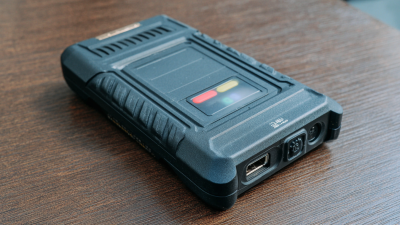
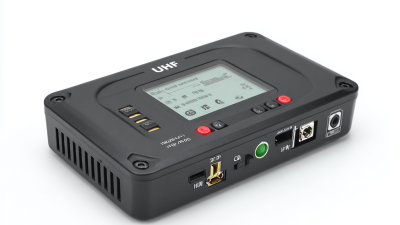
In today’s super忙business world, staying on top of your inventory is more important than ever if you want to stay competitive and keep your customers happy. One of the coolest and most innovative ways to do this is withPortable Uhf Rfid Readers. These gadgets don’t just make tracking inventory a whole lot easier—they also cut down on mistakes and save time compared to the old manual methods. At MingQ Technology Limited, we’re pretty passionate about IoT—whether it’s software or hardware—and we’re all about creating solutions that fit right into what you’re already using. We specialize in stuff like communication tech, AI, and industrial IoT, so we can handcraft software and hardware products that really help businesses get their inventory management game on point. By using our Portable UHF RFID Readers, companies can bump up their accuracy and efficiency, which means smoother operations, better productivity, and happier customers all around.
Inventory management has always been a huge deal for businesses wanting to run smoothly and cut costs. But let’s be honest, old-school methods often mean a lot of manual work and chances for mistakes. According to a report from the Council of Supply Chain Management Professionals, companies end up losing around 20-30% of their inventory because manual tracking just isn’t cutting it anymore. Outdated systems lead to mismatched stock levels—sometimes you end up with too much stuff, other times, not enough to meet demand.
Now, switching things up with modern tech like portable UHF RFID readers can really make a difference. These gadgets let you capture data instantly, so you can track your assets accurately and quickly. A study from the International Journal of Production Economics shows that businesses that adopted RFID technology managed to cut their inventory management costs by about 30% after just one year.
**Pro tip:** If you’re thinking about moving from old methods to RFID, try starting with a small pilot program first. It helps your team get the hang of it without feeling overwhelmed and lets you see how well it actually works.
Using RFID doesn’t just make things more efficient; it can also boost customer satisfaction because you’ll have better stock levels that match what’s in demand. When your inventory data gets more accurate, you won’t have to keep extra safety stock just in case, freeing up money you can put toward other parts of your business.
**Another tip:** Keep training your staff regularly on the latest inventory tech. That way, you avoid common headaches that come with sticking to outdated practices.
Manually managing inventory can really cause a lot of headaches and throw off the whole supply chain. You know how it is—mistakes happen when people forget to double-check stock counts, make data entry errors, or mess up on order fulfillment. As more companies jump on the digital bandwagon, tools like portable UHF RFID readers are becoming a game-changer. They help cut down on those human errors by automating the whole stock tracking thing. With RFID, you get real-time updates and spot discrepancies instantly—something manual methods just can't deliver.
On top of that, using artificial intelligence and machine learning in inventory management totally ups the game. These techs can sift through tons of data to predict what you'll need more accurately, keep stock levels just right, and even spot patterns that might lead to mistakes down the line. When companies rely less on manual work and lean more on automation, they not only get more accurate inventories but also bump up overall efficiency. All this adds up to a supply chain that's way more resilient and less prone to surprises.
Hey, in today’s busy world of retail and warehousing, it’s pretty clear that traditional barcode systems are starting to show their age. I mean, barcodes have been a go-to for inventory management for ages, but they just don’t cut it anymore in a lot of ways. For one thing, you need a clear line of sight to scan them, which can slow things way down when you're dealing with a ton of products. Plus, relying solely on visual scanning means more room for mistakes — like misreading a barcode or missing one altogether — which messes up your inventory counts.
And let’s not forget, barcodes can only hold so much info — basically just a product ID. So, when companies want a smarter, faster way to handle their stock, they’re turning to solutions like portable UHF RFID readers. These bad boys can grab data in real time, scan multiple items at once, and keep better track of everything without needing direct line of sight. That means faster checks, fewer errors, and a much smoother operation overall. Honestly, RFID tech is really changing the game, making inventory management way more efficient and reliable than ever before.
In today’s busy world of retail and logistics, keeping track of inventory efficiently isn’t just important — it’s pretty much essential for staying ahead. That’s where portable UHF RFID readers come in—they’re a total game changer when it comes to inventory management. Unlike the old-school barcode scanners, these RFID devices can scan multiple items all at once, no line-of-sight needed. That makes checking stock way faster and helps you get real-time data, which is super important if you want to keep your shelves just right.
And the best part? These readers are portable, so you can do inventory checks pretty much anywhere — whether it’s in the warehouse, on the shop floor, or any other spot. It’s a lot easier and more accurate than doing everything manually, and it cuts down on human errors that happen when folks are counting stuff by hand. As businesses look for smarter ways to manage their inventories, portable UHF RFID tech really stands out — helping to boost accuracy, cut costs, and keep customers happy in the end.
This chart illustrates the efficiency improvement in inventory management through the implementation of portable UHF RFID readers across different sectors.
In today’s super competitive world, more and more businesses are turning to RFID technology to make managing their inventory a lot easier. Honestly, the cost savings you get from using portable UHF RFID readers can be pretty impressive. According to Gartner, companies that jump on this bandwagon can cut their inventory management costs by up to 30%. That’s a pretty big deal, and it mostly comes down to how much more accurate and efficient RFID makes things—less messing up manual counts and all that.
Investing in RFID isn’t just about cutting costs, though; it also helps keep your stock levels just right. That’s huge for keeping your supply chain lean and mean. Auburn University’s RFID Lab found that using RFID can slash out-of-stock situations by half, which means your customers stay happy, and you avoid those costly excess inventories. The best part? You often see your initial investment paid back within the first year because of lower labor costs and faster inventory turnover.
A couple of tips if you’re thinking about giving RFID a shot: Start small with a pilot program to see how well it fits into your operations. Make sure your team gets proper training so everything runs smoothly without a hitch. And don’t forget to look for partners who can scale with you—RFID solution providers who can grow with your business should be a top priority. It’s all about testing, learning, and finding what works best for you.
The way we handle inventory is changing pretty quickly these days, thanks to RFID technology. With all the advancements in tech and the increasing demand from the market, RFID solutions are becoming more and more essential. In fact, experts are predicting that by 2024, the RFID market could be worth over $16.8 billion, growing at about 12.7% annually from 2025 all the way to 2034. A big reason for this surge? The growing need for better visibility and transparency in supply chains, especially in fields like healthcare and pharmaceuticals.
What’s really exciting is how innovation with RFID is transforming inventory management — particularly in labs. Recent studies show that RFID smart tags are now being used to manage lab reagents more precisely throughout their entire lifecycle, pushing us toward more automation in biological labs. As companies look to boost efficiency, RFID’s ability to work seamlessly with IoT and smart manufacturing solutions makes it a key player in streamlining inventory tasks.
And it doesn’t stop there — new tracking tech, like ultra-deep elastic tags, are promising better read ranges and smoother integration with cloud systems. By jumping on these innovations, businesses can not only get better at managing their inventory but also ramp up their overall efficiency. Basically, we’re moving into a future where supply chain management is more tech-driven than ever before, and RFID is right at the heart of it all.
: Manual errors often arise from human oversight during stock counts, data entry, and order fulfillment processes.
RFID technology automates the inventory tracking process, offering real-time visibility and accuracy that manual methods cannot match.
They enhance the reliability of data and decision-making by analyzing vast amounts of inventory data to predict demand accurately and optimize stock levels.
Barcodes require line-of-sight scanning, which slows down processing times and increases the risk of human error, leading to inaccuracies in inventory counts.
RFID readers offer real-time data capture, the ability to scan multiple items simultaneously, and can be read without direct visibility, significantly improving speed and accuracy.
Automated systems minimize manual intervention, improve inventory accuracy, boost operational efficiency, and lead to a more resilient supply chain.
In today’s really fast-moving market, sticking with traditional ways of managing inventory is getting tougher. Manual mistakes and the limits of barcode systems often cause inaccuracies and slow things down, making day-to-day operations a bit of a headache. Luckily, there are cool new solutions coming into play — like the Portable UHF RFID Reader — that are changing the game when it comes to tracking inventory. These gadgets let you gather data in real-time and cut down on human error, which means things run smoother and more accurately overall.
At MingQ Technology Limited, we totally get how these kinds of advancements in IoT and industrial tech are making a difference. Using Portable UHF RFID Readers doesn’t just boost inventory accuracy — it’s also a smart, cost-effective move for businesses wanting to level up their inventory strategies. And as RFID tech keeps advancing, we can expect even more high-tech tools down the line. These will help streamline operations better and make the whole supply chain much more efficient — exciting stuff, right?