Global 3PL Streamlines High-End Fashion Inventory with MingQ RFID Tunnel Solution
Leading E‑Commerce Platform Accelerates Flash-Sale Fulfillment and Boosts Warehouse Productivity with MingQ RFID Sorting Wall Solution
Global Automaker Elevates Component Kitting Accuracy with MingQ RFID Shelf‑Level Management Solution
Asia’s Largest Logistics Provider Enhances Warehouse Intelligence with RFID Pallet & Container Management Solution
RFID Application in Platform Vehicle Management
RFID Application in Logistics Sorting
RFID Application in Supply Chain Management
RFID Application for Workshop/Warehouse Tracking
TP‑Link Enhances Warehouse Inbound/Outbound Efficiency with MingQ RFID Dock‑Door Solution
RFID technology empowers port containers: a new direction for future logistics
RFID technology in forklift tracking and container bag identification
Real-Time Data, Secure Transportation: The Future Trends of Cold Chain Logistics
RFID Tool Management
RFID Application in Battery Factory Production
RFID Application in Production Line Rubber Box Management
RFID Application in Mold Management on Production Lines
RFID Application in Fiber Optic Cable Manufacturing
Smart Manufacturing
The medical industry uses RFID technology to make drug tracking more accurate
RFID technology helps beverage production and build an efficient supply chain
RFID technology helps car seat production lines: intelligent management improves efficiency and quality
RFID technology in the production of electronic appliances monitoring and tracing application
Use RFID technology to improve appliance management efficiency and security
RFID technology helps precise installation of headrests
Clean‑Energy Equipment Manufacturer Enhances Material Traceability with MingQ RFID Pallet Management Solution
In today's world, where efficiency really matters, picking the right Handheld RFID Reader can actually make quite a difference. I remember John Smith from Tech Innovations—an RFID expert—once said, “Choosing the right handheld device is crucial for effective inventory management.” That really highlights how important it is to understand what's out there in the market.
When you're on the hunt for a good handheld RFID tag reader, there are a bunch of things to think about—like battery life, read range, and how well it plays with other systems. Companies like Rfid Solutions offer a range of devices tailored for different needs, but honestly, a lot of businesses skip over some key details, which can end up costing them a pretty penny.
With tech changing so fast these days, it can get a little overwhelming trying to figure out what's best. That’s why it’s super important to weigh your options carefully and really think about what you need. Sometimes, not knowing enough can make decision-making a real headache. But here’s the thing: the right service can actually simplify things, making your operations smoother and your data more accurate. Bottom line? Paying attention to the details really pays off when you're choosing a handheld Rfid Device.
RFID technology, or Radio Frequency Identification, offers remarkable capabilities in inventory management and asset tracking. It uses electromagnetic fields to automatically identify and track tags attached to objects. These tags can be read by a Handheld Reader Rfid device, making the process efficient and accurate. Applications are vast, from retail environments to logistical operations, showcasing RFID's versatility.
Understanding RFID requires familiarity with its components. The reader, for instance, transmits signals to tags. These tags then respond with their stored data, providing essential information in real-time. This immediate feedback loop streamlines operations significantly. Yet, not all RFID systems are alike. Factors like environmental conditions and reading ranges can impact effectiveness. It’s essential to consider these aspects when choosing a Handheld Reader RFID service.
While RFID has proven benefits, there are challenges to address. Device compatibility, tag placement, and signal interference can hinder performance. Careful assessment of your specific needs is crucial before implementation. Choosing the right service provider can make a significant difference. A thorough understanding of the technology and its applications is key to optimizing its use.
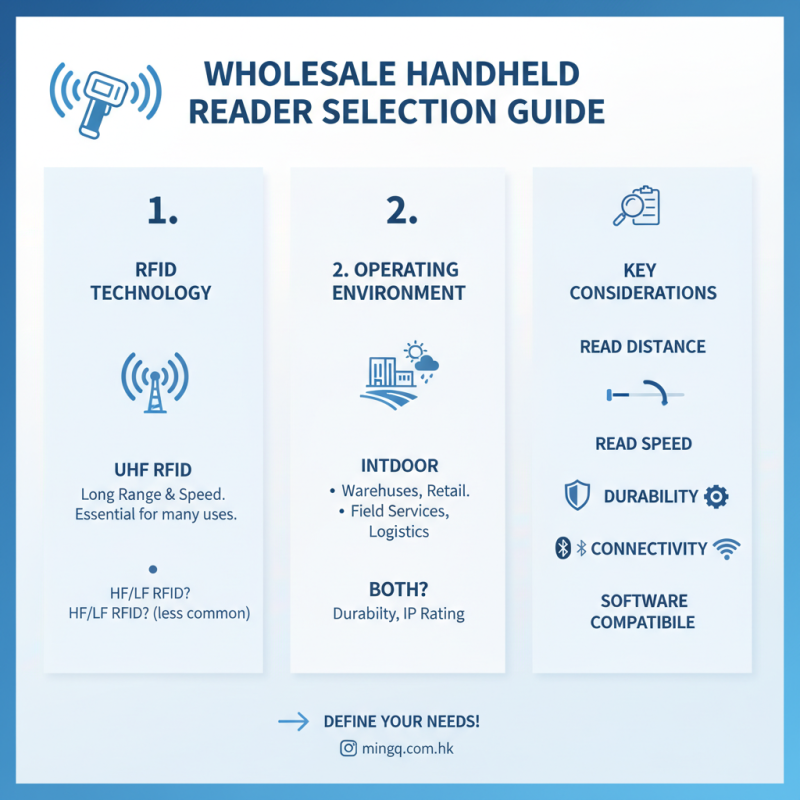
When it comes to selecting the best wholesale handheld reader, your specific requirements matter. Start by assessing the type of RFID technology you need. For many applications, Uhf Rfid Handheld Readers are essential. They offer a range of read distances and speeds. Think about the environment too. Will it be indoors, outdoors, or both? These settings can affect performance, so adjust your choice accordingly.
Next, consider the tasks your team will perform. Are you focusing on inventory management or asset tracking? Each application might require different features. Battery life can be a crucial factor for mobile usage. A short battery life may lead to frustrations, limiting efficiency.
Don’t overlook the user interface. It should be intuitive and versatile. Sometimes, overly complicated systems can slow down operations. Test various options to find what suits your workflow best. Stay open to feedback from your team, as their insights are invaluable. Focusing on these specifics can lead to a more informed decision.
Choosing the Best Handheld Reader Rfid service can be complex. When evaluating key features, consider several critical aspects. Battery life is vital for seamless operation. A device that can last a full shift without needing a charge is essential. According to industry reports, readers with extended battery life improve workflow efficiency by 30%. Hence, it is important to analyze how long the device can last under normal use.
Connectivity is another crucial factor. Handheld RFID readers should offer various connectivity options like Bluetooth and Wi-Fi. Flexibility in connectivity allows for real-time data transfer, enhancing accuracy. In a study, 65% of users reported increased productivity with devices that support multiple connections. This emphasizes the necessity of testing connectivity options before making a decision.
Tips: Assess the weight and ergonomics of the reader. A comfortable grip can reduce fatigue during long periods of use. Consider your specific environment. Readers designed for outdoor use may offer better durability in harsh conditions. Analyzing reviews from various sectors can provide insights. Remember, the best handheld reader RFID might vary based on your unique operational needs.
| Feature | Description | Importance Level |
|---|---|---|
| Read Range | Distance a reader can detect RFID tags | High |
| Battery Life | Duration the device can operate before needing a recharge | High |
| Connectivity Options | Methods available for connecting to other devices (e.g., Bluetooth, Wi-Fi) | Medium |
| Durability | Resistance to environmental factors, such as moisture and dust | High |
| User Interface | Ease of use and navigation of the device's controls and display | Medium |
| Software Compatibility | Ability to integrate with existing systems and software solutions | High |
| Cost | Overall price of the handheld RFID reader | High |
When selecting an RFID service provider, consider key factors that set them apart. Look at their experience in the industry. A provider with years of expertise likely understands diverse customer needs. They should offer solutions tailored to various business models, enhancing overall efficiency.
Evaluate the technology they use. A reliable provider utilizes the latest RFID technology, ensuring you get top performance. Pay attention to the ease of integration. The best systems seamlessly blend into your existing operations, preventing disruptions. Some providers may fall short in this area, leading to frustration.
Customer support is another essential component. Reach out to potential providers to gauge response times and helpfulness. A strong support system reflects a commitment to customer satisfaction. Ask for references and case studies; they can provide insights into the provider's reliability. Avoid settling for vague claims without evidence to back them up.
When choosing a wholesale handheld RFID reader service, customer support is crucial. You want a provider that offers reliable and responsive assistance. Consider how easily you can reach their support team. Are they available 24/7? Quick response times matter in urgent situations.
Tips: Look for reviews that mention customer service experiences. Real users provide insights that official channels may not highlight.
Training and resources should be a priority, too. A good service offers comprehensive user guides and tutorials. Check if they have dedicated support for technical issues. This can save you time and reduce frustration.
Tips: Ask potential providers about their training options. A strong program can reflect their commitment to customer satisfaction.
Maintain communication with your provider after purchase. A vendor that stays engaged can offer better support. They can help you keep your systems updated and functioning smoothly.
Tips: Share your expectations during initial discussions. Clear communication helps set the right tone for the relationship.
When considering RFID solutions, analyzing cost versus value is crucial. A study by the RFID Journal found that companies can see a 30% reduction in inventory loss with RFID technology. This statistic highlights the potential value of investing in an efficient RFID system. However, initial investment costs can vary widely. Businesses must evaluate their specific needs and the expected return on investment.
Cost factors include hardware, software, and ongoing maintenance. A comprehensive report from IDTechEx estimates the average cost of handheld RFID readers at about $1,000 to $3,000. Companies should also consider training expenses. Employees need to be equipped with sufficient knowledge to effectively utilize these devices. Failure to invest in training can lead to underperformance.
It's essential to reflect on the long-term benefits as well. While upfront costs may seem daunting, the potential for increased operational efficiency is significant. A well-implemented RFID system can streamline inventory processes and reduce labor costs by 20%. Businesses must weigh these benefits against their specific circumstances. In many cases, the right RFID solution can lead to substantial savings and improved accuracy in supply chain operations.
Reading customer reviews and testimonials can significantly influence your choice of a Wholesale Handheld Reader Rfid service. Reviews provide insight into real-world experiences with the product. When browsing, it’s crucial to focus on both positive and negative feedback. A mix of opinions reveals the strengths and weaknesses of specific services.
Look for detailed testimonials that address performance, durability, and customer support. Customers often share practical tips that can save you time and money. Some might mention the learning curve associated with their device. Reflect on how this aligns with your team’s capabilities. It matters to consider both satisfaction and frustration in reviews. A review that highlights a customer's challenge can be just as valuable as one praising outstanding service.
Another critical aspect is the frequency of reviews. A service with numerous feedback entries might indicate reliability. However, a small number of reviews can raise questions. Always check the context in which the product was used. Not all devices fit every business model. Understanding how similar businesses perceive their Wholesale Handheld Reader RFID can shape your decision-making process. Take your time reading through these evaluations; they offer wisdom born from actual usage.
: Key features include battery life, connectivity options, weight, and ergonomics.
Longer battery life ensures seamless operation without frequent recharges during shifts.
Devices with Bluetooth and Wi-Fi allow real-time data transfer, increasing productivity.
Analyze costs for hardware, software, maintenance, and employee training.
Yes, efficient systems can reduce inventory loss and labor costs significantly.
Reviews offer insights on performance and highlight both strengths and weaknesses.
Look for details on performance, durability, tips, and the learning curve involved.
Consider the context of reviews related to the specific needs and environment of your business.
Lack of training can lead to underperformance and ineffective use of the device.
Yes, balanced reviews provide a comprehensive view and highlight potential challenges.
When selecting the best wholesale Handheld Reader RFID service, it's essential to start with a solid understanding of RFID technology and its various applications. Identifying your specific needs in a handheld RFID reader is crucial, as it guides your decision-making process. Evaluating key features such as reading range, battery life, and compatibility with existing systems will help ensure that the chosen device meets your operational requirements.
Once you have established your requirements, comparing different RFID service providers becomes necessary to determine which one offers the best value. Be sure to assess customer support options, as reliable service is vital for troubleshooting and maintenance. Additionally, analyzing costs in relation to the value offered will provide insights into long-term investments. Finally, reading customer reviews and testimonials can offer real-world perspectives on product performance and supplier reliability, aiding in a well-informed decision.