Leave Your Message
0%

Picking the right RFID productscan really make or break your project—turning it into a useful tool or just an expensive mistake. For example, if you're setting up inventory in a warehouse, you might need long-range UHF tags. But in a hospital setting, HF or NFC solutions could be the way to go. The key is figuring out what matches your environment—materials, how far you need to read, how fast things move, temperature concerns, and how accurate your data needs to be.

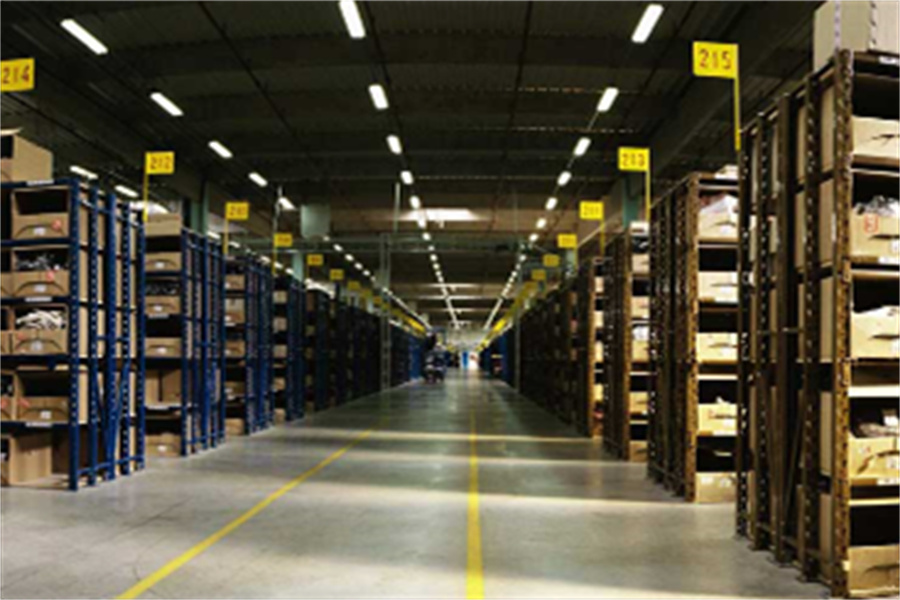
Honestly, real-world testing beats flashy specs every time. A metal shelf, for instance, can zap your signal, and liquids in containers might cause gaps in reading. A hectic loading dock? That can mess with your signals, too. You’ll find brands like Zebra Technologies and Impinj offer solid hardware options, but just going with a name doesn’t guarantee success. Everything has to click—your reader, antenna, tags, middleware, and how everything lines up with your existing systems.

Doing a small pilot run can really flag issues spreadsheets might miss. Stuff like testing tags on actual cartons, pallets, uniforms, or equipment is crucial. Keep track of missed reads, how fast scans are, how tricky the setup is, and what ongoing maintenance looks like. It's also worth asking if your staff can pick up the system without a ton of training and if managers can actually trust the data during those crazy busy shifts.

Let’s be honest—perfection isn’t realistic.

When you’re choosing your gear, think about durability, support from the supplier, how well it will mix with your current setup, future upgrade options, and overall costs. Cheap tags might save you cash upfront but could falter around metal or moisture. On the other hand, high-end equipment might be overkill for simple tracking needs. Good decision-making comes from clearly defined requirements, hands-on testing, and clear info from vendors. In this guide, we’ll walk through how to compare Rfid Products and pick a solution that actually works for your real-world conditions—not just what looks good in a sales pitch.

How to Choose the Best RFID Products for Your Business?

Define Your Business Requirements for RFID Technology

How to Choose the Best RFID Products for Your Business?

Define Your Business Requirements for RFID Technology

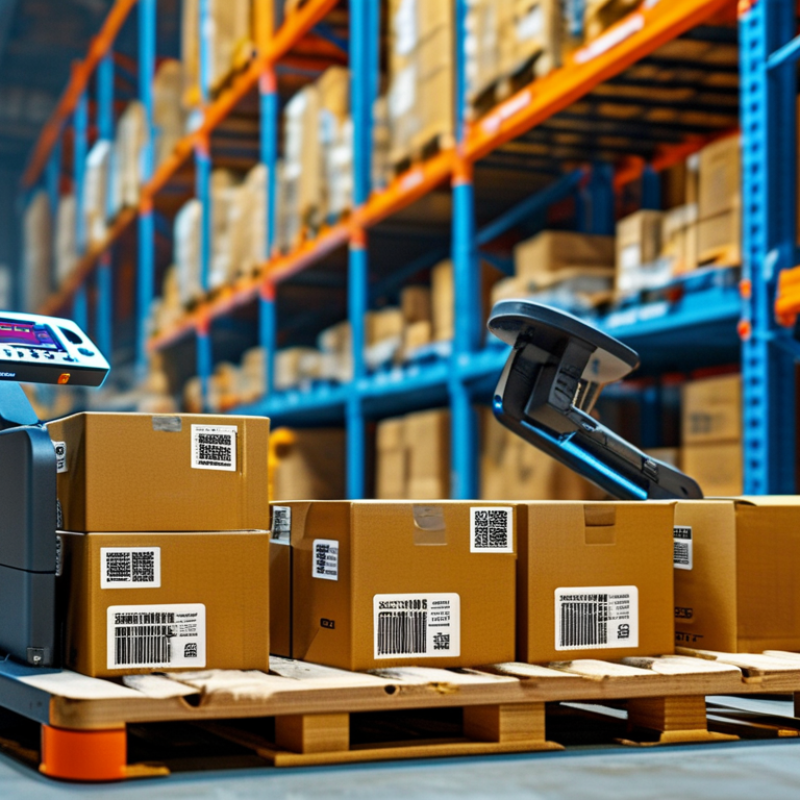
Choosing RFID products should begin with your daily workflow, not a product catalogue. Identify what must be tracked, where scanning occurs, and how fast items move. A warehouse handling metal containers needs different tags from a retail stockroom. Record read distances, temperature changes, moisture exposure, and expected tag volume. Small details matter.

Speak with the people who use the process. Their experience often reveals missed scans, awkward labels, or slow receiving steps. Decide whether you need item-level tracking, pallet identification, access control, or shipment verification. Then define measurable targets, such as a 98 percent read rate or a two-hour inventory count. These targets make supplier claims easier to test.

Compatibility also deserves careful attention. Check the tag frequency, reader placement, antenna coverage, software integration, and data security controls. A pilot test in the real environment is more reliable than a showroom demonstration. Test full boxes, moving goods, crowded shelves, and damaged packaging. I once focused too heavily on read range and overlooked label placement. That mistake produced inconsistent results. Review failures honestly, then adjust the design. A lower-cost tag may perform better when its material matches the product surface. Keep records of test conditions, results, and maintenance needs. This evidence supports informed purchasing and helps your team explain why the selected RFID system fits its actual business requirements.

How to Choose the Best RFID Products for Your Business?

Define Your Business Requirements for RFID Technology

RFID frequency selection should match the required reading distance and operating environment. LF systems typically support short-range identification, HF systems are suitable for close-proximity applications, and passive UHF systems provide longer read distances for inventory, logistics, and Asset Tracking.

Choose the Right RFID Frequency and Operating Range

How to Choose the Best RFID Products for Your Business?

Choose the Right RFID Frequency and Operating Range

Frequency determines how an RFID system behaves in your workplace. Low-frequency tags, often around 125–134 kHz, work reliably near liquids and some metals. Their reading distance is usually short. High-frequency systems at 13.56 MHz suit access cards, library items, and close-range identification. They can provide stable reads across a small counter.

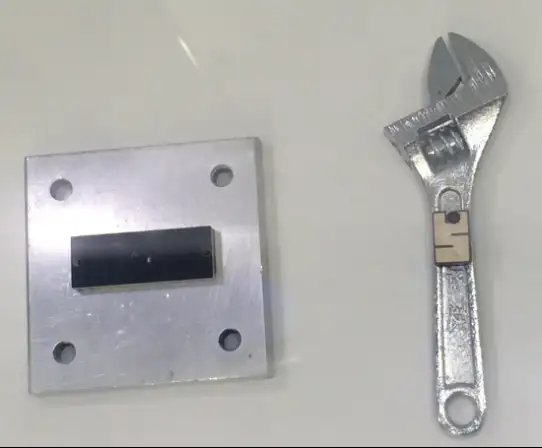
Ultra-high-frequency RFID, commonly between 860 and 960 MHz, offers a longer operating range. It can identify cartons moving through a doorway or several meters away. However, liquids and metal surfaces may absorb or reflect its signal. A warehouse filled with steel shelves can produce surprising gaps. Testing matters more than a specification sheet.

When evaluating China Rfid Products, request samples and test them with your real packaging, shelves, and reader position. Measure read accuracy during movement, not only with a stationary tag. I once expected a four-meter range, but stacked liquid containers reduced it sharply. That result changed the antenna placement and tag choice. Power settings, tag orientation, cable quality, and nearby machinery also affect performance. Keep a simple record of successful and missed reads. A practical trial may reveal that a shorter range is safer, especially where neighboring items could be scanned accidentally. Each site behaves differently. That is easy to underestimate.

Compare RFID Tags by Material, Size, and Readability

How to Choose the Best RFID Products for Your Business?

Material, size, and readability determine whether an RFID tag performs reliably in daily operations. Paper labels suit clean, dry cartons and short-term tracking. Synthetic materials resist moisture, friction, and temperature changes. For metal shelves or equipment, choose tags designed to reduce signal interference. A small tag may look cleaner, but its limited antenna can reduce reading distance. Measure the available surface before ordering.

Readability depends on more than the reader. Tag orientation, product density, packaging, and nearby metal all affect performance. Test samples on real items, not only on a clear laboratory table. A tag that reads from three meters in testing may work poorly inside a crowded storage bin. Consider the required read range, scan speed, and memory capacity. OEM Rfid Products can support specific sizes or materials, but confirm production tolerances and sample consistency before purchasing.

Tips

Place trial tags on the exact product area used in operations. Record successful and missed scans. Test cold rooms, loading areas, and stacked cartons when relevant. Do not choose the smallest tag automatically. I once underestimated packaging thickness, and the final read range suffered. That mistake was avoidable. Ask suppliers for technical data, test reports, and replacement procedures. Keep a small batch for future verification, because materials and packaging may change.

Select RFID Readers and Antennas for Your Environment

Choosing RFID readers and antennas starts with the physical environment, not the product catalogue. A warehouse aisle needs different equipment from a refrigerated room or a checkout counter. Metal racks can reflect radio signals, while liquid-filled cartons can absorb them. I have seen a strong reader perform poorly because its antenna faced a steel beam. The mistake was not the reader. It was the installation.

The 2024 RAIN RFID industry report estimated 52.8 billion RFID tag chips shipped in 2023, showing how widely these systems are being deployed. This scale makes field testing essential. Select a reader with suitable sensitivity, connection options, and regional frequency compliance. Then match the antenna’s polarization to the tag orientation. Circular polarization supports mixed tag angles, while linear polarization can offer stronger performance along a controlled path. Measure the read zone with real cartons, labels, and people nearby. Empty-room tests are misleading.

Keep cables short where possible. Use appropriate cable quality and inspect connectors before blaming software. For Wholesale Rfid Products, request tested performance data, not only maximum read distance. Antenna gain, beamwidth, and power settings must fit the space. The 2024 RFID market outlook from a leading research publisher projects continued double-digit growth, but growth does not guarantee reliable deployment. I would also challenge my first design after observing seasonal stock changes. A layout that works in January may fail when dense liquid products arrive. Small blind spots matter. Test them deliberately.

Evaluate RFID Software, Integration, and Data Management

Choosing High-Quality Rfid Products requires more than comparing read ranges or tag prices. The software layer decides whether RFID data becomes useful inventory information. The 2024 MHI Annual Industry Report found that 55% of supply-chain leaders planned to increase technology investment. That investment needs measurable outcomes, not another dashboard.

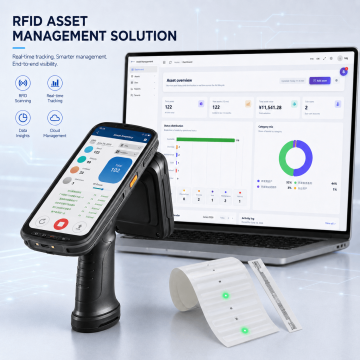
Test how the platform handles missed reads, duplicate events, and damaged tags. A receiving clerk should see a clear exception on a handheld screen, not search through raw timestamps. Integration also matters. Confirm that RFID events can connect with warehouse, inventory, and order-management systems through documented APIs. GS1’s EPCIS standard provides a structured method for recording what happened, where, when, and why. That structure supports traceability across facilities.

Data quality needs daily attention. Set rules for reader zones, duplicate filtering, time synchronization, and user permissions. During a pilot, compare RFID counts with physical counts at receiving and shipping. Measure read accuracy, labor minutes, correction rates, and system response time. Real warehouses are messier. Metal shelving, liquid products, and crowded dock doors can expose weak assumptions. A 2023 industry survey by the Auburn University RFID Lab highlighted the importance of controlled testing before wider deployment. The first design may be wrong. Keep the pilot small, document failures, and let operators challenge the workflow before scaling it.

Assess Product Quality, Security, Scalability, and Total Cost

How to Choose the Best RFID Products for Your Business?

Assess Product Quality, Security, Scalability, and Total Cost

Product quality begins with reliable reading in real working conditions. Test tags on metal, plastic, liquid containers, and moving items. A warehouse trial often reveals weaknesses that a product sheet hides. Check read distance, material durability, temperature tolerance, and data consistency. Ask for test records and failure rates. I have seen inexpensive tags become costly after repeated replacements. Small errors can disrupt inventory counts.

Security requires more than a password. Look for controlled access, encrypted communication, secure data storage, and detailed activity logs. Review how devices receive firmware updates and how administrators remove lost credentials. Protect personal and operational data throughout the system. A practical assessment should include unauthorized scanning attempts and network interruptions. Security testing may feel slow. Skipping it creates uncertainty.

Scalability affects both equipment and daily workflows. Confirm whether readers can support future locations, higher item volumes, and different tag types. Check integration options for inventory, production, and asset records. Total cost includes tags, readers, software, installation, training, maintenance, energy use, and replacement stock. Calculate costs over three to five years, not only the purchase price. A pilot with real staff provides stronger evidence than a polished demonstration. It may expose confusing screens or weak processes. That is useful. The best choice is not always the most advanced system; it is the one that remains dependable, secure, expandable, and financially realistic as operations change.

How to Choose the Best RFID Products for Your Business? — Assess Product Quality, Security, Scalability, and Total Cost
RFID Product Type Typical Operating Frequency Product Quality Indicators Security Capabilities Scalability Potential Typical Read Performance Indicative Unit Cost Estimated 3-Year Total Cost of Ownership Best-Fit Business Use
Passive UHF RFID Labels 860–960 MHz High
Consistent antenna tuning, strong adhesive, printable surface, and reliable operation across normal warehouse temperatures.
Basic–Medium
Suitable for item identification; security improves when paired with protected databases, access controls, and tag-kill features.
Very High
Can be deployed across large inventories because tags are low-cost and require no battery.
Commonly 3–10 m with fixed readers and suitable orientation; performance varies with material, reader power, and installation. US$0.05–US$0.30 per tag Approximately US$8,000–US$45,000 for 100,000 tagged items, reader infrastructure, software, and deployment labor. Inventory visibility, apparel, cartons, distribution centers, and asset tracking.
Passive HF/NFC Tags 13.56 MHz High
Stable short-range communication, broad form-factor availability, and good suitability for controlled tap or near-field interactions.
Medium–High
Certain tag types support password protection, mutual authentication, and encrypted transactions when compatible systems are used.
High
Easy to scale for item authentication, access points, and mobile interactions; read range is intentionally limited.
Typically up to a few centimeters for NFC and generally below 1 m for many HF applications. US$0.10–US$1.50 per tag Approximately US$5,000–US$35,000 for 10,000 tagged items, readers, software integration, and deployment. Product authentication, ticketing, access control, smart labels, and customer engagement.
Reusable Hard RFID Tags LF, HF, or UHF Very High
Rugged housings, impact resistance, stronger attachment methods, and optional resistance to water, dust, chemicals, and temperature changes.
Basic–Medium
Physical durability protects the identifier, while logical security depends on the selected chip, reader controls, and backend system.
High
Reusable designs can lower replacement rates and support closed-loop asset programs.
Approximately 1–12 m depending on frequency, tag design, reader configuration, and the tagged asset. US$1.00–US$15.00 per tag Approximately US$20,000–US$90,000 for 10,000 reusable assets, readers, mounting hardware, software, and maintenance. Returnable transport items, tools, cylinders, industrial equipment, and reusable containers.
Fixed RFID Readers Usually UHF; some HF models available High
Evaluate read stability, multi-antenna support, ingress protection, temperature range, network reliability, and firmware maintenance.
Medium–High
Prefer encrypted management protocols, role-based access, signed firmware, secure network configuration, and event logging.
Very High
Supports portal, conveyor, dock-door, and multi-zone deployments with centralized monitoring.
Up to several hundred tag reads per second in optimized environments; actual throughput depends on tag density and interference. US$500–US$3,000 per reader Approximately US$25,000–US$150,000 for 10–30 readers, antennas, cabling, middleware, installation, and support. Automated receiving, shipping verification, dock doors, conveyor lines, and warehouse portals.
Handheld RFID Readers Usually UHF; optional barcode scanning High
Assess drop resistance, battery life, ergonomic design, trigger durability, display visibility, and operating-system support.
Medium–High
Look for device encryption, secure authentication, mobile-device management, remote lock, patch support, and application-level controls.
High
Additional devices and users can be added incrementally without changing the entire infrastructure.
Typical practical read distance is approximately 3–9 m, depending on antenna, tag orientation, reader power, and environment. US$1,000–US$4,000 per device Approximately US$15,000–US$100,000 for 5–20 devices, charging equipment, applications, integration, and support. Cycle counting, stock locating, field service, retail audits, and exception handling.
Battery-Assisted RFID Tags Commonly UHF or active sub-GHz systems High
Check battery life, environmental sealing, sensor accuracy, transmission consistency, and battery replacement procedures.
Medium–High
Security depends on encrypted communications, authenticated gateways, controlled provisioning, and secure cloud or on-premise software.
Medium–High
Suitable for high-value assets, but battery management and higher tag prices affect large-scale deployment.
Often 15–100 m or more in suitable conditions; range is affected by transmit power, building structure, and gateway placement. US$5.00–US$30.00 per tag Approximately US$40,000–US$200,000 for 1,000 monitored assets, gateways, software, batteries, and maintenance. Cold-chain monitoring, high-value equipment, location tracking, and condition-based asset management.
RFID Middleware and Analytics Software Not frequency-dependent High
Evaluate event filtering, duplicate-read suppression, API reliability, dashboard performance, uptime, and integration documentation.
High
Essential controls include encryption in transit, role-based permissions, audit trails, vulnerability management, and configurable data retention.
Very High
Cloud or modular architectures can support additional sites, readers, users, and transaction volumes.
Performance is measured by event-processing capacity, latency, uptime, and integration throughput rather than read distance. US$500–US$10,000 per month or project-based licensing Approximately US$30,000–US$250,000 over three years, including configuration, integrations, hosting, training, and support. Multi-site visibility, ERP/WMS integration, exception management, reporting, and operational analytics.
Cost reference: Figures are indicative planning ranges in USD for generic RFID deployments. Actual total cost depends on tag volume, site conditions, integration complexity, installation labor, maintenance, software licensing, security requirements, and regulatory or environmental constraints.

Portals & Tunnel Antennas for Integrated RFID Series: Design, Selection, and Applications

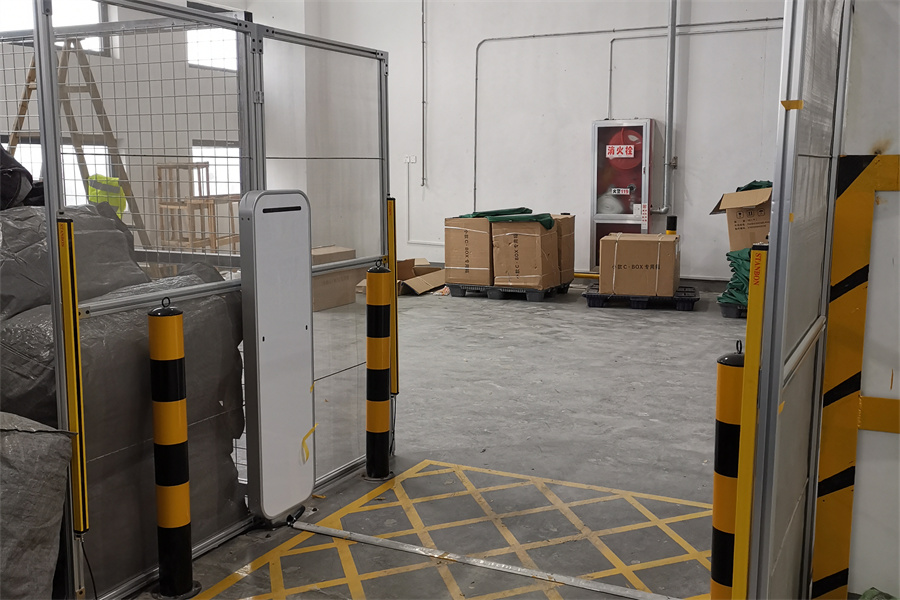
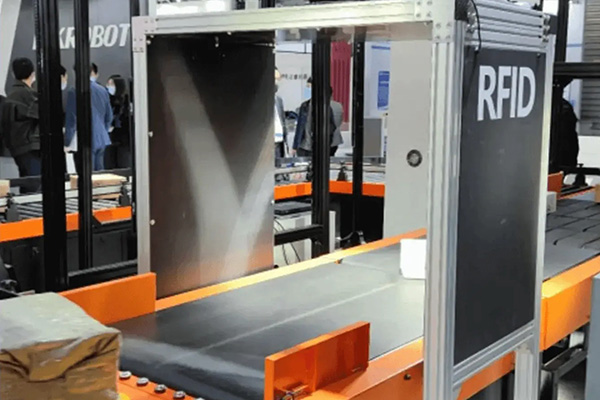
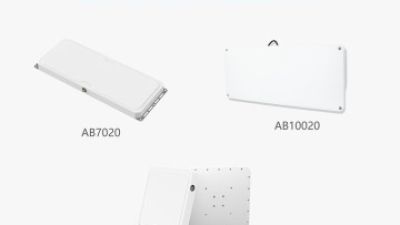
Portals and tunnel antennas are essential components in large-scale RFID integrated equipment, especially where items must be identified quickly while moving through warehouse, logistics, retail, or manufacturing environments. Unlike single-direction readers, a portal system combines multiple antenna positions to create a controlled reading zone. Tunnel antennas further improve tag visibility by surrounding cartons, pallets, or containers, helping capture electronic tags from different orientations with minimal blind spots. Their long recognition distance supports automated receiving, sorting, inventory tracking, and shipment verification.

Industry demand continues to grow as organizations pursue higher supply-chain visibility. According to the RAIN Alliance 2024 industry report, global RAIN RFID tag shipments exceeded 40 billion units in 2023, reflecting the rapid expansion of item-level identification. Grand View Research has also projected strong growth for the global RFID market through the decade, driven by logistics automation, retail inventory accuracy, and industrial digitization. These trends increase the need for antennas that deliver stable performance in dense, high-throughput environments.

When selecting a portal or tunnel antenna, engineers should consider operating frequency, read-zone dimensions, conveyor speed, tag placement, reader compatibility, and resistance to electromagnetic interference. Proper antenna spacing and polarization can enable rapid identification in any direction while reducing missed reads. Whether a customized configuration or a general-purpose product is required, reliable, cost-effective antenna solutions can be matched to specific equipment layouts and application goals, with detailed quotations and responsive technical support available for inquiries and orders.

FAQS

: How should I choose an RFID frequency?

: Low-frequency tags work near liquids and some metals, but their reading range is short. High-frequency systems suit close-range identification. Ultra-high-frequency tags provide longer range, but liquids and metal can weaken signals.

What reading range can I expect?

Specifications provide estimates, not guarantees. Test tags with real packaging, shelves, reader positions, and moving items. A four-meter range may shrink sharply near stacked liquid containers.

Why should I test RFID tags on real products?

Packaging thickness, product density, metal, and tag orientation affect readability. A clear laboratory table hides practical problems. Crowded bins can create missed scans.

Which tag materials suit different workplaces?

Paper labels suit clean, dry cartons and short-term tracking. Synthetic materials handle moisture, friction, and temperature changes better. For metal equipment, use tags designed to reduce signal interference.

Should I always choose the smallest RFID tag?

No. Small tags may look neat, but their antennas can reduce reading distance. Measure the available surface before ordering. I once underestimated packaging thickness, and the final range suffered.

How can I improve RFID reading accuracy?

Place trial tags on the exact product area used during operations. Test movement, cold rooms, loading areas, and stacked cartons. Record successful and missed reads. Keep the record simple.

What security features should an RFID system include?

Look for controlled access, encrypted communication, secure storage, and detailed activity logs. Check firmware updates and lost-credential removal procedures. Test unauthorized scanning attempts and network interruptions. Skipping security tests creates uncertainty.

How should I calculate the total RFID cost?

Include tags, readers, software, installation, training, maintenance, energy, and replacement stock. Calculate costs over three to five years. A pilot with real staff may reveal confusing screens or weak workflows. That evidence matters.

Conclusion

Choosing the right Rfid Products begins with a clear understanding of your business goals, workflow, and operating environment. Determine whether you need RFID for inventory tracking, asset management, access control, or process automation, then select a frequency and reading range that match your application. Compare tag materials, sizes, memory capacity, durability, and readability on different surfaces. It is also important to choose readers and antennas that can perform reliably in your facility, even in areas with metal, liquids, or signal interference.

A complete RFID solution should include software that supports data collection, reporting, system integration, and secure user management. When evaluating products, consider build quality, data protection, scalability, maintenance requirements, and total cost of ownership rather than focusing only on the initial purchase price. Testing products in real operating conditions can help confirm performance and reduce implementation risks. By balancing technical capability, flexibility, reliability, and long-term value, businesses can select an RFID system that supports efficient operations and future growth.

Ethan

Ethan

Ethan is a dedicated marketing professional at Shenzhen Jinruiming Technology Co., Ltd., where he plays a pivotal role in shaping the company's online presence. With a deep understanding of the company's cutting-edge products, Ethan frequently updates the professional blog on the company website,......
Previous Why Choose UHF RFID Antennas for Your Supply Chain Needs?