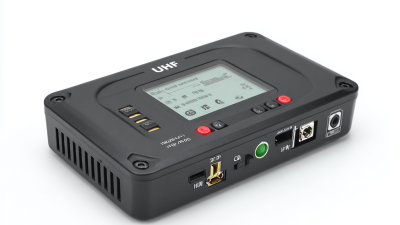
You know, the global market for IoT solutions is really taking off, and I’ve got to say, the role of Antenna Rfid Uhf technologyis becoming super important across the board. We're seeing it pop up in everything from how we manage inventory to keeping an eye on our assets. A recent report fromMordor Intelligence even predicts that the UHF RFID market could grow by over 14% by 2025! That’s mostly thanks to some pretty cool advancements in antenna tech and a growing push for automation in various industries.
At MingQ Technology Limited, we’re all about staying on the cutting edge with our IoT software and hardware offerings. We're trying to stay ahead of the curve when it comes to these new trends. With our skills in communications, AI, and industrial IoT solutions, we really get what global buyers are looking for. In this blog post, we’ll dig into what’s on the horizon for Uhf Rfid Antenna technology and how these innovations are set to change the game for IoT applications around the world.
Emerging Trends in UHF RFID Antenna Technology for 2025
As we move towards 2025, the UHF RFID antenna technology is poised for significant advancements, driven by the burgeoning demand within the global RFID market. With projections estimating the market to grow from $17.12 billion in 2025 to an impressive $37.71 billion by 2032, the industry is set to experience a compound annual growth rate (CAGR) of 11.9%. This surge emphasizes the critical role that UHF RFID antennas will play in improving efficiency and accuracy across various sectors, including retail, logistics, and healthcare.
Emerging trends indicate that innovations in UHF RFID antenna design and performance will be key to meeting the evolving needs of global buyers. Enhanced read ranges, miniaturization, and increased sensitivity are just a few of the advancements that will redefine how businesses leverage RFID technology. At MingQ Technology Limited, we are dedicated to developing cutting-edge IoT solutions that integrate seamlessly with these emerging technologies. Our expertise in artificial intelligence and industrial IoT ensures that we remain at the forefront of advancements, providing our clients with reliable and efficient RFID systems tailored to meet the demands of the future.

Key Innovations in UHF RFID Design and Performance Enhancements
Looking ahead to 2025, it’s pretty exciting to see how UHF RFID antenna technology is really gearing up for some fantastic advancements. This stuff is about to flip the script on inventory management and how we capture data! Among the game-changer innovations, we’ve got design upgrades like beamforming techniques—these are going to boost reading range and accuracy for RFID systems like you wouldn’t believe. What this means is better inventory tracking and fewer mistakes when capturing data, giving retailers and manufacturers the solid info they need to make smart decisions.
On top of that, we’re seeing some cool performance improvements, like lightweight and flexible materials that can easily fit into all sorts of environments and onto different surfaces. This isn’t just about being sleek—it’s also about durability and functionality, especially for tougher conditions, like those you find outdoors or in industrial spaces. Plus, with cutting-edge computational algorithms thrown into the mix, RFID systems are getting smarter. They’ll adjust to their surroundings, making sure they perform consistently no matter what kind of interference or signal issues crop up. As the global market keeps changing, these innovations are going to give buyers a real edge in using UHF RFID tech, which will ramp up efficiency and productivity across the board.
Alternatives to Traditional UHF RFID Antennas: A Comparative Overview
You know, as the need for smart and efficient ways to manage inventory and track assets continues to rise, UHF RFID antenna technology is really stepping up in importance. For ages, traditional UHF RFID antennas have pretty much ruled the roost, but as we look toward 2025, a bunch of new options are popping up. These alternatives are really taking advantage of innovations in information communication and AI, which is super exciting! They offer better performance, extended read ranges, and can tackle those tricky environments where the old antennas just can’t keep up.
At MingQ Technology Limited, we're all about riding this wave of change. We’re constantly pushing the boundaries with our IoT software and hardware solutions. Our approach goes beyond just the traditional UHF RFID systems; we’re diving into cutting-edge tech that makes complicated operations a whole lot easier. By providing alternatives that tap into our know-how in the industrial IoT space, we’re giving global buyers the tools to take a fresh perspective on RFID technology. This way, they can stay on top in a market that’s changing fast. With our innovative solutions, clients can truly enhance their efficiency and adaptability, completely transforming how they manage their supply chains and assets.
Integrating UHF RFID with IoT: Future Prospects and Challenges
So, as we dive deeper into the world of UHF RFID technology and its buddy, the Internet of Things (IoT), there's a ton of exciting stuff on the horizon, but let's not kid ourselves—there are some pretty big challenges ahead too. Those UHF RFID antennas? They’re super important for making sure our smart devices can talk to each other effortlessly. This means we can track and monitor stuff in real time, which is a game changer for all sorts of industries. We’re seeing some cool innovations in passive IoT tags, and it’s clear that companies are really stepping up their game. Especially with 5G rolling out, which is going to give us the speed and reliability we need for smooth data transfers.
But, hey, the path forward isn’t all smooth sailing. With more people and businesses jumping on the UHF RFID bandwagon, we’re going to hit some bumps, like making sure different systems can work together and keeping data safe. It’s crucial that we develop standards for UHF RFID and its integration with IoT to tackle these issues head-on. If industries and global players team up, we can create an environment where these technologies flourish, leading us to a future where smart, interconnected systems really change the game in logistics, inventory management, and even more areas.
Sustainability in UHF RFID Technology: Eco-Friendly Solutions for 2025
Looking ahead to 2025, it’s clear that sustainability in UHF RFID technology is becoming super important for industries all over the world. Recent reports show that the UHF RFID market is set to grow by about 9% each year from 2020 to 2025, and a big part of that is the rising demand for eco-friendly solutions. More and more companies are really putting sustainability at the top of their list. They’re working on stuff like antennas made from recyclable materials and energy-efficient designs. This isn’t just good for the planet; it also strikes a chord with consumers who are increasingly worried about sustainability issues.
When it comes to making UHF RFID more sustainable, innovations like bio-based plastics and low-energy chipsets are really making a splash. A study from Allied Market Research in 2022 found that embracing green technologies could cut carbon footprints by as much as 30% in the RFID industry. It’s a smart move for businesses to regularly check their supply chains and sources, keeping an eye on sustainable materials and processes.
**Here’s a tip:** If you want to stay ahead in this changing world, look for suppliers who are open about their sustainability efforts. Connecting with manufacturers that focus on green technology can not only help save costs in the long run but also boost your brand’s image. Plus, it’s worth integrating UHF RFID solutions that not only tick the efficiency boxes but also align with eco-friendly initiatives. By making savvy choices, companies can really help pave the way for a more sustainable future.
Exploring the Future of UHF RFID Antenna Technology Trends for Global Buyers in 2025 - Sustainability in UHF RFID Technology: Eco-Friendly Solutions for 2025
| Dimension | Current Trends | Future Predictions for 2025 | Sustainability Features |
| Antenna Design | Compact and lightweight designs | Integration of advanced materials for better performance | Use of recyclable materials |
| Energy Efficiency | Low power consumption | Smart energy harvesting techniques | Energy-efficient manufacturing processes |
| Integration with IoT | Increased use in smart devices | Seamless connectivity with IoT platforms | Support for eco-friendly applications |
| Regulatory Compliance | Compliance with global standards | Stricter regulations on electronic waste | Adoption of circular economy practices |
| Market Trends | Growing demand in retail and logistics | Expansion in healthcare applications | Increased investment in sustainable solutions |
Global Market Insights: Consumer Preferences and Impact on UHF RFID Development
Looking ahead to 2025, UHF RFID antenna tech is on the brink of some serious change! It's all about how consumer tastes are shifting and the growing need for smarter IoT solutions. With more businesses jumping on the UHF RFID bandwagon for managing inventory and logistics, really getting to grips with what consumers want has never been more crucial. Nowadays, buyers are searching for antennas that not only deliver top-notch performance but also mesh well with their existing IoT setups. That’s where companies like MingQ Technology Limited really shine with their flexible product range.
If you're one of those global buyers, keep in mind that scalability of your chosen UHF RFID solutions is key. You want to make sure that your antenna tech can keep pace with the rapid changes in IoT and AI – it’s super important! Also, teaming up with providers who can offer solid support and know-how during installation can really boost how efficiently your RFID systems run.
And let’s not forget about sustainability – that's another big trend shaking things up in the market. Consumers are more drawn to brands that put eco-friendly practices front and center in their tech development. This shift is pushing manufacturers to come up with sustainable innovations while making sure their products align with circular economy principles, which is a win-win for both businesses and consumers!
FAQS
: The global RFID market is projected to grow from $17.12 billion in 2025 to $37.71 billion by 2032.
Key advancements expected include enhanced read ranges, miniaturization, and increased sensitivity to improve efficiency and accuracy.
MingQ Technology Limited is dedicated to developing cutting-edge IoT solutions and integrating artificial intelligence to provide clients with reliable and efficient RFID systems.
Alternatives leveraging advancements in information communication and artificial intelligence are emerging, promising enhanced performance and the ability to handle complex environments.
Sustainability is becoming a pivotal focus, with a demand for eco-friendly solutions including antennas made from recyclable materials and energy-efficient designs.
Companies can reduce their carbon footprint, improve brand image, and potentially achieve long-term cost savings by integrating sustainable practices in their RFID systems.
Innovations include the use of bio-based plastics and low-energy chipsets, which aim to minimize environmental impact.
Engaging with sustainable suppliers can help businesses align with eco-friendly initiatives, ultimately leading to a positive brand image and compliance with consumer demands for sustainability.
Companies should adopt a multi-faceted approach to RFID technology and seek suppliers who invest in innovation and sustainability to enhance their operational efficiency.
Regular audits allow businesses to focus on sustainable materials and processes, which can help reduce environmental impacts and align with corporate sustainability goals.

 Rotary HF RFID Tag Reader GRH-I40 Suitable for Assembly Lines
 Industrial-grade High-frequency Integrated Reader GRH-I65 Suitable for Asset Tracking
 With ESD Protection HF RFID Reader GRH-I68 Suitable for Progress Tracking
 Proximity HF RFID Reader GRH-M30 Suitable for Manufacturing Workshops
 Desktop HF RFID Scanner GRH-D80-HID Suitable for Card-issuing Applications
 High Frequency Medium Distance Reader GRH-I90 Suitable for Logistics Production Line
 UHF RFID Portals and Tunnel Machine RFly-AM3000 for Access Control
 Narrow RFID Portals Series TD-P20040-SS for Single Tag Entry and Exit Identification Scenario
 RFID Transmission Line Simple Identification Tunnel Machine (TD-T3050)
 Vision and RFID Tunnel Machine TD-T7692-RV for Logistics Sorting
 RFID Transmission Line Identification Tunnel Machine TD-T10090
 RFID Mobile Inventory Tunnel Machine TD-T65150 for Conveyor Belts
 High-Performance Far-Field Antennas for Broad Coverage.
 Multi-Purpose Antennas: Flexibility for Diverse Applications
 Near-Field Antennas for Short-Distance Tag Detection.
 Portals & Tunnel Antennas for Integrated RFID Series
 Slimline PCB Antennas for Warehousing and Logistics
 Miniaturized and Thin Antennas can Provide Good Performance in a Smaller Size.
 GPS Tracker for Vehicles, Car, Kids, Assets.
 CO2 Sensors Detect CO2 Gas through Alarms, Suitable for Offices, Planting Tents.
 Door Sensor, Detect Open and Closed Doors or Windows, Sends Alerts, Triggers Siren.
 Wireless Level Sensor Equipped with a 5-Meter Detection Line, Suitable for Water Tanks
 Real Time Monitoring of Air Quality Using PM2.5/PM10 Sensors.
 Smoke Sensor, Fire Alarm Smoke Detector with Test Button and Low Battery Reminder.
 Soil Stress Sensor,Bridge and Tunnel Monitors.
 Vibration Sensor Monitors Equipment, Like Conveyors and Motors, for Operational Status.
 E -Paper Display
 Smart Water Sensor Alarms, 1.2 M Detection Line.
 CO Sensor for Basements Home Office House Bedroom Living Room Car, Light Plug and Play.
 Temperature and Humidity Sensor
 Multi-sensor GD-ME
 Temperature Sensors Monitor the Surface Temperature of Various Heating Equipment.-1
 Signal Enhancement Terminal, Long Range Coverage.
 Multi-Protocol Communication Gateway, App Remote Control.
 Edge Vision Gateway can Access Various Mainstream Cameras, Suitable for Office, Factory.
 GBS-3550 Outdoor Sensor Gateway,LoRa, 2/3/4G Communication.
 Smart WiFi Gateway, Realize Remote Control.
 Ultra-Low-Power Solar-Powered Intelligent Gateway (Outdoor)
 IP67-protected Integrated RFID Reader Writer RFly-I165 for Supply Chain
 Long-range Distance UHF RFID Reader RFly-I195 for Inventory Management
 Small UHF RFID Tag Reader RFly-I300 for Cars
 Two-channel Compact Fixed RFID Reader RFly-F210 for Warehousing
 Four Channels Fixed UHF RFID Reader RFly-R6 for Supply Chain
 8-channel UHF RFID Tag Reader RFly-R8 for File Cabinet Identification
 Bluetooth Portable RFID Reader and Writer GRU-HBT100 for Inventory Management
 Industrial Grade Handheld UHF RFID Reader GRU-HC520 Suitable for Logistics
 RFID Gateway Networking System
 RFID Passive Temperature Measurement System
 RFID Tags for Container Turnover Management
 RFID Tags for Equipment O&M Management
 RFID Tags for Manufacturing Management
 RFID Tags for Tool Management
 A Kits for Equipment Condition Detection
 A Kits for Office Computer Room Environment Monitoring
 A Kits for Reservoir Environmental Monitoring
 A Kits for Storage Space Environment Monitoring
 A Kits for Stress Detection of Underground Tunnel
 A Kits for Urban Environment Monitoring
 Intelligent IoT Monitoring Platform
 Integrating Multiple Functional OTG Demo Software
 HF Demo Software
 UHF Demo Software