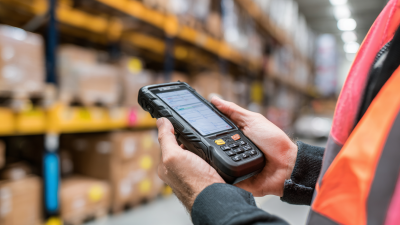
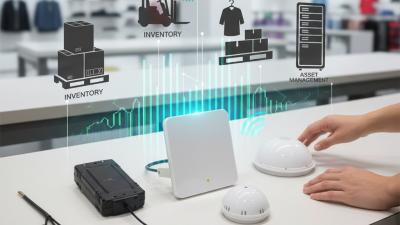
In today’s fast-paced tech world, picking the right Uhf Rfid Handheld Readercan honestly feel pretty overwhelming. I mean, with so many options out there, it’s easy to get lost! Experts like Dr. Emily Chen from SmartTech Solutions often stress just how much the design of your RFID reader matters — she says, “The way your uhf rfid handheld is built can really make or break how smoothly things run.” It’s a good reminder that choosing the right device isn’t just about price or brand, but about how well it fits your needs.
Think about what you’re actually gonna use it for. Are you scanning inventory in a warehouse, or are you tracking assets in a sprawling facility? Those are pretty different scenarios, and your perfect reader should match up — easy to handle, tough enough to survive daily use, and capable of reading tags from various distances. Unfortunately, not all devices tick all those boxes.
cost-wise, yeah, there are plenty of cheaper options out there — but quality can really suffer. Sometimes they perform unevenly, which just ends up being super frustrating. So, ask yourself, is saving a few bucks worth it if the device keeps letting you down? More often than not, investing in a well-designed UHF RFID handheld reader ends up being the smarter move. Finding that balance between good quality and your budget is key to actually getting stuff done effectively without breaking the bank.
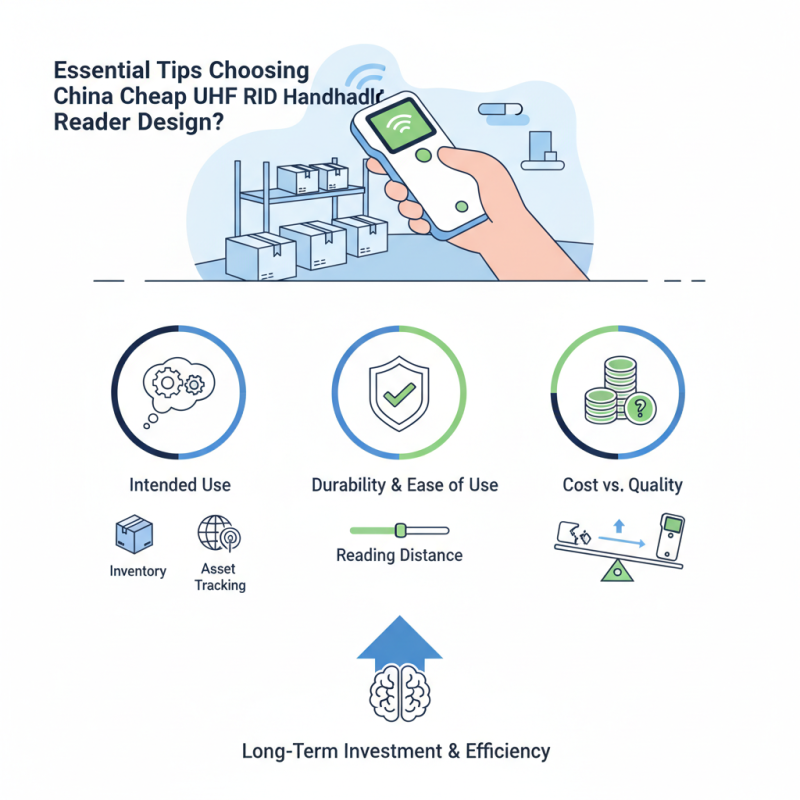
Key Features to Consider in UHF RFID Handheld Reader Design
When selecting a UHF RFID handheld reader, several key features should guide your decision. First, consider the read range. A reader that can effectively capture tags from a distance can significantly enhance efficiency. However, it's important to reflect on your specific application needs. A powerful reader might offer extensive range but could be more expensive. Finding the balance is essential.
Battery life is another critical factor. Long-lasting batteries can keep your operations running smoothly. If the battery depletes quickly, it interrupts workflows. Look for options that provide at least a full day of use. Moreover, the weight of the device matters too. Lightweight readers are easier to handle during long operations. An ergonomic design can reduce fatigue, which is often overlooked but significant.
Also, take note of connectivity options. A reader with versatile connectivity can easily integrate with your existing system. This feature prevents unnecessary complexity in your processes. Additionally, software compatibility is crucial. Some models claim to be user-friendly but may not support the programs you use. Thus, being thorough in evaluating these aspects can help avoid frustrating mismatches. In the realm of RFID technology, it’s essential to explore and not just settle for the Famous Uhf Rfid Handheld Reader without assessing how it fits your requirements.
Key Features to Consider in UHF RFID Handheld Reader Design
Understanding UHF RFID Technology and Its Applications in Industry
UHF RFID technologyplays a crucial role in various industries, revolutionizing data collection and management. It uses radio waves to identify and track objects equipped with RFID Tags. This technology enhances supply chain efficiency, streamlining inventory management and reducing human error. For many businesses, understanding its applications can lead tocost savings and improved productivity.
Industries such as retail, logistics, and manufacturing extensively utilize UHF RFID solutions. Retailers often deploy these systems for real-time tracking of inventory levels. Logistics companies rely on RFID to monitor shipments and ensure accurate delivery. However, some users report challenges in implementation. Inconsistent tag readings in cluttered environments can lead to inaccuracies, which must be addressed to ensure reliability.
Choosing a cost-effective handheld reader design is essential. Users need to consider factors like battery life, read range, and durability. While affordability is key, it shouldn't come at the cost of performance. Finding a balance can be tricky. Testing different models in real-world scenarios helps identify which device best fits operational needs. Embracing UHF RFID technology requires careful thought and adaptation to maximize its benefits.
Cost-effective Materials for Manufacturing RFID Handheld Readers
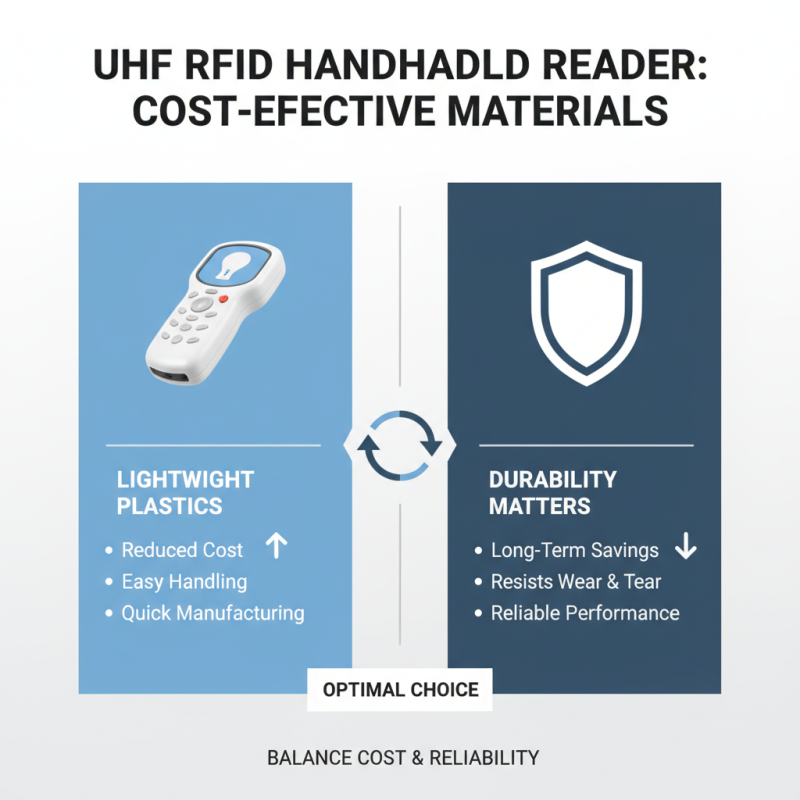
When designing a cost-effective UHF RFID handheld reader, choosing the right materials is crucial. Many manufacturers overlook the long-term impact of their choices. Lightweight plastics can be a good starting point. They reduce costs and are easier to handle. However, make sure they are durable enough for repeated use.
Metal housing is another option. It enhances durability but can increase costs. A smart approach involves a mix of materials. For example, using a sturdy plastic trim combined with metal can optimize both cost and durability. This hybrid design often leads to better performance.
Here are a few tips for your design process. Evaluate local suppliers for materials. This can significantly cut shipping costs and lead times. Don't get caught up in using the latest materials. Sometimes, tried and tested options work best. Also, consider the end-user experience. Handheld readers should feel good in hand, affecting user satisfaction. In the end, careful material selection can make a significant difference in both performance and cost.
Evaluating Read Range and Sensitivity in UHF RFID Readers
When considering a UHF RFID handheld reader, evaluating read range and sensitivity is crucial. The effectiveness of these devices often hinges on their ability to accurately read tags at varying distances. A true test of a reader's sensitivity lies in its performance in real-world applications. You may find that some readers perform well in a lab but struggle in challenging environments.
Tips for assessing read range: Test devices in different scenarios. Measure how far they can accurately read tags. Make sure to include different tag types and materials. Also, consider environmental factors like interference from other devices, which can impact performance. Don’t overlook the importance of antenna design; it can significantly affect the read range of a High-Quality Uhf Rfid Handheld Reader.
Sensitivity must also be carefully evaluated. Look for readers that can detect weak signals from far away. It's not just about distance; it's about reliability. In some cases, you might notice that certain readers miss tags that others can detect easily. This inconsistency is worth reflecting on. Sometimes, a lower-cost option may underperform in critical situations. Balancing cost and effectiveness is key in finding the right device for your needs.
Battery Life and Power Management in Handheld RFID Devices
When selecting a China Uhf Rfid Handheld Reader, battery life and power management are crucial factors. Recent industry reports highlight that power management can increase operational efficiency by up to 40%. A reliable handheld reader should offer extended battery performance, enabling users to work longer without interruption. Users often overlook how battery capacity impacts scanning speed and accuracy. Poor battery performance leads to slower read times and, consequently, diminished productivity.
Energy-efficient devices consume less power during operational tasks. This is crucial, especially in environments with high scanning volumes, such as warehouses and retail spaces. Studies show that a handheld reader with a well-optimized power management system can last up to 12 hours on a single charge. However, many models fall short, providing only 6-8 hours under heavy use. It's essential to analyze specifications thoroughly and seek user feedback. Reflecting on user experiences can help you avoid devices with short battery life and poor power efficiency.
Temperature extremes and frequent use also affect performance. Devices may struggle to maintain optimal battery life under demanding conditions. Many users report that their handheld readers face overheating issues, resulting in reduced efficiency. Product design plays a significant role in managing power consumption. Features like sleep modes and efficient processing chips can contribute significantly. Always examine these aspects before making a choice. A thoughtful selection can lead to enhanced productivity and user satisfaction in your China UHF RFID handheld reader.
User Ergonomics and Interface Design for Enhanced Usability
When selecting a Cheap Uhf Rfid Handheld Reader, user ergonomics and interface design are crucial. A well-designed device should fit comfortably in the hand. Consider weight and grip texture. A lightweight reader reduces fatigue during prolonged use. Meanwhile, a grippy surface enhances control in various environments.
Interface design also plays a pivotal role. Clear, intuitive buttons simplify navigation. Screen visibility matters, especially in outdoor conditions. Larger fonts and high-contrast colors can improve readability. Haptic feedback on button presses may enhance user confidence. If users struggle with navigation, the design might need reevaluation.
Additionally, accessibility features can’t be overlooked. Multi-functionality should not compromise ease of use. An overly complex setup can lead to frustration. Users may find themselves overwhelmed by too many options. A balance between features and simplicity is essential for a truly effective cheap UHF RFID handheld reader.
Essential Tips for Choosing China Cheap UHF RFID Handheld Reader Design
| Aspect | Considerations | User Feedback |
| Ergonomics | Weight, grip design, handle comfort | Users prefer lightweight designs for prolonged use |
| User Interface | Screen size, button layout, touch sensitivity | A clear layout and responsive buttons greatly enhance usability |
| Durability | Material quality, IP rating, drop resistance | Users value rugged designs for field use |
| Battery Life | Operational hours, charging time, battery type | Long battery life reduces downtime during operations |
| Connectivity | Bluetooth, NFC, Wi-Fi capabilities | Wireless options increase flexibility for users |
Regulatory Standards and Certifications for RFID Handheld Readers
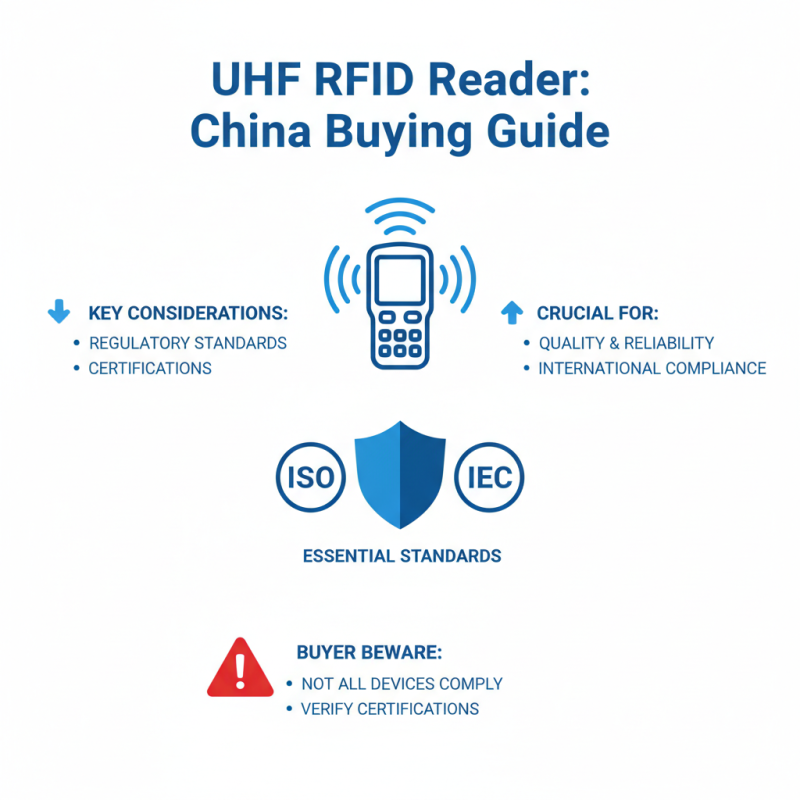
When selecting a cheap UHF RFID handheld reader in China, regulatory standards and certifications play a crucial role. Many manufacturers offer products that meet certain international standards, ensuring quality and reliability. Compliance with regulations such as ISO and IEC is essential. Not all devices, however, achieve these standards. Buyers must be vigilant.
Check for certifications like CE and FCC, which indicate adherence to safety and performance requirements. These certifications can be complicated. Not every manufacturer provides clear documentation. Some may assume compliance without proper verification. It’s vital to request proof of these standards to avoid potential issues.
Another factor to consider is regional regulations. Different countries have specific mandates that might not be addressed by generic certifications. Understanding local requirements can be tricky. If a reader doesn’t meet these, it could lead to legal troubles. Always inquire about local compliance before making a purchase.
The Impact of Accurate Inventory Management: Leveraging the Two-Channel Compact Fixed RFID Reader RFly-F210 for Enhanced Warehousing Efficiency
In today's fast-paced warehousing environment, accurate inventory management is essential for operational efficiency and cost reduction. The integration of advanced technologies, such as RFID systems, has proven to enhance inventory accuracy significantly. According to recent industry reports, businesses adopting RFID technology can achieve accuracy rates of over 99%, leading to substantial reductions in inventory-related costs, which can often represent 20% or more of total operating expenses.
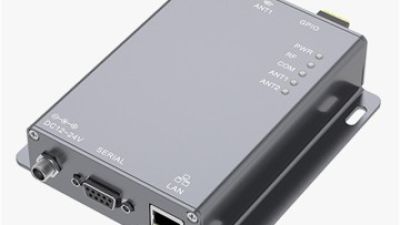
The RFly-F210, a compact two-channel UHF RFID reader, exemplifies the next generation of inventory management solutions. Its small size does not compromise its performance; in fact, it allows for easy integration into various warehousing setups without requiring extensive modifications. Customizable options through OEM/ODM services further enable businesses to tailor the RFly-F210 to their specific applications. Whether it’s adjusting communication protocols or incorporating specialized functionalities, this adaptability supports seamless integration into existing systems and enhances the overall efficiency of warehousing operations.
By leveraging a state-of-the-art solution like the RFly-F210, companies can not only streamline their inventory tracking processes but also foster a data-driven approach to decision-making. Enhanced visibility into inventory levels equips managers with the insights needed to optimize stock replenishment, minimize excess inventory, and ultimately drive profitability. The importance of investing in precise inventory management systems cannot be overstated, as they are pivotal for meeting customer demands while reducing operational costs.
FAQS
: The product serves to enhance daily life. It adds convenience and utility.
Follow the instructions provided. Make sure to read them carefully. Practice improves familiarity.
Most people can use it. Some may need guidance or practice. It’s not for everyone.
Troubleshoot using the guidelines. Contact support if problems persist. Patience is key.
Generally, yes. But misuse can lead to problems. Always prioritize safety.
Longevity depends on usage and care. Regular maintenance improves lifespan. It may wear out.
Skipping instructions is frequent. Assumptions about use can lead to errors.
There is a return policy. Review terms carefully before purchase. Returns are sometimes complicated.
Repairs are possible but vary. Some issues may require replacement instead. Be cautious with handling.
Regular cleaning is essential. Avoid extreme conditions. Keeping it maintained is crucial.
Conclusion
When selecting a China cheap UHF RFID handheld reader, it is crucial to consider various key features that ensure optimal performance and usability. Understanding UHF RFID technology and its industry applications helps in evaluating the practical requirements of the reader. Cost-effective materials can significantly influence manufacturing expenses while maintaining quality. Additionally, assessing the read range and sensitivity of UHF RFID readers is essential for achieving effective data capture.
Battery life and power management are critical for enhancing the operational efficiency of handheld devices. Furthermore, user ergonomics and interface design play a significant role in ensuring ease of use, which can impact productivity. Finally, adherence to regulatory standards and certifications is necessary for compliance and reliability in various applications. By focusing on these aspects, organizations can make informed decisions when choosing a UHF RFID handheld reader that meets their needs.

 Rotary HF RFID Tag Reader GRH-I40 Suitable for Assembly Lines
 Industrial-grade High-frequency Integrated Reader GRH-I65 Suitable for Asset Tracking
 With ESD Protection HF RFID Reader GRH-I68 Suitable for Progress Tracking
 Proximity HF RFID Reader GRH-M30 Suitable for Manufacturing Workshops
 Desktop HF RFID Scanner GRH-D80-HID Suitable for Card-issuing Applications
 High Frequency Medium Distance Reader GRH-I90 Suitable for Logistics Production Line
 UHF RFID Portals and Tunnel Machine RFly-AM3000 for Access Control
 Narrow RFID Portals Series TD-P20040-SS for Single Tag Entry and Exit Identification Scenario
 RFID Transmission Line Simple Identification Tunnel Machine (TD-T3050)
 Vision and RFID Tunnel Machine TD-T7692-RV for Logistics Sorting
 RFID Transmission Line Identification Tunnel Machine TD-T10090
 RFID Mobile Inventory Tunnel Machine TD-T65150 for Conveyor Belts
 High-Performance Far-Field Antennas for Broad Coverage.
 Multi-Purpose Antennas: Flexibility for Diverse Applications
 Near-Field Antennas for Short-Distance Tag Detection.
 Portals & Tunnel Antennas for Integrated RFID Series
 Slimline PCB Antennas for Warehousing and Logistics
 Miniaturized and Thin Antennas can Provide Good Performance in a Smaller Size.
 GPS Tracker for Vehicles, Car, Kids, Assets.
 CO2 Sensors Detect CO2 Gas through Alarms, Suitable for Offices, Planting Tents.
 Door Sensor, Detect Open and Closed Doors or Windows, Sends Alerts, Triggers Siren.
 Wireless Level Sensor Equipped with a 5-Meter Detection Line, Suitable for Water Tanks
 Real Time Monitoring of Air Quality Using PM2.5/PM10 Sensors.
 Smoke Sensor, Fire Alarm Smoke Detector with Test Button and Low Battery Reminder.
 Soil Stress Sensor,Bridge and Tunnel Monitors.
 Vibration Sensor Monitors Equipment, Like Conveyors and Motors, for Operational Status.
 E -Paper Display
 Smart Water Sensor Alarms, 1.2 M Detection Line.
 CO Sensor for Basements Home Office House Bedroom Living Room Car, Light Plug and Play.
 Temperature and Humidity Sensor
 Multi-sensor GD-ME
 Temperature Sensors Monitor the Surface Temperature of Various Heating Equipment.-1
 Signal Enhancement Terminal, Long Range Coverage.
 Multi-Protocol Communication Gateway, App Remote Control.
 Edge Vision Gateway can Access Various Mainstream Cameras, Suitable for Office, Factory.
 GBS-3550 Outdoor Sensor Gateway,LoRa, 2/3/4G Communication.
 Smart WiFi Gateway, Realize Remote Control.
 Ultra-Low-Power Solar-Powered Intelligent Gateway (Outdoor)
 IP67-protected Integrated RFID Reader Writer RFly-I165 for Supply Chain
 Long-range Distance UHF RFID Reader RFly-I195 for Inventory Management
 Small UHF RFID Tag Reader RFly-I300 for Cars
 Two-channel Compact Fixed RFID Reader RFly-F210 for Warehousing
 Four Channels Fixed UHF RFID Reader RFly-R6 for Supply Chain
 8-channel UHF RFID Tag Reader RFly-R8 for File Cabinet Identification
 Bluetooth Portable RFID Reader and Writer GRU-HBT100 for Inventory Management
 Industrial Grade Handheld UHF RFID Reader GRU-HC520 Suitable for Logistics
 RFID Gateway Networking System
 RFID Passive Temperature Measurement System
 RFID Tags for Container Turnover Management
 RFID Tags for Equipment O&M Management
 RFID Tags for Manufacturing Management
 RFID Tags for Tool Management
 A Kits for Equipment Condition Detection
 A Kits for Office Computer Room Environment Monitoring
 A Kits for Reservoir Environmental Monitoring
 A Kits for Storage Space Environment Monitoring
 A Kits for Stress Detection of Underground Tunnel
 A Kits for Urban Environment Monitoring
 Intelligent IoT Monitoring Platform
 Integrating Multiple Functional OTG Demo Software
 HF Demo Software
 UHF Demo Software