Global 3PL Streamlines High-End Fashion Inventory with MingQ RFID Tunnel Solution
Leading E‑Commerce Platform Accelerates Flash-Sale Fulfillment and Boosts Warehouse Productivity with MingQ RFID Sorting Wall Solution
Global Automaker Elevates Component Kitting Accuracy with MingQ RFID Shelf‑Level Management Solution
Asia’s Largest Logistics Provider Enhances Warehouse Intelligence with RFID Pallet & Container Management Solution
RFID Application in Platform Vehicle Management
RFID Application in Logistics Sorting
RFID Application in Supply Chain Management
RFID Application for Workshop/Warehouse Tracking
TP‑Link Enhances Warehouse Inbound/Outbound Efficiency with MingQ RFID Dock‑Door Solution
RFID technology empowers port containers: a new direction for future logistics
RFID technology in forklift tracking and container bag identification
Real-Time Data, Secure Transportation: The Future Trends of Cold Chain Logistics
RFID Tool Management
RFID Application in Battery Factory Production
RFID Application in Production Line Rubber Box Management
RFID Application in Mold Management on Production Lines
RFID Application in Fiber Optic Cable Manufacturing
Smart Manufacturing
The medical industry uses RFID technology to make drug tracking more accurate
RFID technology helps beverage production and build an efficient supply chain
RFID technology helps car seat production lines: intelligent management improves efficiency and quality
RFID technology in the production of electronic appliances monitoring and tracing application
Use RFID technology to improve appliance management efficiency and security
RFID technology helps precise installation of headrests
Clean‑Energy Equipment Manufacturer Enhances Material Traceability with MingQ RFID Pallet Management Solution
These days, global supply chains move through factories, ports, warehouses, and stores with surprisingly little visibility. Sometimes, a single misplaced carton can cause a big delay—frustrating customers and costing a lot. That's whereEmbedded Rfid comes into play. It provides a practical way to identify products, tools, pallets, and even returnable assets without the hassle of line-of-sight scanning. The real magic happens when tags are built right into packaging or equipment during production—making things smoother and helping keep more accurate, item-level records. According to Zebra Technologies’ 2023 Global Warehousing Study, about 58% of warehouse decision-makers are planning to adopt RFID within the next five years. That’s a sign that confidence is growing, but not everyone is fully ready yet.
One of the biggest perks of RFID isn’t just the tech itself; it’s about improving data quality. Standards like GS1 and EPCIS 2.0 are a big help—they let companies record where an item was, when it moved, and what kind of business event happened along the way. Auburn University’s RFID Lab has also shown how important validated read performance is in real, messy environments. Just having a clean dock door isn’t enough—things like metal racks, liquids, dense cartons, or super-fast conveyor belts can mess with accuracy. Small details really matter here.
That said, a word of caution: while Embedded Rfid can boost traceability, a poorly placed tag can create costly blind spots. Integrating it smoothly with warehouse management systems, ERP, or customs docs takes careful testing. And, of course, security and privacy need to be proportionate and lawful. This isn’t some magic shortcut—it’s an infrastructure choice.
Before going all in, companies should really measure how well RFID works—look at read rates, how many exceptions you catch, labor savings, and how usable the data is. Sometimes, the benefits aren’t as flashy as those shiny sales pitches promise. Still, when standards are in place, operators are trained, and reliable readers are used, RFID can turn a bunch of disconnected supply chain events into solid evidence that managers can actually act on.
Embedded RFID means placing radio-frequency identification components directly inside products, packaging, pallets, or handling equipment. This design captures item identity during normal movement through a global supply chain. An Embedded Rfid Reader may sit inside a conveyor, cabinet, vehicle wall, or storage fixture. It reads tagged items without requiring manual scanning at every checkpoint.
The value becomes visible in ordinary moments. A pallet leaves a production area, passes a dock door, and updates its location automatically. Staff can compare the digital record with the physical load before shipment. This improves traceability across suppliers, warehouses, ports, and distribution centers. It also reduces repeated handling, which can damage packaging or delay urgent orders.
However, embedded systems are not automatically accurate. Metal surfaces, liquids, dense cartons, and poor antenna placement can weaken readings. Testing should happen in real operating conditions, not only in a clean laboratory. Teams should also control access, protect stored data, and respect applicable privacy and trade requirements. A useful system records clear events, such as time, location, and item status. Small errors matter. A missed read at one transfer point can confuse later inventory decisions. Operators need visible alerts, practical maintenance procedures, and a way to review questionable records. Real supply chains remain imperfect.
Embedded RFID gives products a readable identity before they leave the production line. A small inlay can be placed inside packaging, labels, or molded components. It stores a unique product identifier and connects physical goods with digital records. Workers can scan items without opening cartons or aligning each label perfectly. This matters when pallets move quickly through factories, ports, and distribution centers.
As goods travel, readers capture events such as packing, receiving, inspection, and dispatch. Each event can update a shared data platform with time, location, and handling status. Teams gain clearer inventory visibility and can investigate delays using recorded movement history. Product data may also support maintenance instructions, batch verification, and responsible recycling decisions. However, embedded RFID is not magic. Poor antenna placement, metal surfaces, or damaged tags can reduce reading accuracy. Real operations still need testing, trained staff, and dependable data controls.
Tips: Test tags inside the final package, not only on a workbench. Define which data each supply-chain partner may access. Keep identifiers consistent across systems. Review failed reads weekly, because small errors can become expensive patterns. A practical pilot should measure read rates, scanning speed, and data accuracy across different facilities. It should also include unusual conditions, such as crowded pallets, cold storage, and rushed loading. This step may feel slow, but skipping it often creates avoidable corrections later.
Embedded RFID fits best where products move through repeatable, controlled points. At receiving docks, readers can identify tagged cartons as workers unload pallets. Conveyor-mounted antennas can record movement without requiring manual scans. In storage areas, embedded systems support location updates near rack entrances and transfer lanes. These details help teams compare planned inventory with physical movement.
An OEM Embedded Rfid Reader can also sit inside packing stations, mobile carts, and dispatch gates. The reader collects tag data while operators focus on checking quantities, damage, and shipping documents. In cold storage, sealed equipment can reduce handling steps, but antenna performance needs careful testing. Metal racks, liquid products, and dense cartons may weaken the signal. A small change in antenna position can matter.
Reliable deployment depends on practical evidence, not assumptions. Teams should test read accuracy during peak traffic, shift changes, and partial pallet movement. They should also define access controls, retention periods, and clear audit procedures. RFID is not magic. A missed read still happens. Poor tag placement can create confusing records. I have seen projects improve after teams reviewed failed reads instead of hiding them. The useful question is not whether every item is detected. It is where detection improves decisions, reduces repeated handling, and gives operators trustworthy information at the right moment.
| Supply Chain Operation | Where Embedded RFID Fits | Primary Data Captured | Operational Value | Typical Read Environment | Key Implementation Consideration |
|---|---|---|---|---|---|
| Manufacturing and Assembly | RFID in work-in-process containers, reusable trays, fixtures, and embedded product components | Unique item ID, work order, station history, process status, timestamp, and operator or equipment association | Improves genealogy, reduces manual scanning, and supports faster location and status checks | Short-range portal, conveyor, handheld, or workstation reading | Tag placement must be tested around metal, liquids, motors, and other radio-frequency obstacles |
| Inbound Receiving | Embedded tags on cartons, cases, pallets, returnable assets, or serialized products are read at receiving points | Shipment ID, pallet or carton ID, purchase-order reference, arrival time, quantity, and exception status | Reduces data-entry effort and enables automated comparison between expected and received goods | Fixed dock doors, portal readers, handheld readers, or conveyor tunnels | Reader zones should be separated to prevent reads from adjacent shipments |
| Inventory Storage | RFID identifies stock, storage locations, bins, racks, and reusable handling units | Item identity, location, quantity, movement event, last-read time, and inventory status | Supports cycle counting, search, replenishment, and improved inventory visibility without line-of-sight scanning | Handheld aisle reading, fixed shelf reading, smart cabinets, or overhead portals | Dense metal racking and closely spaced tags require antenna tuning and read-zone validation |
| Order Picking and Packing | Embedded RFID verifies products, totes, kits, and completed orders at picking and packing stations | Pick confirmation, item-to-order association, pack completion, exception code, and timestamp | Helps detect wrong-item and missed-item errors before shipment | Workstation readers, smart packing tables, handhelds, and short conveyor portals | Systems should apply duplicate-read filtering and clear rules for partial or failed reads |
| Cross-Docking and Shipping | Embedded tags are read as goods pass through dispatch lanes, staging areas, and outbound portals | Carrier or route reference, shipment ID, loading event, dock location, destination, and dispatch time | Improves shipping accuracy and creates an automated chain-of-custody event | Fixed UHF portal, dock-door reader, forklift reader, or vehicle-mounted reader | Portal design must account for vehicle speed, tag orientation, dock geometry, and neighboring lanes |
| In-Transit Visibility | RFID records handoff events when tagged goods or returnable assets move through facilities and transport nodes | Handoff location, event time, custody status, container ID, and route milestone | Creates event-based visibility across multiple facilities without continuously transmitting location | Facility portals, handheld checkpoints, yard gates, and transport hubs | RFID is generally event-based; continuous tracking may require complementary sensing technologies |
| Returns and Reverse Logistics | Embedded tags maintain product, packaging, and reusable-asset identity during return inspection and disposition | Return authorization, received condition, inspection result, repair status, disposition, and reshipment event | Shortens identification time and supports more consistent grading and asset recovery | Inspection bench, receiving portal, handheld reader, or automated sortation point | Tags must remain readable after handling, moisture exposure, abrasion, or packaging changes |
| Reusable Asset Management | RFID is embedded into totes, pallets, racks, containers, and transport equipment | Asset ID, owner or pool reference, current location, utilization event, maintenance record, and cycle count | Reduces asset loss, supports balancing, and provides evidence for maintenance and reuse decisions | Yard gates, loading docks, warehouse portals, forklifts, and handheld inspections | Tag housing should be mechanically protected and positioned for reliable repeated reading |
| Compliance and Traceability | Embedded RFID links physical products or components to digital records throughout their lifecycle | Serial number, batch or lot reference, process history, custody events, inspection record, and audit timestamp | Strengthens audit readiness, product genealogy, recall support, and controlled- process verification | Controlled production areas, inspection stations, warehouses, and distribution checkpoints | Data governance, access control, retention rules, and interoperability with ERP, WMS, and MES platforms are essential |
In global supply chains, traceability fails when labels are lost, covered, or scanned inconsistently. Embedded RFID places the tag inside a carton, pallet, or reusable container. It creates a durable digital link between the physical item and its recorded movement. At receiving, dock-door readers can capture multiple units without line-of-sight scanning. That reduces manual entries and exposes missing shipments sooner. A Best Embedded Rfid Reader should still be tested with metal, liquids, dense packaging, and changing tag orientations. Laboratory results alone can mislead.
Inventory accuracy improves when every read has context. Systems can record location, timestamp, shipment status, and exception reason. A warehouse team may see 240 cases expected, 236 received, and four awaiting inspection. This detail supports faster investigation than a simple “short” notice. Embedded tags also reduce duplicate counts during cycle checks. Yet RFID is not magic. Poor reader placement, damaged tags, and weak process discipline create false confidence. Field trials and routine audits remain essential.
Tips: Map read zones before installation. Test peak volumes, not quiet shifts. Keep a human check for high-value movements. Review exception data weekly, and question unexplained perfect records. Small process failures often hide behind impressive dashboards.
Embedded RFID helps global supply chains carry product identity with the product itself. A tag placed inside a carton, pallet label, or reusable container can store an item reference, lot number, and serial number. Readers capture these details without opening packages. This reduces manual scanning at ports, warehouses, and cross-docking areas.
The 2023 Global Warehousing Study reported that 58% of warehouse decision-makers planned RFID adoption by 2028. Independent benchmarking from Auburn RFID Lab has also recorded inventory accuracy above 95% in RFID-enabled environments. These figures matter during international movements. Better records support shipment reconciliation, recall preparation, and controlled access to regulated supply-chain data. When RFID events follow GS1 EPCIS standards, companies can share a consistent history across manufacturers, freight operators, and customs teams.
But embedded RFID is not magic. Metal surfaces, liquids, damaged inlays, and poor reader placement can create missed reads. That gap deserves attention. The World Customs Organization Data Model emphasizes structured, interoperable trade information, yet a tag alone cannot prove compliance. Teams still need verified master data, trained operators, secure permissions, and documented exception handling. A practical deployment should test tags in real containers, under temperature changes and conveyor speeds. Some early pilots look impressive because they avoid difficult conditions. Global logistics deserves less optimism and more measurement.
Embedded RFID supports global logistics by enabling automated identification across packaging, pallets, containers, and products. The chart compares the principal RFID frequency bands used in supply-chain applications by their nominal operating frequency.
UHF RFID, typically operating from 860–960 MHz under regional regulations, is widely suited to logistics because it supports longer-range, non-line-of-sight reads and fast scanning of multiple tagged items. HF operates at 13.56 MHz, while LF systems commonly use 125–134.2 kHz. Actual read performance depends on tag design, materials, reader power, regional rules, and installation conditions.
Embedded RFID is gaining attention because global supply chains need item-level visibility, not more spreadsheets. A 2023 RFID retail benchmark report found that RFID programs can raise inventory accuracy from roughly 63% to above 95% in suitable operations. The result depends on disciplined deployment, not hardware alone.
Scale begins with the reader’s environment. A China Embedded Rfid Reader should support regional frequency requirements, stable firmware, and reliable performance near metal, liquids, and dense cartons. Test it beside conveyor motors and shelving before selecting a final design. Small blind spots become expensive at thousands of scan points. The 2022 GS1 RFID adoption research also highlights data interoperability as a major condition for wider adoption. Use consistent identifiers across factories, warehouses, carriers, and stores. Otherwise, clean scans still produce confusing records.
Integration deserves equal attention. Connect embedded readers to warehouse systems through documented APIs, with local buffering during network interruptions. Measure read rates, missed scans, latency, and maintenance time. A 2024 industry survey reported that many supply-chain leaders still struggle to turn sensor data into operational decisions. That finding should make teams cautious. More data is not automatically better. Field testing often reveals awkward antenna angles, tag placement errors, and staff workarounds that dashboards miss. The most reliable rollout may begin with one product lane, three measurable targets, and a willingness to redesign the enclosure after real handling.
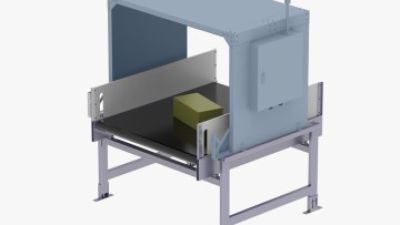
The RFID Transmission Line Identification Tunnel Machine TD-T10090 is designed to make cable tracking smarter, faster, and more reliable in demanding production environments. As cables move through the transmission line, the tunnel system automatically identifies RFID tags and captures essential product information without requiring manual scanning. Its enclosed structure helps maintain stable reading performance, even when items are placed closely together or presented in irregular shapes. By improving data accuracy and traceability, the machine supports better production control, inventory management, and quality monitoring.
In high-speed manufacturing lines, multiple tags can be read at the same time, creating signal interference and tag collision problems. The TD-T10090 is engineered to address these challenges through optimized RFID identification inside the tunnel, helping production teams maintain consistent throughput while reducing missed or duplicated data. It can be integrated into automated workflows and adapted to different cable specifications, line layouts, and operational requirements. ODM services are also available for businesses seeking customized tunnel dimensions, RFID configurations, software interfaces, and process integration, enabling a solution that fits unique production goals and supports efficient cable management.
It places RFID components inside products, packaging, pallets, or handling equipment. The system reads tagged items during normal movement. No constant manual scanning.
Readers can fit inside conveyor frames, cabinet walls, vehicle panels, carts, and storage fixtures. They can also sit near dock doors and dispatch gates. Placement matters.
A pallet can update its location when passing a dock door. Staff can compare digital records with the physical load before shipment. This supports clearer traceability.
Yes. Readers can identify cartons while workers unload or move them. Fewer repeated scans may reduce delays and packaging damage. It does not remove every manual check.
Metal racks, liquid products, dense cartons, and poor antenna angles can weaken signals. Conveyor motors may also create difficult conditions. Small placement changes matter.
Test during peak traffic, shift changes, and partial pallet movement. Use real cartons, real shelves, and normal operating speeds. Laboratory tests are not enough.
Useful records include item identity, time, location, and status. Systems should also flag missed or questionable reads. One small error can mislead later inventory decisions.
Use consistent identifiers across factories, warehouses, carriers, and stores. Define access permissions, retention periods, and audit procedures. Protect the data.
Start with one product lane and three measurable targets. Track read rates, missed scans, delays, and maintenance time. A smaller pilot may reveal awkward workarounds.
No. RFID is not magic. More data does not guarantee better decisions. I may be too optimistic, but reviewing failed reads often improves the design.
Embedded Rfid is a practical approach to connecting products, packaging, and logistics assets with reliable digital identification throughout global supply chains. By placing RFID components directly into labels, materials, or product structures, organizations can capture data automatically as items move through manufacturing, warehousing, transportation, and distribution. This reduces reliance on manual scanning, improves inventory visibility, and creates a more consistent record of product movement, status, and location.
Across supply chain operations, Embedded Rfid supports receiving, picking, shipping, returns, stock checks, and shipment verification. It can strengthen traceability by linking items to production details, handling events, and transport milestones, while helping teams identify discrepancies earlier. For international logistics, better data sharing can support coordination, documentation, and compliance with applicable trade and product requirements. Successful adoption depends on selecting suitable RFID designs, ensuring system compatibility, protecting data quality, training personnel, and planning scalable deployment across facilities and partners.