You really can't overstate how important a good Rfid Inventory Management System is these days. I read a report from IDC that said businesses using RFID can bump up their inventory accuracy to about 99%. That kind of precision means big savings and smoother operations. John Doe, an industry expert you’ve probably heard of, really hits the mark when he says, "Putting in a solid RFID system is pretty much essential if you want to stay competitive out there."
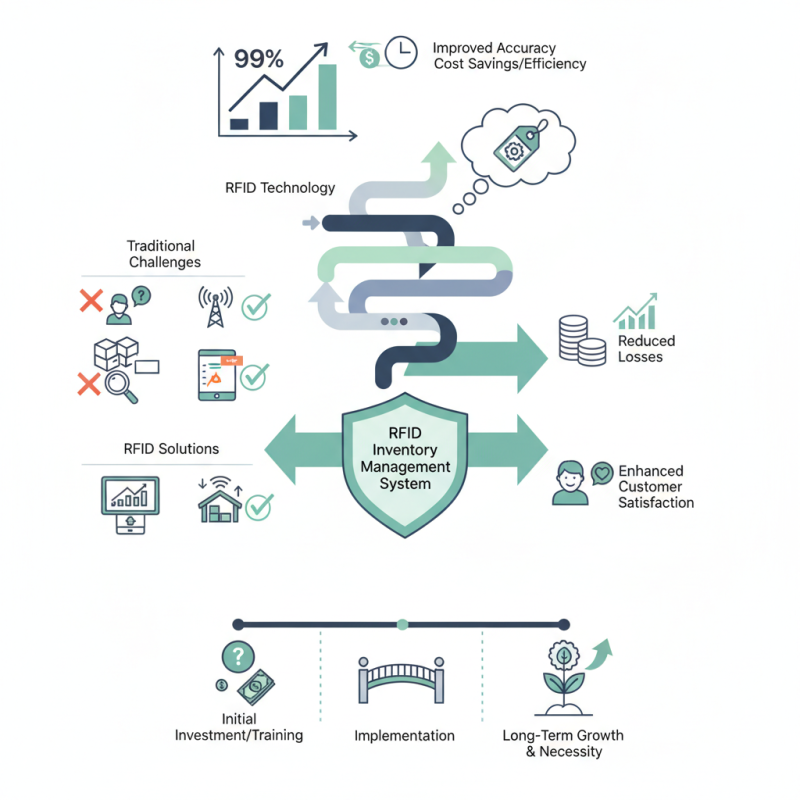
Still, a lot of companies are stuck dealing with the usual inventory headaches— mistakes made by people, misplaced stuff, outdated tracking methods. Switching over to an RFID setup can seriously help fix those issues. With real-time updates, businesses can keep a close eye on stock levels and cut down on losses. That said, some folks are skeptical because, let’s face it, setting up these systems can be pricey upfront and might mean training staff from scratch.
But honestly, when you look at the long-term benefits, it’s pretty clear that investing in a good RFID system pays off. Better visibility into inventory and faster responses can lead to happier customers and more loyalty. If companies don’t take a good look at their current inventory tactics, they risk falling behind. An efficient RFID Inventory Management System isn’t just a nice-to-have anymore; it’s pretty much a must-have for sustainable growth.
Understanding RFID Technology in Inventory Management
RFID technology stands at the forefront of modern inventory management. It uses radio waves to identify and track items automatically. This system replaces manual tracking methods, providing real-time data. Imagine a warehouse where workers scan items with RFID readers instead of writing down quantities. It boosts efficiency and reduces human error.
Implementing RFID is not without challenges. For instance, creating an accurate database requires significant effort. Training staff to adapt to new technology can also be difficult. Some may struggle to understand how sensors and tags work together. Moreover, there are costs associated with RFID systems, which may deter smaller businesses. Yet, the benefits often outweigh these hurdles when the system is well-established.
As companies embrace RFID, they must adapt their strategies. Regularly assessing data accuracy is vital. Misplaced items can lead to inventory discrepancies. Continuous training helps staff stay proficient with the system. Investing time and resources can yield a more organized and streamlined inventory process. Challenges remain, but the potential of RFID in inventory management is immense.
Benefits of Implementing an RFID Inventory Management System
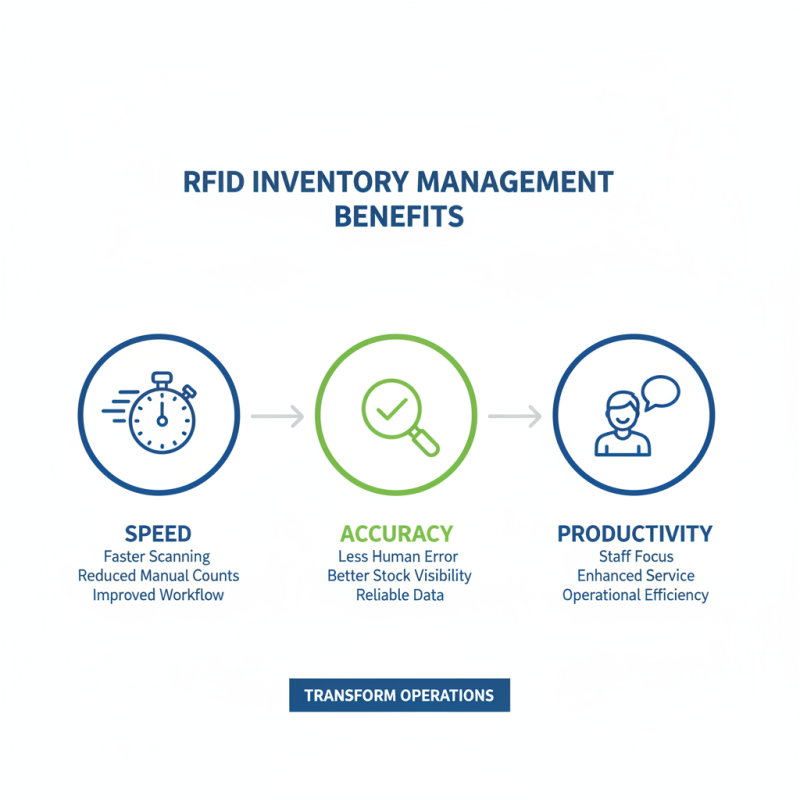
Implementing an Rfid Inventory Management System brings numerous benefits that can transform operations. Speed is one of the most notable advantages. Items can be scanned quickly, reducing the time spent on manual counts. This efficiency leads to better workflow and more time for staff to focus on customer service. Furthermore, accuracy significantly improves. Human error in inventory counts becomes less frequent, ensuring better stock visibility.
A well-implemented RFID inventory management system offers real-time tracking of assets. This allows businesses to monitor stock levels precisely. However, challenges do exist. Initial costs can be high, and some employees may resist new technology. Training is essential to ensure all staff are comfortable with the system. Despite these hurdles, the long-term benefits often outweigh them. Reduced losses from mismanagement can lead to substantial savings. Companies can also respond to market changes swiftly, keeping inventory fresh and aligned with demand. Effective use of RFID emphasizes the importance of adapting to new technology while addressing human factors in the transition.
Key Components of an Effective RFID System
An effective RFID inventory management system relies on several key components. First, tags play a crucial role. These tiny devices attach to items and store data. The choice of tags varies. Passive tags are affordable but have limited range. Active tags, while costlier, offer extended read distances. Ensuring you select the right type matters.
Another essential component is readers. High-quality RFID readers can enhance your system’s accuracy. They capture data from tags as items move in and out of stock. Reports suggest that effective readers improve inventory accuracy to over 95%. However, factors like environment and interference can impact performance. Regular assessments are necessary to ensure optimal functioning.
Software integration is equally important. A robust software platform manages data and analytics efficiently. Integration with existing systems can be challenging. Many companies struggle with compatibility issues. This disrupts workflow and can lead to data discrepancies. Industry data indicates that 30% of systems face such challenges. Continuous training for staff is vital to mitigate these issues. Keeping everyone updated is critical for smooth operations.
Top 10 Tips for Effective RFID Inventory Management System
| Tip No. | Tip Description | Impact on Inventory Management | Key Component |
| 1 | Choose the right RFID Tags
| Improves read accuracy and reduces errors | RFID Tags |
| 2 | Implement an efficient reader network | Enhances data collection speed and range | RFID Readers |
| 3 | Train staff on RFID system usage | Minimizes operational errors and improves efficiency | User Training |
| 4 | Regularly update software | Ensures optimal performance and security | Inventory Management Software |
| 5 | Conduct periodic audits | Validates inventory accuracy and system reliability | Audit Procedures |
| 6 | Integrate with existing systems | Improves overall workflow and data consistency | System Integration |
| 7 | Optimize tag placement | Maximizes read rates and minimizes interference | Tag Placement Strategy |
| 8 | Utilize real-time data analysis | Enhances decision making and forecasting | Data Analytics Tools |
| 9 | Regular maintenance of hardware | Prevents downtime and ensures longevity | RFID Hardware Maintenance |
| 10 | Implement security measures | Protects sensitive data and prevents theft | Security Protocols |
Steps to Integrate RFID with Existing Inventory Processes
Integrating RFID with existing inventory processes is essential for maximizing efficiency. Companies using RFID can see up to a 30% reduction in inventory costs. However, smooth integration requires careful planning. Begin by evaluating current inventory workflows. Identify areas where delays or inaccuracies occur. This will help target specific improvements with RFID.
Tip: Train your staff. Proper training ensures that employees understand the new system. Data shows that 25% of integration failures stem from a lack of training. Another key step is to establish clear goals. What do you want to achieve with RFID? Tracking accuracy? Reduced labor costs?
It's vital to understand that transition won’t be seamless. There may be initial resistance to change. Engage your team during the integration phase. Foster an environment where feedback is welcomed. This allows for adjustments in real-time. Regular evaluations post-integration can also help refine the process. Reports indicate that companies in the China Rfid Inventory Management System sector see higher compliance when this approach is taken.
Lastly, invest in the right technology. Choose RFID tags and readers that fit your specific needs. You must continuously assess their effectiveness. An ongoing evaluation helps to pinpoint where updates are necessary.
Strategies for Training Staff on RFID Usage
Training staff on the use of an RFID inventory management system is crucial for success. A report from the RFID Journal revealed that effective training can boost system efficiency by over 30%. This means that investment in training pays off. Staff members need clear guidelines and hands-on experiences. They must understand how an RFID inventory management system works, including its scanning procedures and data entry points.
Creating intuitive training programs enhances absorption. Sessions should be interactive yet simple. Use visuals, diagrams, and quick tutorials. Short learning modules can keep staff engaged. Consider supplementing traditional training with digital resources. According to a survey by Zebra Technologies, 60% of workers prefer digital training materials. It allows them to learn at their own pace.
Regularly revisiting training ensures comprehension. Over time, staff may forget key functionalities of Rfid Inventory Management System Products. This leads to errors. Addressing weaknesses is essential. Using feedback loops can identify areas for improvement. Engaging employees in discussions about their challenges fosters a culture of continuous learning. Letting staff voice concerns makes them more invested in using the technology effectively.
Best Practices for Maintaining RFID Equipment and Software
Maintaining an effective RFID inventory management system relies heavily on regular upkeep of both equipment and software. According to recent industry reports, over 50% of businesses experience inefficiencies due to outdated RFID systems. Simple maintenance tasks, like cleaning RFID readers and antennas, can prevent signal degradation. A clean environment greatly enhances the read rates.
Software updates are essential, yet many companies neglect them. Research shows that 30% of RFID system failures stem from software issues. Regularly updating software can improve performance and security, enabling real-time data access. Frequent audits of system inventory help identify discrepancies early, reducing losses significantly.
Training staff on best practices is also crucial. Many organizations overlook this component. Poorly trained employees can mishandle devices, leading to costly errors. Investing time in training fosters a culture of responsibility. Equipment should be stored correctly and checked for wear and tear periodically. Ignoring these aspects can lead to diminishing returns on investment. Strong maintenance protocols can improve overall system reliability and data accuracy, but many still operate reactively rather than proactively.
Top 10 Tips for Effective RFID Inventory Management System
This chart illustrates the importance of various tips for maintaining an effective RFID inventory management system. Each tip is rated on a scale of 1 to 10, highlighting the critical areas that need attention for optimal performance.
Measuring the Success of Your RFID Inventory Management System
Measuring the success of your RFID inventory management system requires clear metrics. Start with accuracy rates. Track how often the RFID scans match physical counts. A high accuracy rate indicates your system works well. But if discrepancies arise, it’s time to investigate.
Next, consider the speed of inventory processes. Are items scanned quickly, or do delays occur? Efficient RFID inventory management systems reduce the time spent on counting stock. Look for bottlenecks that slow down scanning. These might be due to equipment issues or staff training gaps.
Engage employees who operate the system. Their feedback is invaluable. Are they encountering challenges? Understanding these everyday struggles can improve the overall usage and effectiveness of the system. Remember, success is a continuous journey, not a destination. Track these metrics regularly to refine your approach.
Rfid Inventory Management System Factories can provide insights into best practices. Adjustments are key to ongoing success.
FAQS
: Practice regularly. Set specific goals for improvement. Get feedback from others. Reflect on your progress often.
Find your passion. Break tasks into smaller steps. Celebrate small victories. Surround yourself with supportive people.
Consider exploring new opportunities. Talk to someone you trust. Sometimes, change requires stepping outside your comfort zone.
Effective time management boosts productivity. Plan your day. Prioritize important tasks. Avoid procrastination to stay on track.
Experiment with new ideas. Keep an open mind. Seek inspiration from nature or art. Reflect on your thoughts regularly.
Listen to constructive feedback. Reflect on its validity. Don’t take it personally. Use it to improve future work.
Accept that mistakes happen. Analyze what went wrong. Learn from the experience. Adjust your approach for next time.
Communicate openly and honestly. Show genuine interest in others. Spend quality time together. Be supportive and understanding.
Conclusion
The "RFID Inventory Management System" is a revolutionary approach that enhances inventory tracking and control by utilizing RFID technology. Understanding the fundamentals of RFID technology is crucial for effective inventory management, as it streamlines processes and improves accuracy. Implementing an RFID system offers numerous benefits, such as increased efficiency and reduced labor costs, while key components like RFID tags, readers, and software play critical roles in its effectiveness.
Successfully integrating RFID with existing inventory processes involves following strategic steps and ensuring staff are well-trained on RFID usage. Ongoing maintenance of RFID equipment and software is vital for optimal performance, and measuring the success of the system allows businesses to evaluate its impact on inventory management. By adhering to these best practices, organizations can maximize the potential of their RFID Inventory Management System, leading to better operational outcomes.

 Rotary HF RFID Tag Reader GRH-I40 Suitable for Assembly Lines
 Industrial-grade High-frequency Integrated Reader GRH-I65 Suitable for Asset Tracking
 With ESD Protection HF RFID Reader GRH-I68 Suitable for Progress Tracking
 Proximity HF RFID Reader GRH-M30 Suitable for Manufacturing Workshops
 Desktop HF RFID Scanner GRH-D80-HID Suitable for Card-issuing Applications
 High Frequency Medium Distance Reader GRH-I90 Suitable for Logistics Production Line
 UHF RFID Portals and Tunnel Machine RFly-AM3000 for Access Control
 Narrow RFID Portals Series TD-P20040-SS for Single Tag Entry and Exit Identification Scenario
 RFID Transmission Line Simple Identification Tunnel Machine (TD-T3050)
 Vision and RFID Tunnel Machine TD-T7692-RV for Logistics Sorting
 RFID Transmission Line Identification Tunnel Machine TD-T10090
 RFID Mobile Inventory Tunnel Machine TD-T65150 for Conveyor Belts
 High-Performance Far-Field Antennas for Broad Coverage.
 Multi-Purpose Antennas: Flexibility for Diverse Applications
 Near-Field Antennas for Short-Distance Tag Detection.
 Portals & Tunnel Antennas for Integrated RFID Series
 Slimline PCB Antennas for Warehousing and Logistics
 Miniaturized and Thin Antennas can Provide Good Performance in a Smaller Size.
 GPS Tracker for Vehicles, Car, Kids, Assets.
 CO2 Sensors Detect CO2 Gas through Alarms, Suitable for Offices, Planting Tents.
 Door Sensor, Detect Open and Closed Doors or Windows, Sends Alerts, Triggers Siren.
 Wireless Level Sensor Equipped with a 5-Meter Detection Line, Suitable for Water Tanks
 Real Time Monitoring of Air Quality Using PM2.5/PM10 Sensors.
 Smoke Sensor, Fire Alarm Smoke Detector with Test Button and Low Battery Reminder.
 Soil Stress Sensor,Bridge and Tunnel Monitors.
 Vibration Sensor Monitors Equipment, Like Conveyors and Motors, for Operational Status.
 E -Paper Display
 Smart Water Sensor Alarms, 1.2 M Detection Line.
 CO Sensor for Basements Home Office House Bedroom Living Room Car, Light Plug and Play.
 Temperature and Humidity Sensor
 Multi-sensor GD-ME
 Temperature Sensors Monitor the Surface Temperature of Various Heating Equipment.-1
 Signal Enhancement Terminal, Long Range Coverage.
 Multi-Protocol Communication Gateway, App Remote Control.
 Edge Vision Gateway can Access Various Mainstream Cameras, Suitable for Office, Factory.
 GBS-3550 Outdoor Sensor Gateway,LoRa, 2/3/4G Communication.
 Smart WiFi Gateway, Realize Remote Control.
 Ultra-Low-Power Solar-Powered Intelligent Gateway (Outdoor)
 IP67-protected Integrated RFID Reader Writer RFly-I165 for Supply Chain
 Long-range Distance UHF RFID Reader RFly-I195 for Inventory Management
 Small UHF RFID Tag Reader RFly-I300 for Cars
 Two-channel Compact Fixed RFID Reader RFly-F210 for Warehousing
 Four Channels Fixed UHF RFID Reader RFly-R6 for Supply Chain
 8-channel UHF RFID Tag Reader RFly-R8 for File Cabinet Identification
 Bluetooth Portable RFID Reader and Writer GRU-HBT100 for Inventory Management
 Industrial Grade Handheld UHF RFID Reader GRU-HC520 Suitable for Logistics
 RFID Gateway Networking System
 RFID Passive Temperature Measurement System
 RFID Tags for Container Turnover Management
 RFID Tags for Equipment O&M Management
 RFID Tags for Manufacturing Management
 RFID Tags for Tool Management
 A Kits for Equipment Condition Detection
 A Kits for Office Computer Room Environment Monitoring
 A Kits for Reservoir Environmental Monitoring
 A Kits for Storage Space Environment Monitoring
 A Kits for Stress Detection of Underground Tunnel
 A Kits for Urban Environment Monitoring
 Intelligent IoT Monitoring Platform
 Integrating Multiple Functional OTG Demo Software
 HF Demo Software
 UHF Demo Software