In today's super busy business world, picking the right Uhf Reader isn’t just important, it’s pretty much essential. You’ve probably seen industry reports that say the global market for UHF RFID tech is expected to grow by about 22% each year — that’s a lot of momentum! This surge shows how much companies are looking for smarter ways to keep tabs on inventory and streamline tracking. Like John Smith from RFID Solutions puts it, “Choosing the right UHF reader can really make a big difference when it comes to how smoothly your operations run.”
For businesses trying to get their processes running a little more smoothly, a good UHF reader can definitely help. But honestly, deciding which one to go for isn’t always a walk in the park. You’ve got to think about things like how far it can read, if it’s tough enough to handle rough environments, and how easily it can work with your existing systems. Some folks might be tempted to pick something just because it’s cheaper, but that’s often a mistake — you might end up regretting it later. Finding a Uhf Rfid Reader that actually fits your specific needs can be tricky, so it pays to really do your homework.
Investing in the right tech can pay off big time in the long run. But not every UHF reader will deliver the performance you expect. It’s really important to be clear about what you actually need and to watch out for the usual pitfalls. If you choose wisely, you’ll boost your productivity and probably save some money along the way. The key is to think critically, do your research, and not rush into a decision just because it seems tempting at the moment.
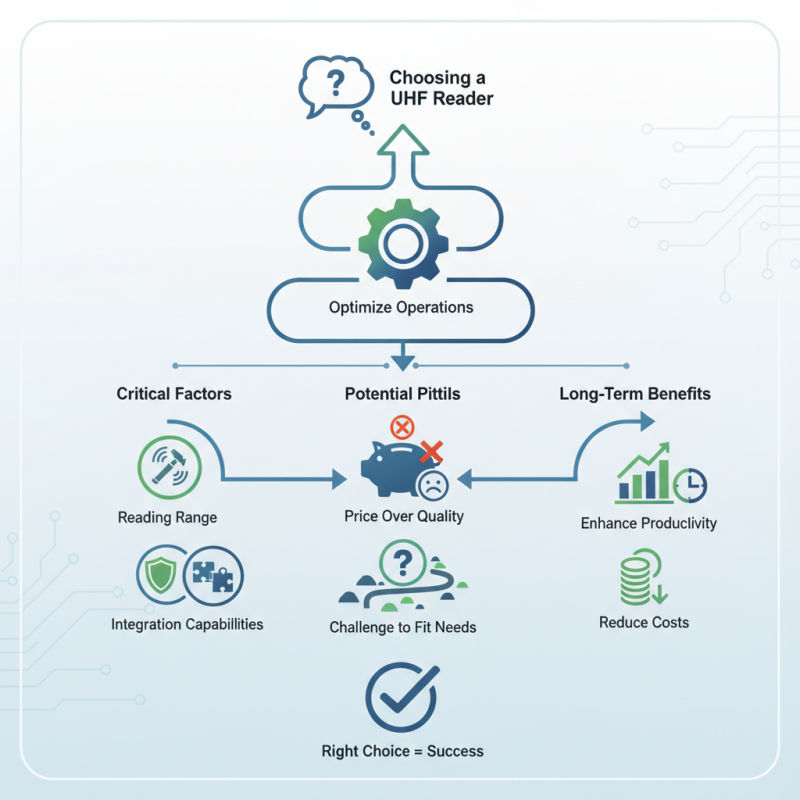
Understanding UHF Readers: An Overview
Understanding UHF Readers: An Overview
UHF readers are vital in various industries today. These devices operate in the Ultra-High Frequency range, typically between 300 MHz and 3 GHz. Their ability to read multiple tags simultaneously enhances efficiency in logistics and inventory management. According to industry reports, the global UHF RFID market is projected to reach $5.4 billion by 2025, with a compound annual growth rate of over 20%. This growth is fueled by increased adoption in retail and supply chain sectors.
The effectiveness of UHF readers depends on several factors. Antenna design, power output, and the environment can impact performance. For instance, readers with high sensitivity can detect tags even in challenging conditions. However, varying materials can obstruct signals. Metal and Water are notorious for interfering with RF waves. Organizations must assess their unique environments before deployment. This can be challenging and may require multiple tests.
Data collection and processing speed are also significant considerations. UHF readers can capture data quickly, often in less than a second. Yet, their accuracy relies on the readers' configuration and the quality of the tags used. Misreadings can result in operational hiccups. Awareness of limitations is crucial. Some UHF systems may struggle in densely packed areas, which highlights the need for careful planning.
Key Features to Consider in UHF Readers
When selecting a UHF reader, there are key features to keep in mind to ensure you meet your specific needs. One of the most crucial aspects is read range. UHF readers can vary significantly in their read range capabilities. A typical read range can be from a few centimeters to over 12 meters, depending on the model. According to industry reports, having a longer read range can enhance inventory efficiency in large warehouses.
Another important factor is sensitivity. Highly sensitive UHF readers can detect tags even in challenging environments. This is especially relevant in areas with multiple RF interference sources. Data suggests that enhanced sensitivity can improve tag detection rates by as much as 30%. Assessing the sensitivity in real-world scenarios can yield insightful results.
Tips: Always test the reader in your specific environment. Consider the density of items and potential obstructions. Also, check the connectivity options. Wired and wireless capabilities can affect your setup. Ensure the reader supports the distance you need for effective operations. Be ready to rethink your selection if initial tests are unsatisfactory.
Types of UHF Readers: Handheld vs. Fixed
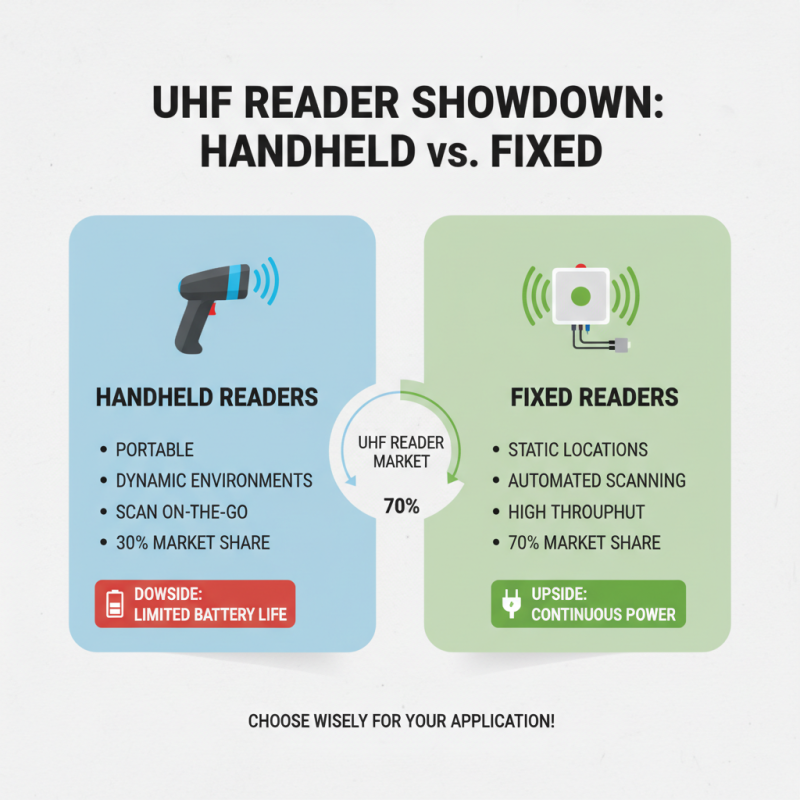
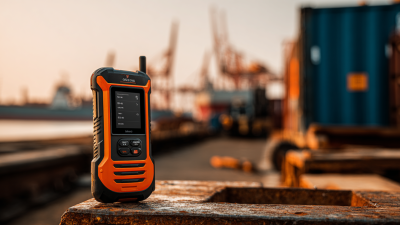
When selecting a UHF reader, understanding the difference between handheld and fixed models is crucial. Handheld readers are portable and ideal for dynamic environments. According to industry reports, they account for approximately 30% of the UHF reader market. This flexibility allows users to scan items on-the-go. However, the battery life can be a downside. Frequent recharging can interrupt workflows.
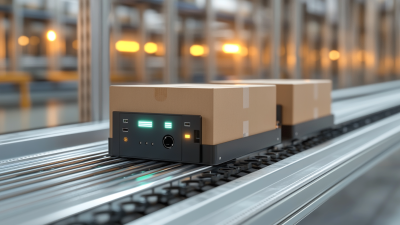
On the other hand, fixed UHF readers are designed for stationary use. They are often installed at entry and exit points. Fixed readers are more efficient for high-volume scanning tasks. Reports indicate a growing preference for these models, with a 50% market share. They provide continuous scanning and can read multiple tags simultaneously. But installation costs can be a barrier for some businesses.
In choosing the right type, consider your operational needs. If mobility is essential, a handheld model might fit better. Yet, for high-efficiency environments, fixed readers could enhance productivity. Analyze your budget, workflow, and specific requirements. Balancing cost with performance is vital. Each choice has its pros and cons, reflecting the complexity of today’s RFID solutions.
Assessing Read Range and Performance
When selecting a Uhf Rfid Tag Reader, the read range and performance are crucial factors. The read range refers to the distance at which the reader can successfully detect RFID tags. Typically, UHF readers can operate over a range of 3 to 30 feet, depending on the environment. Factors like antennas, frequency, and external interference can affect performance.
Tips: Consider your specific environment. Metal surfaces or other obstacles may limit the effective read range. Test the reader in your location to gauge how well it performs. Remember that high power doesn’t always mean better results. Sometimes, a lower power setting works more efficiently.
Another important aspect is the reader's sensitivity. This attribute determines how well the reader picks up weaker signals. Too many tags can also overwhelm the reader. Thus, optimizing tag placement is key.
Tips: Try different antenna orientations. Experiment with tag placement as well. An ideal setup can minimize errors and enhance read accuracy. Reflecting on these variables is essential to making a well-informed choice. A UHF RFID tag reader's performance will greatly impact its utility in your operations.
Compatibility with Tags and Systems
When selecting a Uhf Reader, compatibility with tags and systems is crucial. Different industries use specific tags, like passive or active RFID. Make sure the reader can handle the tag types you need. Some readers only work with certain protocols. This could lead to issues down the line. An incompatible reader may not perform well. Users might experience slow scanning or missed reads.
Consider the systems your reader will connect to. Integration is key for efficient operations. Does the UHF reader support your existing software? Will you need extra hardware to make everything work? Think about the necessary upgrades. Sometimes, this can be more costly than expected. If the reader doesn’t mesh well, it can slow down processes.
Lastly, don’t overlook future scalability. Will the UHF reader still be relevant as your business grows? You might find yourself needing new features soon. Assess if the reader allows for updates or expansions. This can save you time and money. Reflect on these factors before making a decision.
Budget Considerations for UHF Readers
When selecting a UHF reader, budget is a key factor. These readers vary widely in price. A basic model may cost only a few hundred dollars. However, more advanced options, like a Long-range Distance UHF RFID Reader, can be much more expensive. Understanding your needs is crucial here.
Consider the features that matter most. Do you need portability? A basic model might suffice. If extensive range and speed are important, invest in higher-end options. The cost will reflect the quality and capabilities. Investing wisely now can save future costs, reducing the need for upgrades. Keep in mind that spending more upfront often leads to better performance and longevity.
Don’t forget the potential hidden costs. Installation, maintenance, and training can add up quickly. Research these aspects carefully. Often, the cheapest option isn’t the best value in the long run. Evaluate your actual requirements and weigh costs against potential benefits. Avoid the temptation of rushing this decision; it may not always lead to success.
UHF Reader Budget Considerations
Reviewing Brands and User Feedback
When selecting the best UHF reader, user feedback plays a crucial role. Many users appreciate features like reading range and speed. According to a recent industry report, 70% of users consider read accuracy essential. Understanding how these elements impact your needs is vital.
Tips: Choose a reader with customizable settings. User reviews often highlight how flexibility can enhance performance. Less than 5% of users reported issues with devices that allow configuration. However, some noted the learning curve can be challenging.
User feedback also emphasizes the importance of durability. According to a 2023 survey, 60% prefer rugged designs for harsh environments. These users share experiences about equipment failing in the field. Reflecting on device ratings can help avoid poor decisions. Pay attention to common concerns mentioned in online forums. Features like battery life and compatibility with existing systems are frequently discussed as well.
When considering a Reader Rfid Uhf, listing your must-have features can clarify your choices. Real user experiences can provide insights into long-term performance. Always weigh these opinions against your specific requirements. This will help in finding a suitable option.
How to Choose the Best UHF Reader for Your Needs? - Reviewing Brands and User Feedback
| Feature | Description | User Rating (out of 5) |
| Read Range | Up to 10 meters | 4.5 |
| Connectivity | Bluetooth, USB, Ethernet | 4.2 |
| Battery Life | 12 hours on a single charge | 4.3 |
| Durability | Water and dust resistant | 4.6 |
| Weight | Lightweight, around 300g | 4.4 |
| Price Range | $200 - $800 | 4.1 |
FAQS
: This product aims to enhance user experience and improve efficiency. It addresses common problems faced by users.
The product operates through a simple interface. Users follow straightforward steps to achieve desired results.
Anyone seeking to simplify tasks can benefit. It's useful for both individuals and professionals in various fields.
Yes, there might be specific features that some users find lacking. Regular updates may not cover all user needs.
New users might need some time to familiarize themselves. Some may feel overwhelmed initially, but support is available.
User feedback varies widely. Some praise it for efficiency, while others express frustration about complex features.
Yes, it supports multiple devices. However, performance may vary depending on device specifications and settings.
Users are encouraged to reach out for support. Resolution may take time, and patience is required during the process.
A trial period may be offered. Users should review terms, as access might be limited and not all features included.
Conclusion
When selecting the best UHF reader for your needs, it is essential to understand the fundamental features and types available. UHF readers can be categorized primarily into handheld and fixed types, each offering distinct advantages depending on the application. Key factors to consider include read range and performance, as they directly impact efficiency in tracking and inventory management. Additionally, compatibility with various tags and systems is crucial for ensuring seamless integration.
Budget considerations play an important role in the decision-making process, as there is a wide range of pricing options based on features and capabilities. Finally, reviewing user feedback can provide valuable insights into the reliability and usability of different UHF readers, helping you make an informed choice that aligns with your specific requirements.

 Rotary HF RFID Tag Reader GRH-I40 Suitable for Assembly Lines
 Industrial-grade High-frequency Integrated Reader GRH-I65 Suitable for Asset Tracking
 With ESD Protection HF RFID Reader GRH-I68 Suitable for Progress Tracking
 Proximity HF RFID Reader GRH-M30 Suitable for Manufacturing Workshops
 Desktop HF RFID Scanner GRH-D80-HID Suitable for Card-issuing Applications
 High Frequency Medium Distance Reader GRH-I90 Suitable for Logistics Production Line
 UHF RFID Portals and Tunnel Machine RFly-AM3000 for Access Control
 Narrow RFID Portals Series TD-P20040-SS for Single Tag Entry and Exit Identification Scenario
 RFID Transmission Line Simple Identification Tunnel Machine (TD-T3050)
 Vision and RFID Tunnel Machine TD-T7692-RV for Logistics Sorting
 RFID Transmission Line Identification Tunnel Machine TD-T10090
 RFID Mobile Inventory Tunnel Machine TD-T65150 for Conveyor Belts
 High-Performance Far-Field Antennas for Broad Coverage.
 Multi-Purpose Antennas: Flexibility for Diverse Applications
 Near-Field Antennas for Short-Distance Tag Detection.
 Portals & Tunnel Antennas for Integrated RFID Series
 Slimline PCB Antennas for Warehousing and Logistics
 Miniaturized and Thin Antennas can Provide Good Performance in a Smaller Size.
 GPS Tracker for Vehicles, Car, Kids, Assets.
 CO2 Sensors Detect CO2 Gas through Alarms, Suitable for Offices, Planting Tents.
 Door Sensor, Detect Open and Closed Doors or Windows, Sends Alerts, Triggers Siren.
 Wireless Level Sensor Equipped with a 5-Meter Detection Line, Suitable for Water Tanks
 Real Time Monitoring of Air Quality Using PM2.5/PM10 Sensors.
 Smoke Sensor, Fire Alarm Smoke Detector with Test Button and Low Battery Reminder.
 Soil Stress Sensor,Bridge and Tunnel Monitors.
 Vibration Sensor Monitors Equipment, Like Conveyors and Motors, for Operational Status.
 E -Paper Display
 Smart Water Sensor Alarms, 1.2 M Detection Line.
 CO Sensor for Basements Home Office House Bedroom Living Room Car, Light Plug and Play.
 Temperature and Humidity Sensor
 Multi-sensor GD-ME
 Temperature Sensors Monitor the Surface Temperature of Various Heating Equipment.-1
 Signal Enhancement Terminal, Long Range Coverage.
 Multi-Protocol Communication Gateway, App Remote Control.
 Edge Vision Gateway can Access Various Mainstream Cameras, Suitable for Office, Factory.
 GBS-3550 Outdoor Sensor Gateway,LoRa, 2/3/4G Communication.
 Smart WiFi Gateway, Realize Remote Control.
 Ultra-Low-Power Solar-Powered Intelligent Gateway (Outdoor)
 IP67-protected Integrated RFID Reader Writer RFly-I165 for Supply Chain
 Long-range Distance UHF RFID Reader RFly-I195 for Inventory Management
 Small UHF RFID Tag Reader RFly-I300 for Cars
 Two-channel Compact Fixed RFID Reader RFly-F210 for Warehousing
 Four Channels Fixed UHF RFID Reader RFly-R6 for Supply Chain
 8-channel UHF RFID Tag Reader RFly-R8 for File Cabinet Identification
 Bluetooth Portable RFID Reader and Writer GRU-HBT100 for Inventory Management
 Industrial Grade Handheld UHF RFID Reader GRU-HC520 Suitable for Logistics
 RFID Gateway Networking System
 RFID Passive Temperature Measurement System
 RFID Tags for Container Turnover Management
 RFID Tags for Equipment O&M Management
 RFID Tags for Manufacturing Management
 RFID Tags for Tool Management
 A Kits for Equipment Condition Detection
 A Kits for Office Computer Room Environment Monitoring
 A Kits for Reservoir Environmental Monitoring
 A Kits for Storage Space Environment Monitoring
 A Kits for Stress Detection of Underground Tunnel
 A Kits for Urban Environment Monitoring
 Intelligent IoT Monitoring Platform
 Integrating Multiple Functional OTG Demo Software
 HF Demo Software
 UHF Demo Software