You know, with all the rising tariffs and trade drama between the US and China, businesses around the world are facing all sorts of new hurdles. But here’s the silver lining: some really forward-thinking companies are not just getting by; they’re actually thriving! Take MingQ Technology Limited, for example – they’re a big name in the IoT game when it comes to software and hardware. They’re really at the forefront with their cutting-edge RFID scanners. These gadgets are super important for boosting supply chain efficiency and keeping an eye on operations, which is pretty crucial for companies trying to navigate the tricky Waters of international trade. Even as tariffs go up and down, the need for solid and dependable RFID scanners is still skyrocketing, proving just how resilient China’s manufacturing sector still is. In this blog, we’re going to dive into how companies like MingQ aren’t just making it through; they’re actively turning obstacles into chances for growth in this tightly connected world we live in.

Impact of the US-China Trade War on the RFID Industry: A Statistical Overview
You know, the ongoing trade war between the US and China has really shaken things up across various sectors, and the RFID industry, which plays a huge role in the Internet of Things (IoT) space, is no exception. Recent reports suggest that the global RFID market could hit a whopping USD 30 billion by 2025! That’s a compound annual growth rate of over 14%—pretty impressive, especially considering all the tariff headaches. Chinese companies have really shown their resilience by diversifying their supply chains and tapping into cutting-edge tech. They're doing whatever it takes to stay competitive in this tricky international climate.
So, if you're in the RFID business, here are a few tips that might help you navigate these waters:
1. **Innovate your way forward**—seriously, investing in research and development can lead to some cool, unique solutions that might lessen the blow from tariffs.
2. **Don’t put all your eggs in one basket**—think about exploring markets outside the usual ones. Branching out could really help with balanced growth and reduce risks.
3. **Team up locally**—building strategic partnerships can be a game changer, helping you deal with regulatory challenges and boost your adaptability in the market.
And let’s not forget about MingQ Technology Limited. They’re really leading the charge by offering some amazing IoT solutions and top-notch tech services aimed at refining operational efficiency and pushing innovation in the RFID world. By keeping an eye on global trends and being nimble during these trade ups and downs, companies can actually come out on the other side stronger and more prepared for whatever’s next.
Navigating Tariff Challenges: Impact of the US-China Trade War on the RFID Industry
This chart illustrates the annual revenue growth of top RFID scanner manufacturers in China from 2018 to 2023, showcasing how they have adapted amidst tariff challenges during the US-China trade war.
The Resilience of Chinese RFID Manufacturers: Strategies for Growth Amid Tariff Pressures
You know, the whole US-China trade war has really put these Chinese RFID manufacturers to the test. But honestly, they’ve shown an amazing ability to bounce back and adapt. With tariffs messing with their usual supply chains, these companies aren't just sitting back; they're taking the initiative to deal with all the challenges out there. They're spotting weaknesses and using some cool tech to not just get by but actually flourish in what’s turned out to be a pretty tough situation. One of the big things helping this sector grow is their strategic push into AI-powered Asset Tracking systems, which is expected to take off even more in the next decade.
In addition, it's become pretty clear that making supply chains future-proof is absolutely crucial now. It's not just about cutting costs anymore; they really need to focus on being resilient and agile in their operations. And guess what? Chinese RFID manufacturers are really stepping up by diversifying their supply chains, refining their processes, and boosting product quality. By going down this road, they're setting themselves up to quickly adapt to any shifts in tariff rules or market needs, which should keep them on a strong growth path for years down the line.
Market Demand Dynamics: Rising Global Adoption of RFID Technology Despite Tariffs
You know, RFID technology is really taking off around the world, even though we’ve got those pesky tariff issues from the US-China trade war. A recent report from Grand View Research predicts that the RFID market could hit a whopping $38.68 billion by 2026, with a compound annual growth rate (CAGR) of 14.4% since 2019. It's pretty clear that this growth is being fueled by the rising demand for automation in retail and logistics—it really shows how crucial RFID is for streamlining inventory management and boosting supply chain efficiency.
And get this: despite the tariffs, Chinese manufacturers of RFID scanners are holding their ground pretty well. A study by MarketsandMarkets points out that the Asia Pacific region, especially China, is set to have the largest market share in the RFID space, expected to grab about 32.9% by the end of 2023. This edge is largely thanks to some really cool tech advancements, competitive pricing, and a big push towards smart manufacturing. Companies that can cleverly dodge these tariff hurdles are in for a treat with the growing demand for RFID solutions, which could really help them thrive in a market that's constantly changing.
Innovative Adaptations: How Chinese Companies are Enhancing RFID Products to Compete
You know, with the US-China trade war still going on, it's pretty impressive to see how Chinese companies in the RFID tech space are really holding their ground and getting creative. Instead of just dealing with the hurdles that tariffs throw at them, these companies are stepping it up, actually improving their products to stay ahead of the game. They’re not just copying what others are doing; they’re crafting advanced RFID solutions that really cater to what both local and international markets need. It’s a smart move to stay relevant in a field that’s changing so fast.
And guess what? The boom in cross-border e-commerce is opening up new doors for these Chinese RFID manufacturers. They’re using AI tools to whip up product listings that tick all the right boxes with regulatory standards, making it way easier for them to step into foreign markets. The fact they can tweak their offerings quickly to fit what local consumers want really boosts their competitiveness and puts them in a better spot against global rivals. With their focus on innovation and smart localization, it looks like China's RFID industry is paving a solid path for success, even with all these external challenges looming.
Cost Management Strategies: Navigating Tariff Increases Through Supply Chain Optimization
You know, with the US-China trade war heating up, companies are really feeling the pinch from tariffs, and it's starting to impact their bottom line. Take the manufacturers of RFID scanners in China, for example. They’ve got to figure out how to keep their heads above water amid all this chaos. A smart move they can make is optimizing their supply chains—this not only helps cut costs but also boosts how efficiently they operate. By taking a fresh look at their suppliers and getting their logistics in order, these companies can cushion the blow from those rising tariffs while still keeping their product quality up to snuff.
But it doesn't stop there; investing in technology is big in the cost management game. By tapping into advanced manufacturing methods and incorporating automation, these Chinese RFID scanner makers can really drive down costs and ramp up production. Plus, by bringing data analytics into the mix for their supply chain decisions, they can manage their inventory much more intelligently. This way, they can quickly adapt to market shifts and what customers actually want. Taking this proactive approach not only helps them deal with tariff hikes, but also sets them up to really succeed in such a competitive market where being flexible is super important.

Future Outlook: Predictions for the RFID Market in the Wake of Ongoing Tariff Challenges
You know, the US-China trade war is still going on, and it looks like the RFID market is in for some pretty big shifts. A recent report from MarketsandMarkets has some eye-opening projections—the global RFID market is expected to hit a staggering $40.47 billion by 2026, which is a pretty fantastic growth rate of 14.3% from 2021 to 2026. Because of those ongoing tariffs, a lot of Chinese RFID manufacturers are hustling to keep up, really focusing on being innovative and improving quality so they can stay in the game on an international level. This kind of adaptability is super important since businesses are scrambling to handle rising costs and get through all those tricky import regulations.
On top of that, the ever-changing landscape of RFID tech is throwing both challenges and opportunities into the mix. I was reading on RFID Journal that more and more companies are jumping on the RFID bandwagon in sectors like supply chain management, retail, and healthcare. For example, some major retailers are using RFID to boost their inventory accuracy by as much as 30%, which is a huge win for customer satisfaction, right? Even with the tariffs hanging over everyone, there's still a strong demand for efficient and contactless tracking systems. This is nudging Chinese manufacturers to mix things up in their product offerings and pump more money into research and development. So, this focus on resilience and tech progress? It really suggests that the future of the RFID sector could be looking pretty bright, even if things feel a bit uncertain economically.

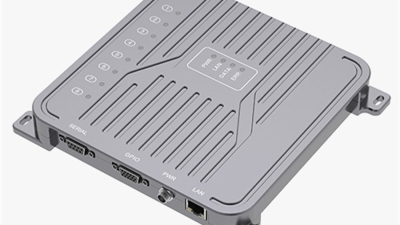
Enhancing Office Efficiency: The Benefits of Using the 8-Channel UHF RFID Tag Reader RFly-R8 for File Cabinet Identification
In today's fast-paced office environment, efficient file management is crucial for maintaining productivity. The integration of technology into day-to-day operations has led to significant improvements, especially with the adoption of RFID (Radio-Frequency Identification) solutions. One standout product in this space is the 8-Channel UHF RFID Tag Reader, RFly-R8, which enhances office efficiency by streamlining file cabinet identification processes. According to a recent report from RFID Journal, organizations that implement RFID technology can see inventory accuracy improvements of up to 99.9%, a critical factor in ensuring records are easily accessible when needed.
The RFly-R8 is a high-performance fixed reader that boasts exceptional RF capabilities, enabling efficient and accurate data collection across a range of applications, from logistics to manufacturing. Featuring eight channels, this reader significantly increases read rates and minimizes bottlenecks during high-volume operations. As organizations face increasing demands for speed and accuracy, the RFly-R8 stands out as an ideal solution for file management needs in an office setting. Furthermore, our commitment to providing high-quality, cost-effective products ensures that businesses can tailor solutions according to their specific requirements.
With the ability to customize solutions, the RFly-R8 caters to both general-purpose needs and specialized applications. The reader not only simplifies file retrieval but also enhances overall operational efficiency. By adopting the RFly-R8, companies can expect not just an improvement in file identification but also tangible returns on their investment as they drive towards more streamlined and responsive operations. With prompt service and detailed product quotations available, now is the time to enhance your office's efficiency through innovative RFID technology.
FAQS
: The RFID market is projected to grow at a compound annual growth rate (CAGR) of 14.4% from 2019, reaching approximately $38.68 billion by 2026.
Chinese manufacturers have demonstrated resilience by adapting and enhancing their products, focusing on innovation and differentiation to maintain competitive advantage in the market.
The Asia Pacific region, particularly China, is expected to hold the largest market share in the RFID sector, accounting for 32.9% by the end of 2023.
Chinese RFID manufacturers are utilizing cross-border e-commerce and AI-driven tools to generate compliant product listings for international markets, enhancing their access to overseas customers.
RFID technology adoption is rising in the supply chain management, retail, and healthcare sectors, where it is used for improving inventory accuracy and overall efficiency.
The US-China trade war has created tariff challenges that have prompted RFID manufacturers to quickly adapt, focusing on innovation and quality to remain competitive internationally.
The global RFID market is expected to reach approximately $40.47 billion by 2026, growing at a CAGR of 14.3% from 2021 to 2026, reflecting ongoing demand despite tariff pressures.
RFID technology can enhance inventory accuracy by up to 30%, leading to improved customer satisfaction through better stock management.
Resilience and innovation are crucial for the RFID industry as companies adapt to economic uncertainties and focus on technological advancements to sustain growth.
The RFID sector is anticipated to thrive through its adaptability to market demands and continued investment in research and development, indicating a promising future despite challenges.

 Rotary HF RFID Tag Reader GRH-I40 Suitable for Assembly Lines
 Industrial-grade High-frequency Integrated Reader GRH-I65 Suitable for Asset Tracking
 With ESD Protection HF RFID Reader GRH-I68 Suitable for Progress Tracking
 Proximity HF RFID Reader GRH-M30 Suitable for Manufacturing Workshops
 Desktop HF RFID Scanner GRH-D80-HID Suitable for Card-issuing Applications
 High Frequency Medium Distance Reader GRH-I90 Suitable for Logistics Production Line
 UHF RFID Portals and Tunnel Machine RFly-AM3000 for Access Control
 Narrow RFID Portals Series TD-P20040-SS for Single Tag Entry and Exit Identification Scenario
 RFID Transmission Line Simple Identification Tunnel Machine (TD-T3050)
 Vision and RFID Tunnel Machine TD-T7692-RV for Logistics Sorting
 RFID Transmission Line Identification Tunnel Machine TD-T10090
 RFID Mobile Inventory Tunnel Machine TD-T65150 for Conveyor Belts
 High-Performance Far-Field Antennas for Broad Coverage.
 Multi-Purpose Antennas: Flexibility for Diverse Applications
 Near-Field Antennas for Short-Distance Tag Detection.
 Portals & Tunnel Antennas for Integrated RFID Series
 Slimline PCB Antennas for Warehousing and Logistics
 Miniaturized and Thin Antennas can Provide Good Performance in a Smaller Size.
 GPS Tracker for Vehicles, Car, Kids, Assets.
 CO2 Sensors Detect CO2 Gas through Alarms, Suitable for Offices, Planting Tents.
 Door Sensor, Detect Open and Closed Doors or Windows, Sends Alerts, Triggers Siren.
 Wireless Level Sensor Equipped with a 5-Meter Detection Line, Suitable for Water Tanks
 Real Time Monitoring of Air Quality Using PM2.5/PM10 Sensors.
 Smoke Sensor, Fire Alarm Smoke Detector with Test Button and Low Battery Reminder.
 Soil Stress Sensor,Bridge and Tunnel Monitors.
 Vibration Sensor Monitors Equipment, Like Conveyors and Motors, for Operational Status.
 E -Paper Display
 Smart Water Sensor Alarms, 1.2 M Detection Line.
 CO Sensor for Basements Home Office House Bedroom Living Room Car, Light Plug and Play.
 Temperature and Humidity Sensor
 Multi-sensor GD-ME
 Temperature Sensors Monitor the Surface Temperature of Various Heating Equipment.-1
 Signal Enhancement Terminal, Long Range Coverage.
 Multi-Protocol Communication Gateway, App Remote Control.
 Edge Vision Gateway can Access Various Mainstream Cameras, Suitable for Office, Factory.
 GBS-3550 Outdoor Sensor Gateway,LoRa, 2/3/4G Communication.
 Smart WiFi Gateway, Realize Remote Control.
 Ultra-Low-Power Solar-Powered Intelligent Gateway (Outdoor)
 IP67-protected Integrated RFID Reader Writer RFly-I165 for Supply Chain
 Long-range Distance UHF RFID Reader RFly-I195 for Inventory Management
 Small UHF RFID Tag Reader RFly-I300 for Cars
 Two-channel Compact Fixed RFID Reader RFly-F210 for Warehousing
 Four Channels Fixed UHF RFID Reader RFly-R6 for Supply Chain
 8-channel UHF RFID Tag Reader RFly-R8 for File Cabinet Identification
 Bluetooth Portable RFID Reader and Writer GRU-HBT100 for Inventory Management
 Industrial Grade Handheld UHF RFID Reader GRU-HC520 Suitable for Logistics
 RFID Gateway Networking System
 RFID Passive Temperature Measurement System
 RFID Tags for Container Turnover Management
 RFID Tags for Equipment O&M Management
 RFID Tags for Manufacturing Management
 RFID Tags for Tool Management
 A Kits for Equipment Condition Detection
 A Kits for Office Computer Room Environment Monitoring
 A Kits for Reservoir Environmental Monitoring
 A Kits for Storage Space Environment Monitoring
 A Kits for Stress Detection of Underground Tunnel
 A Kits for Urban Environment Monitoring
 Intelligent IoT Monitoring Platform
 Integrating Multiple Functional OTG Demo Software
 HF Demo Software
 UHF Demo Software