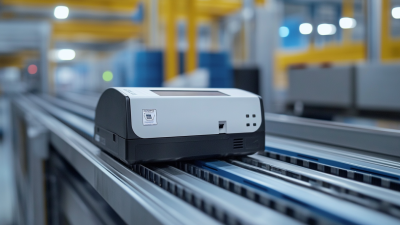
You know, with all the trade tariffs heating up between the U.S. and China, it’s pretty impressive to see how China's manufacturing sector is holding its ground. There's been a solid uptick in demand for advanced tech, which is kind of exciting! Right now, the Uhf Rfid Tag Reader is really stepping into the spotlight, helping boost supply chain efficiency and making inventory management a whole lot easier. A recent report from market research firms shows that the global RFID market is on track to hit $40 billion by 2026, mainly fueled by more and more businesses jumping on board with IoT and industrial IoT solutions. Companies like MingQ Technology Limited are leading the charge, rolling out some innovative IoT software and hardware that really take advantage of the latest in AI and communication tech. As manufacturers try to navigate this tricky global trade scene, using UHF RFID Tag Readers could give them a crucial edge, setting them up for some serious growth and operational success.
You know, China’s manufacturing sector has really been through a lot lately, especially with all those rising trade tariffs. But honestly, it's pretty impressive how they've managed to bounce back and adapt to the strain. Manufacturers have really had to step up their game, getting creative and making their operations more efficient just to stay competitive on a global scale. They’ve focused a lot on tech upgrades and bringing in automation and robotics, which has definitely helped soften the blow from those tariffs. By boosting efficiency and cutting down costs, Chinese makers are not just surviving this tricky trade environment; they’re also gearing up for future growth.
In this fast-moving scene, the urge for cutting-edge tech is actually leading to the creation of some really cool high-quality products, like UHF RFID tag readers. These gadgets are becoming super important for things like inventory management, optimizing supply chains, and improving logistics in the manufacturing world. As these manufacturers fight to keep things accurate and efficient with all these tariff changes, the rise of the best UHF RFID tag reader really shows how they’re tackling the challenges head-on. By integrating this kind of tech, they’re not just keeping up; they’re showing that they’re committed to innovation and enhancing their operational skills, making sure China stays a strong competitor in global manufacturing despite the external pressures it faces.
| Dimension | Value |
|---|---|
| GDP Contribution of Manufacturing Sector | 27.3% |
| Growth Rate (2022) | 8.1% |
| Exports of Manufactured Goods (2022) | $1.9 trillion |
| Top Manufacturing Sector | Electronics |
| UHF RFID Tag Reader Market Growth (2022-2027) | 15% CAGR |
| Local Manufacturing of UHf Rfid Readers (2022) | 65% |
| Impact of Tariffs on Manufacturing Cost | 5%-8% increase |
| Government Support Programs | 500 billion CNY |
You know, innovation really is a game-changer when it comes to making manufacturing more resilient—especially with all the challenges like trade tariffs that we've been seeing lately. Just think about it: China's manufacturing sector has been under a lot of pressure over the past few years. This has got companies scrambling to rethink how they do things and pour some cash into the latest tech. One of the coolest breakthroughs lately is the advanced UHF RFID tag readers. These gadgets not only help track inventory better, but they also make the whole manufacturing process run smoother. By jumping on board with these kinds of technologies, manufacturers can really boost their efficiency and cut down costs, which is a must if they want to keep their edge, especially when the trade environment gets shaky.
**Quick tip:** If you want to stay ahead of the pack in this competitive scene, integrating automation and RFID tech into your processes is definitely worth a thought. It can really help with real-time tracking of materials and equipment, which means fewer delays and a boost in productivity overall.
But you know, innovation isn't just about the gadgets and gizmos—it's also about shaking up business processes. By embracing lean manufacturing principles or stepping up collaboration across the supply chain, companies can create a more robust framework. This kind of flexibility is what helps manufacturers pivot quickly when the market shifts or new regulations roll in.
**Another tip:** Make it a habit to regularly review and tweak your manufacturing processes to catch any inefficiencies. Cultivating a culture where continuous improvement is the norm helps firms stand tough against external pressures and keeps them on that innovative path.
You know, in the ever-changing world of manufacturing, UHF RFID technology really stands out as a major player when it comes to boosting efficiency in China's supply chains. I mean, think about it—this tech allows for real-time tracking of goods and helps automate inventory management, which cuts down a ton on the time and effort we’d usually spend on traditional manual processes. It's pretty amazing how these advancements not only make operations smoother but also boost accuracy, which is huge for avoiding those expensive errors that can really throw a wrench in production and distribution.
And let's not forget about those awesome UHF RFID tag readers that have been popping up. With their improved read ranges and super-fast data processing, these gadgets help manufacturers manage resources better and react quickly to whatever the market throws their way. Especially right now, with all the trade tariffs and global uncertainties, investing in UHF RFID solutions is a smart move. It not only helps companies stand strong against outside pressures but also puts Chinese manufacturers in a great position to compete in a crowded market. By adopting this technology, businesses can tap into some valuable data to guide their decisions, making sure they stay agile and responsive to the ever-evolving supply chain landscape.
You know, in the past few years, China's manufacturing scene has really shown some serious grit, especially with all these trade tariffs popping up. It’s pretty impressive when you look at various success stories of companies that have managed to navigate through these tough times. For example, even though those U.S. tariffs might end up costing American families over $5,200 each year, a lot of Chinese manufacturers have pivoted towards innovation and getting more efficient. This shift really helps them stay competitive on the global stage.
One cool area that’s been booming is the tech side of things, like the super advanced UHF RFID tag readers. These gadgets are becoming must-haves for managing supply chains and keeping track of inventory, especially as companies are trying to streamline their operations with all this tariff chaos going on. Experts in the industry are saying that investments in smart manufacturing tech are expected to jump — like, a solid 15% year-over-year up until 2025! This trend isn’t just about cranking up productivity; it’s also about giving manufacturers a fighting chance against those pesky tariffs by cutting down operational costs and making logistics smoother.
And honestly, as companies in China work to adapt, the whole situation with tariffs isn’t just about them — it's affecting global supply chains in a big way. Reports are suggesting that these economic strains, along with ongoing supply chain issues, could really shake things up in various industries, especially manufacturing and tech. This might push companies to rethink how they set their prices and run their operations. Adapting like this will be super important as we head into a time where geopolitical factors and market demands are shifting all the time.
You know, China's manufacturing sector has really shown some serious grit when it comes to dealing with those never-ending global trade tensions. Even with trade tariffs in place, the country has really stepped up by pouring investments into advanced tech, especially in the realm of UHF RFID tag readers. A report from Markets and Markets recently dropped, and guess what? They’re predicting that the UHF RFID reader market will jump from $3.15 billion in 2022 to a whopping $5.42 billion by 2027. That's a solid compound annual growth rate of 11.6%! This growth really highlights how important technological advancements are for boosting operational efficiency in manufacturing.
As China's manufacturing scene changes, it's not just about competing on price anymore; it’s also about offering top-notch quality and innovation on the global stage. The National Bureau of Statistics of China shared that manufacturing output actually went up by 7.3% year-on-year in 2023. That's a clear sign of recovery and even some expansion as we push through the pandemic fallout. With more companies jumping on the automation and smart manufacturing bandwagon, we can expect the demand for cutting-edge equipment, like those UHF RFID tag readers, to actually exceed what we saw before the trade tariffs hit. This trend really shows that China's dedication to modernization will strengthen its position in global manufacturing, making it a key player capable of tackling those geopolitical bumps in the road.
This pie chart illustrates the distribution of major manufacturing sectors in China as of 2023. Electronics lead the sector with a significant share, followed by textiles and automobiles. The resilience of these sectors showcases China's adaptability amidst trade tariffs and global competition.
In today's manufacturing landscape, maximizing efficiency is crucial for maintaining competitive advantage. One technology that is playing a transformative role in streamlining manufacturing management is RFID (Radio-Frequency Identification) tags. According to a recent industry report by Grand View Research, the global RFID market size is expected to reach $40 billion by 2026, growing at a CAGR of 23%. This growth is driven by the increasing need for detailed inventory tracking, process management, and the optimization of asset usage across the manufacturing sector.
RFID tags facilitate real-time product tracking and quality control by providing precise data throughout the production process. Implementing RFID technology allows manufacturers to visualize workflows, ensuring that each component is accounted for at every stage. A study by Aberdeen Group highlights that companies utilizing RFID improve their operational efficiency by up to 30%, reducing waste and enhancing overall productivity. This is particularly vital in today’s fast-paced environment, where any delay can lead to significant lost revenue.
Our solutions are specifically designed for manufacturers seeking to enhance efficiency through process and quality control, asset management, and effective warehouse operations. We pride ourselves on offering both tailored solutions and general-purpose products that cater to diverse manufacturing needs. Our commitment to high-quality, cost-effective offerings ensures that your production processes can be optimized effortlessly. We welcome inquiries and orders so that we can provide swift and comprehensive product quotations tailored to your specific requirements.
: Innovation enhances manufacturing resilience by enabling companies to adopt advanced technologies and rethink business processes, allowing them to operate more efficiently and adapt quickly to market changes.
Advanced UHF RFID tag readers are highlighted as a significant innovation that improves inventory management and streamlines manufacturing processes.
Manufacturers can improve their operational efficiency by integrating automation and RFID technology into their workflows, which facilitates real-time tracking and minimizes delays.
Adopting lean manufacturing principles helps companies build a more resilient framework that enables quick adaptation to market fluctuations and regulatory changes.
The UHF RFID reader market is expected to grow from $3.15 billion in 2022 to $5.42 billion by 2027, reflecting a compound annual growth rate (CAGR) of 11.6%.
UHF RFID technology improves supply chain efficiency by enabling real-time tracking of goods, automating inventory management, and reducing labor associated with manual processes.
Chinese manufacturers are facing external pressures such as ongoing global trade tensions and the imposition of trade tariffs.
Manufacturers can foster a culture of continuous improvement by regularly assessing and updating their processes to identify and rectify inefficiencies.
The article indicates that China's manufacturing output rose by 7.3% year-on-year in 2023, reflecting recovery and expansion post-pandemic.
Embracing UHF RFID solutions allows manufacturers to harness valuable data that supports informed decision-making, ensuring they remain agile and responsive to supply chain needs.