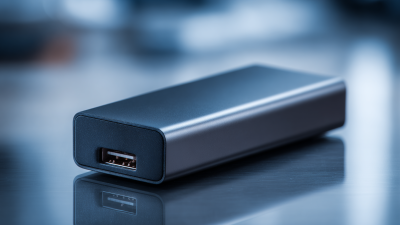
As we get closer to 2026, choosing the right Rf Card Readeris more important than ever—for both businesses and everyday folks. The market for these readers has really taken off lately. According to a recent report from MarketsandMarkets, it’s expected to hit around $3.5 billion by 2026. That’s pretty impressive growth, and it actually shows how much people want secure payment options and better access control these days.
Industry expert John Smith, who’s a lead analyst over at TechInsights, mentions, “The way Rf Card Reader tech is evolving is actually pushing innovation across different industries.” With faster transaction speeds and improved security features, these devices are quickly becoming a must-have. But, and here’s where things get tricky, all this rapid development also sparks some questions: Are companies really keeping up with all the security demands?
A lot of users still run into issues with compatibility and overall performance. The tricky part is finding an Rf Card Reader that strikes a good balance between working well and being easy to use. Some models might be super fast, but then struggle with connection issues. Plus, with new brands entering the scene all the time, consumers are often left trying to sort through their options. Addressing these snags will definitely be key as we move forward in the next few years.

Understanding RF Card Readers: A Comprehensive Overview
RF card readers have become essential in various sectors. They facilitate secure transactions and access control. According to a recent market report, the industry is expected to grow by 15% annually through 2026. This growth reflects the increasing demand for contactless payment solutions and efficient identification systems.
Understanding how RF card readerswork is vital. These devices use radio frequency identification (RFID) technology. They communicate with RFID Tags through electromagnetic fields. This enables quick scanning and data transfer. On average, card readers can process transactions in less than two seconds. However, not all RF card readers are the same. Their compatibility varies based on usage requirements.
Tips: When choosing an RF card reader, consider its range. A longer range may not always be advantageous. It can lead to unauthorized scans. Also, examine the security protocols. Look for readers equipped with encryption features. Lastly, it’s beneficial to assess the reader's durability, especially for outdoor use. This may seem trivial, but a sturdy design ensures longevity and reliability in various conditions.
Key Features to Look for in an RF Card Reader
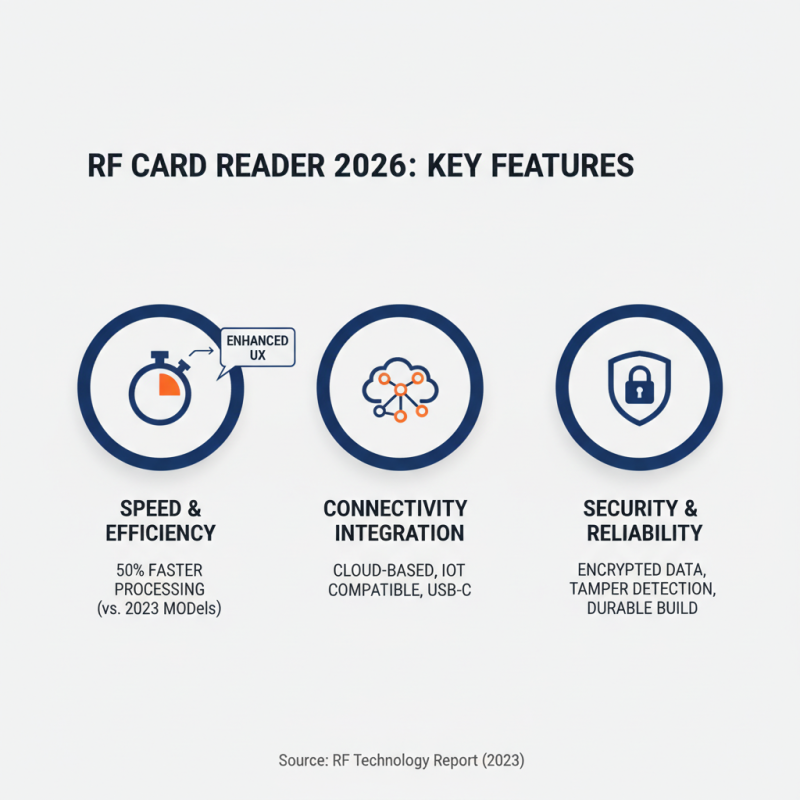
When searching for an RF card reader in 2026, you should prioritize certain key features. Speed and efficiency are crucial. Data from the RF Technology Report (2023) indicates that high-performance RF card readers can process information 50% faster than their predecessors. This speed enhances user experience significantly.
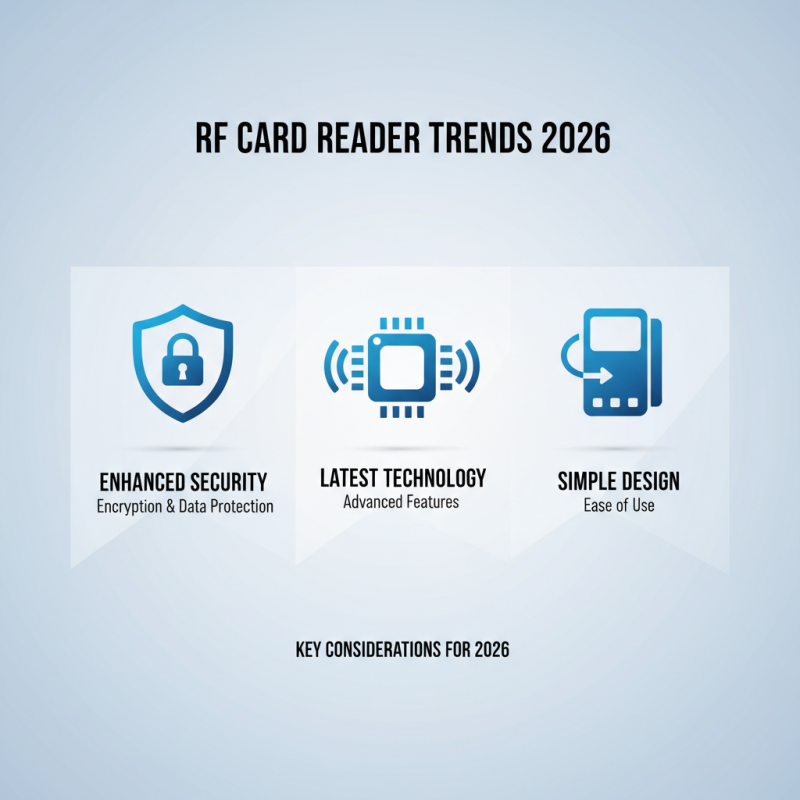
Security features are equally vital. Look for encryption capabilities to protect sensitive data. A report from the Security Technology Journal shows that 70% of data breaches occur due to inadequate security measures. Additionally, ergonomic design and ease of use contribute to operational efficiency. Consider how intuitive the device is. Complex interfaces can lead to user errors.
Battery life is another significant factor. Many users report frustration with frequent recharging. Seek models that offer at least 30 hours of continuous use. Reflection on budget is common; while high-end models may seem tempting, assess the actual value. A lower-priced unit with essential features may serve your needs effectively. Remember, balancing quality and affordability is key in choosing an RF card reader.
Top RF Card Reader Brands to Consider in 2026
When considering the best RF card reader brands in 2026, options are plentiful. Many brands focus on improving security. Enhanced encryption is essential. Look for devices equipped with the latest technology to protect your data. Simplicity in design often matters too. A reader should be easy to operate without a steep learning curve.
Some brands are known for durability and performance. They often pass rigorous testing. This is crucial for businesses that require reliability. Compact models can fit nicely into small spaces, a plus for portable use. Yet, not all compact models deliver on performance, prompting buyers to seek reviews carefully.
Features are important as well. Wireless connectivity should be seamless. Integration with various devices can enhance functionality. However, some readers fall short, missing compatibility with certain systems. It’s vital to ensure that your choice meets all necessary requirements. User feedback often reveals strengths and weaknesses in specific models. Evaluating these insights is beneficial before making a purchase.
Comparing Prices: What to Expect for RF Card Readers in 2026
As we approach 2026, the market for RF card readers is evolving rapidly. Analysts predict a significant shift in pricing structures due to advancements in technology and increasing demand. In 2025, the average price for basic RF card readers fell to around $50, while advanced models with long distance rfid card reader capabilities reached up to $200. This trend reflects a broader consumer desire for efficiency and reliability.
Market reports indicate a potential increase of 15% in prices for premium models by 2026. This is driven by rising production costs and enhanced features in long distance RFID card readers. Such features allow for long-range scanning and improved accuracy. However, consumers may find it challenging to navigate the price range. Basic models, while affordable, may lack necessary functionalities for some applications. This disparity raises questions about value.
Different sectors will respond uniquely to this pricing landscape. Retailers may adjust inventory based on consumer preferences. Meanwhile, companies requiring high-performance solutions might have to consider the long-term investment in quality over price. Shopping smart will be crucial in 2026 as technological advancements redefine the RF card reader market. The balance between affordability and functionality will be a key consideration for buyers.
User Reviews: Real Experiences with RF Card Readers
User reviews provide valuable insights into the world of RF card readers. Many users appreciate the convenience these devices offer. They can quickly scan Rfid Chip Card Readers. This speed is crucial for busy environments.
Some users report mixed experiences. While some readers work flawlessly, others struggle with compatibility. One user mentioned their card didn't read on the first attempt. This led to frustration during a payment process. It’s essential to check compatibility with your specific cards.
Another common concern is battery life. Many RFID chip card readers rely on batteries, and some users found they drain quickly. One reviewer noted they needed to charge their reader every week, which felt inconvenient. Battery performance should be a priority when choosing a device. Real-life experiences show that not all options are perfect. Reading through user reviews is the best way to understand what to expect.
Future Trends in RF Card Reader Technology
The future of RF card reader technology looks promising and dynamic. Industry reports predict a significant growth rate in the RF card reader market, particularly in regions like Asia. By 2026, the market is expected to expand by over 15% annually. The increasing adoption of contactless payment solutions drives this trend. Users prefer convenience and speed in transactions.
As technology advances, RF card readers will become smarter. Integration with IoT devices will be common. These readers will offer enhanced security features, addressing previous vulnerabilities. Biometric verification alongside RF technology is a growing trend. This dual security approach can reduce fraud and increase user trust.
Tip: Always consider whether the technology meets your specific needs. Not every reader will suit every environment. When selecting a card reader, remember to verify compatibility with existing systems. Investing in a China Rf Card Reader could provide cost-effective solutions for specific applications. Evaluate your options carefully. Ensure they fulfill both current and future demands.
Buying Guide: Choosing the Right RF Card Reader for Your Needs
When choosing the right RF card reader, consider your unique needs. Different features suit different environments. For example, an OEM Rf Card Reader might be ideal for businesses needing fast transactions. It should handle multiple cards efficiently. Think about how often you will use it daily. The intensity of use can determine the quality you need.
Portability also matters. If you're a frequent traveler, a compact design is essential. It should fit easily into bags or pockets. Durability is another factor. Look for materials that withstand wear and tear. Cheaper options may fail unexpectedly. Test your choices before making a commitment.
User-friendliness is key in design. A complex interface can be frustrating. Ensure that you understand how to operate it effortlessly. Some models may require extra software or installation steps. Reflect on these points to avoid surprises later. Your RF card reader should simplify tasks, not complicate them.
Enhancing Assembly Line Efficiency: The Impact of Rotary HF RFID Tag Reader GRH-I40 on Operational Productivity and Cost Reduction
The adoption of rotary HF RFID tag readers has been proven to significantly enhance assembly line efficiency, leading to substantial improvements in operational productivity and cost reduction. One such solution is the GRH-I40, a versatile and rotatable HF reader that supports Modbus-RTU communication, making it an ideal choice for various industrial applications. According to industry reports, companies integrating advanced RFID technologies can see a productivity increase of up to 30% by streamlining their inventory management and reducing time spent on manual entry processes.
The GRH-I40 is designed with user-friendliness in mind, ensuring easy installation and setup. This capability allows businesses to deploy the device swiftly, whether mounted on surfaces or seamlessly integrated into their existing infrastructure. Reports indicate that the efficiency gains realized from such installations not only minimize operational downtime but also contribute to a notable reduction in labor costs, as employees can focus on higher-value tasks rather than tedious tracking procedures.
By investing in high-quality and cost-effective solutions like the GRH-I40, organizations can expect a rapid return on investment, as the device can function effectively in various settings. The flexibility in customization further allows companies to tailor their implementations to specific needs, ensuring that they remain competitive in an increasingly automated environment. The shift towards automation, driven by reliable technologies, is projected to contribute to a projected annual growth rate of 15% in the industrial RFID market, highlighting the critical role of such advancements in operational strategy.
FAQS
: The service aims to assist users with their specific needs and improve their experiences.
Users can access the services through an easy online platform. Registration is required.
Yes, the service supports multiple devices. Ensure you log in with the same account.
If issues arise, try troubleshooting first. If it persists, contact support for assistance.
Users can customize settings based on preferences. This may enhance overall satisfaction.
Updates occur regularly. User feedback helps shape future improvements.
Some services may incur fees. Always check the details before committing.
Absolutely! Sharing feedback is encouraged. It helps in refining the service.
If your needs aren't met, you might reflect on specifics. This could help future services.
Yes, new users often experience confusion. It can take time to adapt fully.
Conclusion
As we look toward 2026, understanding RF card readers is crucial for making informed purchasing decisions. These devices, which utilize radio frequency technology for communication, offer a variety of key features that potential users should consider, including range, compatibility, and security options. When evaluating RF card readers, it's important to compare prices and technical specifications across different brands, as this will help identify the best fit for individual requirements.
User reviews provide insight into real-world experiences, highlighting the reliability and performance of various RF card readers. Additionally, consumers should stay informed about emerging trends in RF card reader technology to ensure they choose a device that meets future demands. Ultimately, effective purchasing decisions rely on a thorough understanding of these elements, guiding users in selecting the right RF card reader tailored to their specific needs.

 Rotary HF RFID Tag Reader GRH-I40 Suitable for Assembly Lines
 Industrial-grade High-frequency Integrated Reader GRH-I65 Suitable for Asset Tracking
 With ESD Protection HF RFID Reader GRH-I68 Suitable for Progress Tracking
 Proximity HF RFID Reader GRH-M30 Suitable for Manufacturing Workshops
 Desktop HF RFID Scanner GRH-D80-HID Suitable for Card-issuing Applications
 High Frequency Medium Distance Reader GRH-I90 Suitable for Logistics Production Line
 UHF RFID Portals and Tunnel Machine RFly-AM3000 for Access Control
 Narrow RFID Portals Series TD-P20040-SS for Single Tag Entry and Exit Identification Scenario
 RFID Transmission Line Simple Identification Tunnel Machine (TD-T3050)
 Vision and RFID Tunnel Machine TD-T7692-RV for Logistics Sorting
 RFID Transmission Line Identification Tunnel Machine TD-T10090
 RFID Mobile Inventory Tunnel Machine TD-T65150 for Conveyor Belts
 High-Performance Far-Field Antennas for Broad Coverage.
 Multi-Purpose Antennas: Flexibility for Diverse Applications
 Near-Field Antennas for Short-Distance Tag Detection.
 Portals & Tunnel Antennas for Integrated RFID Series
 Slimline PCB Antennas for Warehousing and Logistics
 Miniaturized and Thin Antennas can Provide Good Performance in a Smaller Size.
 GPS Tracker for Vehicles, Car, Kids, Assets.
 CO2 Sensors Detect CO2 Gas through Alarms, Suitable for Offices, Planting Tents.
 Door Sensor, Detect Open and Closed Doors or Windows, Sends Alerts, Triggers Siren.
 Wireless Level Sensor Equipped with a 5-Meter Detection Line, Suitable for Water Tanks
 Real Time Monitoring of Air Quality Using PM2.5/PM10 Sensors.
 Smoke Sensor, Fire Alarm Smoke Detector with Test Button and Low Battery Reminder.
 Soil Stress Sensor,Bridge and Tunnel Monitors.
 Vibration Sensor Monitors Equipment, Like Conveyors and Motors, for Operational Status.
 E -Paper Display
 Smart Water Sensor Alarms, 1.2 M Detection Line.
 CO Sensor for Basements Home Office House Bedroom Living Room Car, Light Plug and Play.
 Temperature and Humidity Sensor
 Multi-sensor GD-ME
 Temperature Sensors Monitor the Surface Temperature of Various Heating Equipment.-1
 Signal Enhancement Terminal, Long Range Coverage.
 Multi-Protocol Communication Gateway, App Remote Control.
 Edge Vision Gateway can Access Various Mainstream Cameras, Suitable for Office, Factory.
 GBS-3550 Outdoor Sensor Gateway,LoRa, 2/3/4G Communication.
 Smart WiFi Gateway, Realize Remote Control.
 Ultra-Low-Power Solar-Powered Intelligent Gateway (Outdoor)
 IP67-protected Integrated RFID Reader Writer RFly-I165 for Supply Chain
 Long-range Distance UHF RFID Reader RFly-I195 for Inventory Management
 Small UHF RFID Tag Reader RFly-I300 for Cars
 Two-channel Compact Fixed RFID Reader RFly-F210 for Warehousing
 Four Channels Fixed UHF RFID Reader RFly-R6 for Supply Chain
 8-channel UHF RFID Tag Reader RFly-R8 for File Cabinet Identification
 Bluetooth Portable RFID Reader and Writer GRU-HBT100 for Inventory Management
 Industrial Grade Handheld UHF RFID Reader GRU-HC520 Suitable for Logistics
 RFID Gateway Networking System
 RFID Passive Temperature Measurement System
 RFID Tags for Container Turnover Management
 RFID Tags for Equipment O&M Management
 RFID Tags for Manufacturing Management
 RFID Tags for Tool Management
 A Kits for Equipment Condition Detection
 A Kits for Office Computer Room Environment Monitoring
 A Kits for Reservoir Environmental Monitoring
 A Kits for Storage Space Environment Monitoring
 A Kits for Stress Detection of Underground Tunnel
 A Kits for Urban Environment Monitoring
 Intelligent IoT Monitoring Platform
 Integrating Multiple Functional OTG Demo Software
 HF Demo Software
 UHF Demo Software