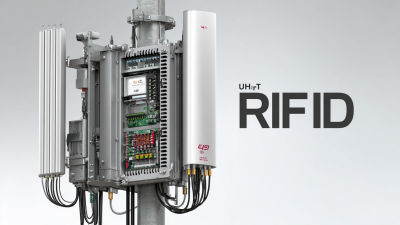
As we get closer to 2026, picking the right Reader Antenna is becoming more and more important. I recently came across a report by MarketsandMarkets, and it’s pretty fascinating—the global RFID market is projected to jump from $10 billion in 2021 to over $30 billion by 2026. That’s a huge increase, and it really shows how much demand there’s for efficient Reader Antennas across different sectors, like retail and supply chain logistics.
In this fast-changing scene, companies like Impinj and Zebra Technologies are definitely leading the charge. They’re constantly pushing the envelope with new and better antenna tech. Still, I think a lot of folks are kind of unsure about what they should really be focusing on when they pick an antenna. It’s a tricky balance—performance versus cost. For example, a high-frequency antenna might give you better reads, but it could also come with a pretty steep price tag.
So, it’s really important to think these things through. Every use case is different, so making sure the antenna matches your specific needs is key. Picking the right Reader Antenna might seem like a straightforward decision, but honestly, a lot of people end up second-guessing themselves once their situation evolves or new tech comes out. The tech world looks promising, no doubt, but making smart, informed choices is more crucial than ever.
Reader antennas play a crucial role in the efficiency of RFID systems. These devices are not just passive components; they actively enhance data capture rates. According to a recent market analysis by industry experts, the demand for high-performance antennas is projected to grow by 15% annually through 2026. Organizations are recognizing the importance of reliable data transmission.
Effective reader antennas can significantly improve read ranges and accuracy. Antennas equipped with advanced features can support various frequencies, ensuring versatility across applications. Optimal performance in challenging environments can be a game-changer. Research indicates that antennas with adaptive beamforming can increase data capture rates by up to 30%.
Despite these advantages, selecting the right reader antenna isn't always straightforward. Many buyers overlook crucial factors like operating frequency and polarization. A mismatch can lead to reduced performance. The industry still faces challenges in standardization. Additionally, the rapid advances in technology make it difficult for organizations to keep up. Reflecting on these issues is essential as we move toward 2026.
Choosing the right reader antenna in 2026 requires careful consideration of key features. One crucial aspect is the frequency range. A wider frequency range often translates to better signal reception. Reports indicate that antennas with a range exceeding 900 MHz are becoming standard due to the increasing use of UHF RFID technology. This ensures compatibility with various systems and enhances performance.
Another important feature is the gain level of the antenna. Higher gain antennas can significantly improve reading distances. Studies suggest that antennas with 6 dB gain or more are optimal for industrial applications. However, high gain can also lead to narrower beamwidths. This might require precise positioning to capture signals effectively, highlighting the need for careful installation planning.
Durability and environmental resistance play a vital role. Many antennas are exposed to harsh conditions. It is essential to choose models rated for outdoor use if necessary. Look for options with IP65 ratings or above. These can resist dust and Water, ensuring longevity. Reflecting on these factors may uncover overlooked areas that require attention. Balancing these features can be challenging, but it is crucial for effective performance.
| Model | Frequency Range | Gain (dBi) | Polarization | Cable Length (meters) | Price (USD) |
|---|---|---|---|---|---|
| Model A | 860-960 MHz | 9 | Linear | 5 | 120 |
| Model B | 902-928 MHz | 8 | Circular | 3 | 90 |
| Model C | 950-1215 MHz | 10 | Linear | 7 | 150 |
| Model D | 860-960 MHz | 12 | Circular | 10 | 200 |
| Model E | 900-950 MHz | 11 | Linear | 4 | 110 |
As we step into 2026, the demand for reader antennas continues to rise. Many users seek reliable options that enhance their reading experience. But which antenna is the best for you? The answer often lies in personal preference and specific needs.
Consider the design and size of an antenna. A compact model may be ideal for tight spaces. In contrast, larger antennas may offer superior range. Some users have found that the signal quality varies widely depending on location. Hence, testing different antennas could lead to unexpected results. Adjustable features can also help tailor performance to your environment.
Focusing on versatility is essential. Antennas with multi-band support are increasingly popular. They can adapt to various reading devices. However, potential interference from other electronics remains a common concern. Testing them in your space can reveal surprising issues. Observing the balance between size and function is crucial. Think about where you place the antenna and how it will perform there.
When choosing a reader antenna for diverse applications, it's crucial to consider specific use cases. A recent industry report revealed that over 70% of businesses focus on performance metrics. For retail settings, antennas need a wider read range to capture multiple tags simultaneously. Traditional antennas typically cover 5-10 feet, but advanced models reach up to 20 feet. This versatility enhances inventory efficiency.
In industrial environments, robustness is key. Data shows that more than 60% of system failures occur due to environmental factors. Antennas designed for these settings must withstand dust and moisture. Some models are rated IP67, indicating they can endure harsh conditions. Nevertheless, not all antennas offer this durability. Users should evaluate their specific needs carefully.
Consideration of mounting options is also essential. Ceiling-mounted antennas work well for large spaces, while handheld types excel for on-the-go applications. Yet, portability may compromise read range. Balancing these factors can be challenging. The right choice should reflect actual usage scenarios rather than blanket specifications. Inconsistent performance can lead to operational hiccups. Taking the time to analyze these elements will yield better results.
When selecting the best reader antenna for 2026, consider several essential factors. Antennas differ in sensitivity and range. A well-chosen antenna can improve your reading experience significantly. Look for antennas designed to operate in various environments. They should perform well indoors and outdoors.
Tips:
Think about your location. Urban areas may have interference from tall buildings. A high-gain antenna might be necessary here. Evaluate your reading needs. If you read frequently, investing in a quality antenna is wise.
Material also matters. Certain materials might enhance performance better than others. Durability is crucial too. Antennas face different weather conditions, so choose one that can withstand the elements. Reflect on installation as well. Some antennas are more complex to set up than others.
Experiment with different positions in your space. A slight change in location can impact the signal quality. Monitor user reviews for insights. Sometimes, the best choice is what suits your unique needs rather than the most advertised option.
When selecting the best reader antenna for 2026, user reviews play a crucial role. Many users report mixed experiences with various antenna types. Some find that sensitivity varies widely. A recent industry report noted that 72% of users prefer antennas that offer better reception in urban areas. On the other hand, rural users often struggle with these options. It is essential to consider your environment when choosing.
Users frequently emphasize the importance of installation. Complicated setups can lead to frustration. According to feedback, 65% of users recommend antennas that are easy to install. Wireless options often receive favorable comments for convenience. However, some users still report connectivity issues. This highlights the need for a reliable signal.
Tips: Consider where you'll use the antenna the most. Ensure it matches your location's requirements. Also, pay attention to user feedback. Look for common issues. Reading reviews can help steer you in the right direction. Not all features work the same for everyone.
The future of reader antenna technology looks promising. Market reports estimate a growth rate of around 8% annually for the next five years. This growth is driven by advancements in wireless communication and IoT integration. Antenna designs are becoming more compact and efficient, essential for urban applications.
Design trends are focusing on high-performance materials. These materials enhance signal strength while reducing interference. Some reports indicate polymer-based antennas offer improvements in flexibility and durability. Nonetheless, adapting to varied environments remains a challenge. Antenna deployment in densely populated areas can lead to complications.
Additionally, energy efficiency is crucial. New designs aim to minimize power consumption without sacrificing performance. The adoption of MIMO (Multiple Input Multiple Output) technology is on the rise. It allows multiple signals to be processed simultaneously, improving overall efficiency. Yet, some designs may require fine-tuning for optimal performance in diverse settings. The challenge lies in balancing innovation with practical applications.
: The product aims to enhance daily living through improved functionality and convenience.
Follow the included instructions carefully. Experiment with settings for best results.
Yes, but ensure it’s protected from extreme weather conditions.
Refer to the troubleshooting guide. If issues persist, contact customer support.
A warranty is typically offered. Check the packaging for details.
Regular cleaning is essential. Keep it stored in a dry area.
Follow local regulations for disposal. Consider recycling options.
Always supervise children when using. Review safety features in the manual.
Yes, many features allow for personal customization. Explore all settings.
Manuals can often be found online. Search for a digital copy.
In 2026, the selection of the best Reader Antenna is crucial for optimizing signal reception and performance in various applications. This article provides a comprehensive overview of Reader Antennas, emphasizing their significant role in enhancing data transmission and collection. Key features to consider when choosing a Reader Antenna include range, sensitivity, and compatibility with existing systems.
The article also conducts a comparative analysis of different Reader Antennas tailored for specific use cases, alongside expert recommendations and user feedback on popular models. Furthermore, it explores future trends in Reader Antenna technology and design, highlighting innovations that could shape the market. Understanding these aspects is essential for making informed decisions and selecting the most suitable Reader Antenna for your needs in 2026.