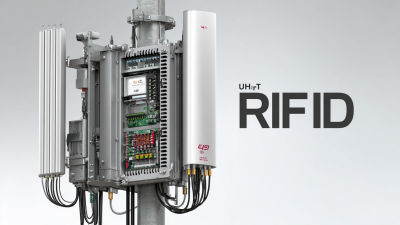
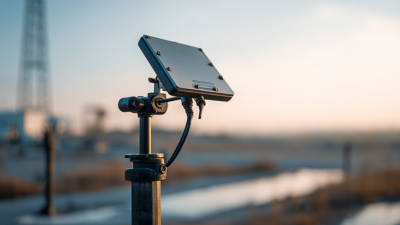
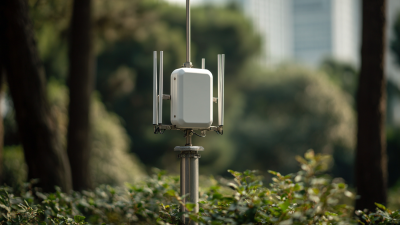
When you're diving into RFID tech, the Reader Antenna really is a key piece of the puzzle. These antennas can make a huge difference in how well your RFID system works—whether it’s smooth sailing or a bit of a headache. Honestly, for those just starting out, understanding what makes each one tick can feel pretty overwhelming. There are so many different types, each designed for different things, which can make choosing the right one a real challenge. If you wanna check out more aboutrfid reader antenna types, I’d definitely recommend taking a look. It helps to see the variety out there.
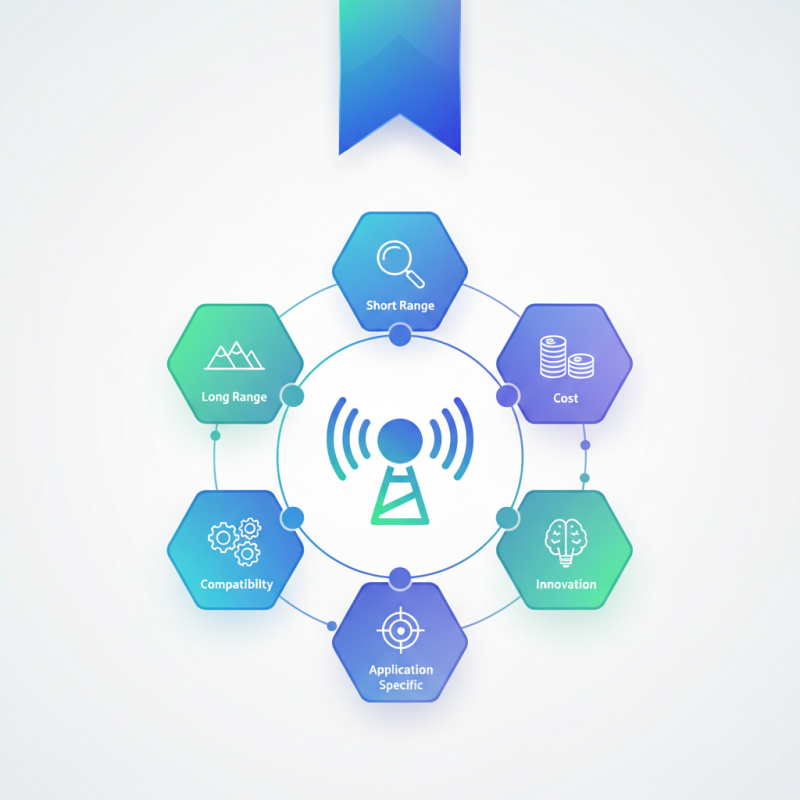
The features of these antennas can vary a lot. Some are built for short-range stuff—like, close-up reads—while others are better if you need to communicate over longer distances. And because there's such a wide range, it can sometimes get pretty confusing. Companies like Alien Technology and Impinj are always pushing out innovative options, but each has its own set of specs that matter. Getting a good grasp of these details is pretty important if you wanna make sure your setup runs smoothly.
Picking the right Reader Antenna really boils down to what you need. Some folks might go for the cheapest option, even if it’s not the best quality, which can backfire. Others might forget to check if the antenna is compatible with their existing system—that’s a common pitfall. It's super important to really think about what your specific requirements are before making a choice. Not every antenna works for every situation, so finding that sweet spot between features, cost, and performance is the way to go if you want things to work out well.
Key Characteristics of 2026 Top Reader Antennas
In 2026, the landscape of Rfid Reader Antennas will continue to evolve. One key characteristic is their increased sensitivity. Enhanced sensitivity allows for quicker data capture and greater read ranges. Recent industry reports highlight a trend where top models achieve up to 99% read accuracy. This advancement is vital for applications like inventory management and Asset Tracking.
Another significant feature is the versatility of design. Modern RFID reader antennas come in various shapes and sizes. This adaptability is essential for fitting into different environments. A study indicated that 60% of users face challenges in deploying antennas in limited spaces. Designers are increasingly focusing on compact solutions that maintain performance. The antennas must also be durable, often exposed to harsh conditions.
Moreover, interoperability has become crucial. With multiple standards in use, compatibility is a growing concern. RFID reader antennas must support various communication protocols. A recent analysis pointed out that up to 70% of companies struggle with integrating different systems. This gap highlights the need for standardization in the industry. Addressing these issues will lead to more seamless data exchange across platforms.
Technological Advances in Antenna Design for 2026
As we move toward 2026, the evolution of antenna technology continues to progress rapidly. Rfid Reader And Antenna systems are at the forefront of this evolution. Recent reports indicate that the global RFID market is expected to reach $30 billion by 2026, showcasing a significant growth trajectory. This rise reflects the increasing demand for efficient data communication across various industries.
Innovative antenna designs are being developed to enhance performance. Antennas now feature multi-band capabilities, allowing them to operate across several frequencies. This adaptability is crucial for applications in retail, logistics, and healthcare. Dynamic beamforming techniques are making waves, enabling antennas to direct signals more efficiently. According to a study by the Antenna Research Institute, this improvement could increase read ranges by up to 50%. However, the implementation of these technologies is not without challenges. Designing antennas that are compact yet highly efficient remains a critical dilemma.
Moreover, the integration of advanced materials is changing the landscape of antenna design. Lightweight and flexible materials are replacing traditional ones, allowing for innovative shapes and easier deployment. These advancements promise better performance and durability in various environments. Yet, ensuring consistent reliability in diverse conditions remains a concern. The journey toward perfecting these designs illustrates the ongoing need for innovation and adaptation in the field of RFID reader and antenna technologies.
2026 Top Reader Antenna Features You Must Know
| Feature | Description | Advancement | Impact on Performance |
| Multi-band Support | Ability to operate across multiple frequency bands. | Increased versatility for various applications. | Improved communication efficiency. |
| Smart Signal Processing | Enhanced algorithms for better signal clarity. | Utilizes AI to adapt to environmental changes. | Greater reliability in diverse conditions. |
| Compact Design | Reduced size without compromising performance. | Use of advanced materials and techniques. | Easier integration in mobile devices. |
| Enhanced Gain | Increased directionality and signal strength. | New designs for improved radiation patterns. | Better performance in long-range communications. |
| Robust Durability | Materials designed to withstand harsh environments. | Innovations in weather-resistant materials. | Longevity and reliability in outdoor applications. |
Types of Reader Antennas Relevant for Various Applications
When considering the types of reader antennas, understanding their specific applications is crucial. Different environments require distinct features for optimal performance. For example, panel antennas are popular for wide coverage areas. They excel in retail spaces where many tags are read simultaneously.
However, some applications may need more focused performance. This is where handheld antennas come into play. They offer the versatility to scan specific items in warehouses or at events. Their portability allows for quick check-ins or inventory assessments. Tips: Always assess your scanning area to determine the best antenna type for your needs.
Another option is the embedded antennas, designed for integration in products. These are ideal for tracking purposes within various devices. They blend seamlessly, enhancing usability without compromising design. Tips: Consider the size and location of the embedded antenna for effective signal integrity.
Choosing the right Rfid Antenna And Reader is essential for achieving desired results. Some setups may face technical challenges or interference. It’s important to test different configurations to find what works best for your specific environment. Understanding these types of reader antennas can lead to better application performance and efficiency.
Performance Metrics to Evaluate Reader Antennas in 2026
When evaluating Antenna Readers in 2026, performance metrics become crucial. Key metrics include read range, accuracy, and speed. A strong antenna reader should cover a significant distance. However, some may struggle in complex environments. Testing in real-world conditions is vital for understanding this.
Next, pay attention to the sensitivity of the antenna reader. High sensitivity leads to better detection. But, can it filter out interference? This aspect often gets overlooked. Not all readers handle noise equally. It's worth exploring how different settings affect performance.
Additionally, power consumption plays a role in efficiency. Some antenna readers consume excessive energy. This can impact overall system performance. You might want to compare various models before deciding. Real user feedback can provide insight here. Remember, the evaluation process requires thoughtful reflection on what truly matters.
Considerations for Choosing the Right Reader Antenna
Choosing the right reader antenna is essential. The right choice can enhance efficiency and accuracy. A recent industry report indicates that 65% of organizations face challenges due to mismatched antennas. It's a common oversight. Many factors go into consideration.
Think about the frequency range. Antennas vary widely in this aspect. Some perform better at lower frequencies, while others excel at higher ones. Unfortunately, many users tend to overlook this detail. They assume that one size fits all. In reality, the right frequency can significantly affect read range and reliability.
Next, consider the antenna's gain. Higher gain can improve performance. Studies show that antennas with gain of 8 dBi can read tags up to 30% farther than those with 5 dBi. However, higher gain also narrows the beam width. This creates a need for careful placement. An improper installation can lead to performance issues. Many users do not account for these nuances in their selection process.
Future Outlook: Reader Antennas Beyond 2026
As we look beyond 2026, the evolution of reader antennas is poised to shape numerous industries. According to a report from MarketsandMarkets, the global RFID market is projected to reach $40 billion by 2026. Antennas play a vital role in this growth, enabling faster and more reliable data transmission. Innovations like phased array systems and adaptive beamforming are expected to enhance signal reception and transmission.
Tips: Consider the long-term investment in adaptive technologies. They could offer significant returns in efficiency.
The future of reader antennas will also incorporate advancements like AI-driven analytics. These technologies could help in real-time data processing and decision-making. A study indicates that over 80% of companies believe that integrating AI with RFID systems will improve operational efficiency. However, this integration isn't without its challenges. Companies must ensure they have the right infrastructure to support such innovations.
Tips: Assess your current infrastructure before tackling advanced integrations. It’s important to have a solid foundation.
Moreover, sustainability will be a critical factor. As regulations tighten, companies will be pushed to develop eco-friendly antennas. This transition could be time-consuming. It's a space worth watching as emerging solutions could disrupt existing markets.
2026 Top Reader Antenna Features Overview
Conclusion
The article titled "2026 Top Reader Antenna Features You Must Know" explores the essential characteristics and technological advancements of reader antennas anticipated for 2026. It delves into the different types of reader antennas that cater to various applications and explains the critical performance metrics necessary for evaluating their effectiveness. Furthermore, the discussion highlights the emerging trends shaping reader antenna development and provides considerations to help users choose the most suitable options for their needs.
Looking ahead, the future outlook section anticipates significant innovations in reader antennas that will likely enhance functionality and efficiency beyond 2026. As industries adapt to evolving technologies, understanding these features and trends will be crucial for selecting the right reader antenna to meet specific application requirements.

 Rotary HF RFID Tag Reader GRH-I40 Suitable for Assembly Lines
 Industrial-grade High-frequency Integrated Reader GRH-I65 Suitable for Asset Tracking
 With ESD Protection HF RFID Reader GRH-I68 Suitable for Progress Tracking
 Proximity HF RFID Reader GRH-M30 Suitable for Manufacturing Workshops
 Desktop HF RFID Scanner GRH-D80-HID Suitable for Card-issuing Applications
 High Frequency Medium Distance Reader GRH-I90 Suitable for Logistics Production Line
 UHF RFID Portals and Tunnel Machine RFly-AM3000 for Access Control
 Narrow RFID Portals Series TD-P20040-SS for Single Tag Entry and Exit Identification Scenario
 RFID Transmission Line Simple Identification Tunnel Machine (TD-T3050)
 Vision and RFID Tunnel Machine TD-T7692-RV for Logistics Sorting
 RFID Transmission Line Identification Tunnel Machine TD-T10090
 RFID Mobile Inventory Tunnel Machine TD-T65150 for Conveyor Belts
 High-Performance Far-Field Antennas for Broad Coverage.
 Multi-Purpose Antennas: Flexibility for Diverse Applications
 Near-Field Antennas for Short-Distance Tag Detection.
 Portals & Tunnel Antennas for Integrated RFID Series
 Slimline PCB Antennas for Warehousing and Logistics
 Miniaturized and Thin Antennas can Provide Good Performance in a Smaller Size.
 GPS Tracker for Vehicles, Car, Kids, Assets.
 CO2 Sensors Detect CO2 Gas through Alarms, Suitable for Offices, Planting Tents.
 Door Sensor, Detect Open and Closed Doors or Windows, Sends Alerts, Triggers Siren.
 Wireless Level Sensor Equipped with a 5-Meter Detection Line, Suitable for Water Tanks
 Real Time Monitoring of Air Quality Using PM2.5/PM10 Sensors.
 Smoke Sensor, Fire Alarm Smoke Detector with Test Button and Low Battery Reminder.
 Soil Stress Sensor,Bridge and Tunnel Monitors.
 Vibration Sensor Monitors Equipment, Like Conveyors and Motors, for Operational Status.
 E -Paper Display
 Smart Water Sensor Alarms, 1.2 M Detection Line.
 CO Sensor for Basements Home Office House Bedroom Living Room Car, Light Plug and Play.
 Temperature and Humidity Sensor
 Multi-sensor GD-ME
 Temperature Sensors Monitor the Surface Temperature of Various Heating Equipment.-1
 Signal Enhancement Terminal, Long Range Coverage.
 Multi-Protocol Communication Gateway, App Remote Control.
 Edge Vision Gateway can Access Various Mainstream Cameras, Suitable for Office, Factory.
 GBS-3550 Outdoor Sensor Gateway,LoRa, 2/3/4G Communication.
 Smart WiFi Gateway, Realize Remote Control.
 Ultra-Low-Power Solar-Powered Intelligent Gateway (Outdoor)
 IP67-protected Integrated RFID Reader Writer RFly-I165 for Supply Chain
 Long-range Distance UHF RFID Reader RFly-I195 for Inventory Management
 Small UHF RFID Tag Reader RFly-I300 for Cars
 Two-channel Compact Fixed RFID Reader RFly-F210 for Warehousing
 Four Channels Fixed UHF RFID Reader RFly-R6 for Supply Chain
 8-channel UHF RFID Tag Reader RFly-R8 for File Cabinet Identification
 Bluetooth Portable RFID Reader and Writer GRU-HBT100 for Inventory Management
 Industrial Grade Handheld UHF RFID Reader GRU-HC520 Suitable for Logistics
 RFID Gateway Networking System
 RFID Passive Temperature Measurement System
 RFID Tags for Container Turnover Management
 RFID Tags for Equipment O&M Management
 RFID Tags for Manufacturing Management
 RFID Tags for Tool Management
 A Kits for Equipment Condition Detection
 A Kits for Office Computer Room Environment Monitoring
 A Kits for Reservoir Environmental Monitoring
 A Kits for Storage Space Environment Monitoring
 A Kits for Stress Detection of Underground Tunnel
 A Kits for Urban Environment Monitoring
 Intelligent IoT Monitoring Platform
 Integrating Multiple Functional OTG Demo Software
 HF Demo Software
 UHF Demo Software